

Transitional Kids' Bedroom
Virtual Staging
Transform your kids' bedroom with transitional virtual staging. Professional AI-powered results in 60 seconds.
Quick Answer
Transitional kids' rooms hit the sweet spot for the broadest buyer pool. The style borrows the comfort of traditional bedding and the cleaner lines of contemporary case goods, then dials each down by half. The result reads as warm but uncluttered, current but not chasing trends, suitable for a six-year-old today and a teenager three years from now. For staging purposes, that flexibility is a gift. A buyer with a toddler can picture their child growing into the space, and a buyer planning a guest room can imagine repurposing it without a gut renovation. I lean on a painted spindle bed or a low upholstered headboard in a neutral fabric, soft cotton bedding with a quiet pattern at the bottom of the layering stack, and a single woven rug with enough warmth to soften hardwood floors. AI staging tools earn their keep here because transitional design depends on proportion. The wrong nightstand height or a rug that stops six inches short of the bed legs makes the whole frame feel awkward. I render the room with two or three lighting choices, swap the throw and accent pillow, and test a small dresser against a tall one before signing off on physical staging. The image that hits the MLS reads calm, bright, and appealing to nearly every demographic clicking through.
Key Takeaways
- 1Transitional style features: Blend of traditional and contemporary
- 2Virtual staging costs just $0.10 per photo
- 3Results delivered in approximately 60 seconds
- 4Staged homes sell 30-50% faster (NAR)
Staging Insight
In suburban markets like Wellesley outside Boston, Naperville near Chicago, and Plano in north Texas, transitional kids' rooms outsell every other style in the listing photos that move quickly. Local agents tell me the buyer pool is mostly relocation families with school-aged kids who want the room to feel ready, not aspirational. That means real wood furniture, a queen or full bed (not a twin) in homes priced above the neighborhood median, and bedding in sage, soft blue, or warm taupe rather than novelty prints. RESA stagers in those markets often pair a Pottery Barn Kids-style bed with a more contemporary brass arc floor lamp, a move that telegraphs taste without alienating buyers who prefer a traditional read. In older Cape Cod and Colonial homes common to Brookline and Wayland, I keep wainscoting in a soft white and add a second wall in a muted heritage green. In newer construction in Frisco or Dublin, Ohio, I lean on shiplap removal renders and a single accent wall in a chalky blue. The local insight that matters most: a transitional kids' room should feel like a real family lives there, not like a model home.
Quick Answer
Transitional kids' bedroom virtual staging uses AI to add blend of traditional and contemporary to empty room photos. Costs as low as $0.10 per image vs $2,000-5,000 for physical staging. Results delivered in under 60 seconds.
Key Takeaways
- 1Transitional style features: Blend of traditional and contemporary
- 2Perfect for kids' bedroom spaces that need professional appeal
- 3AI processing delivers results in under 60 seconds
- 420,000x more affordable than traditional physical staging
How much does transitional kids' bedroom virtual staging cost?
Transitional kids' bedroom virtual staging costs as low as $0.10 per image with Agent Lens. This is up to 20,000x cheaper than physical staging which costs $2,000-5,000 for an entire home. Our AI delivers professional blend of traditional and contemporary staging in under 60 seconds.
About Transitional Style
Transitional staging bridges the gap between traditional warmth and contemporary simplicity, creating universally appealing spaces. This style balances classic furniture silhouettes with cleaner lines, neutral color palettes with subtle texture, and formal layouts with comfortable, livable pieces. The result is sophisticated yet approachable—ideal for reaching the broadest possible buyer pool. Transitional staging works exceptionally well in properties where the architecture blends period details with modern updates.. This style is perfect for kids' bedroom spaces looking to attract buyers with a contemporary, refined aesthetic. Virtual staging allows you to showcase this design without the cost or logistics of physical furniture.
Transitional Design for Your Kids' Bedroom
### Furniture, bedding, and warmth
The bed sets the tone. For transitional staging, I pick a painted spindle in soft white or warm cream, a low panel bed in cerused oak, or a slipcovered upholstered headboard in a cotton-linen blend. Frame should sit no taller than the windowsill so the wall above reads open. Bedding layers from bottom to top: a fitted sheet in a fine cotton percale, a flat sheet in a tonal stripe, a quilted coverlet in muted sage or chambray, two euro shams, two standard pillows, one lumbar pillow with a small block-print pattern, and a folded throw at the foot in waffle cotton. The mix of solids and one quiet pattern is what separates transitional from purely traditional. Add a wood dresser in walnut or painted in the same warm white as the bed, with brass cup pulls. Top the dresser with a framed mirror, a small lamp with a linen shade, and three or four hardback books stacked horizontally with a ceramic object on top.
### Floors, walls, and the styling pass
The rug should be wool, hand-loomed, in a low-pile flatweave or vintage-style print. Choose a Persian-inspired wash in faded blue and rust, or a simple two-tone block in cream and oat. Size it generously: 8x10 in most kids' rooms, 9x12 if the room takes it. Walls work best in a chalky off-white like Benjamin Moore White Dove, with one accent wall behind the bed in a heritage green, dusty blue, or warm clay. Skip primary colors and skip glossy paint. Add a single piece of art above the bed: a framed botanical print, a hand-drawn alphabet, or a small landscape watercolor. Lighting needs three layers: a ceiling fixture with a fabric drum shade, a table lamp on the dresser, and a wall-mounted swing-arm sconce by the bed for reading. Drapery should be unlined cotton in a tonal solid, hung high and wide. For the styling pass, add a small bookshelf with cloth-bound storybooks, a woven basket for soft toys, and one or two real objects of childhood, like a wooden train or a stuffed bear. Do not over-style. The room should look like a child sleeps there and the family put real thought into the space, not like a catalog spread.
Transitional Kids' Bedroom Staging Benefits
Why Virtual Staging Works for Kids' Bedrooms
Transitional Kids' Bedroom Staging Tips
Mix one traditional and one contemporary piece
A spindle bed paired with a clean-lined walnut dresser, or a slipcovered headboard with a brass arc floor lamp, gives the room its transitional read. If everything skews traditional, it feels dated. If everything skews modern, it feels cold for a child.
Layer bedding in three-quarter neutrals plus one pattern
Specify a sage or chambray quilt on top of percale sheets, then add a single small-scale block-print lumbar pillow. The pattern grounds the layering and keeps the bed from reading as bland in a thumbnail.
Choose one accent wall, not three
Paint the wall behind the bed in a chalky heritage green or dusty blue. Leave the other three walls in a soft warm white. The single accent gives the photo depth without locking the room into a specific child's preference.
Stage a small reading corner
Tuck a child-scale wingback or a low woven floor cushion in one corner with a small basket of books and a swing-arm wall sconce. The corner adds a second focal point and signals to family buyers that the room functions for more than sleep.
Keep the dresser styled, not staged
Top the dresser with a framed mirror leaning against the wall, a single table lamp, three horizontally stacked books with a ceramic vase on top, and one small framed photo. Avoid a row of identical baskets or a parade of stuffed animals.
Stage Your Kids' Bedroom in Transitional Style Today
Get professional transitional virtual staging in 60 seconds
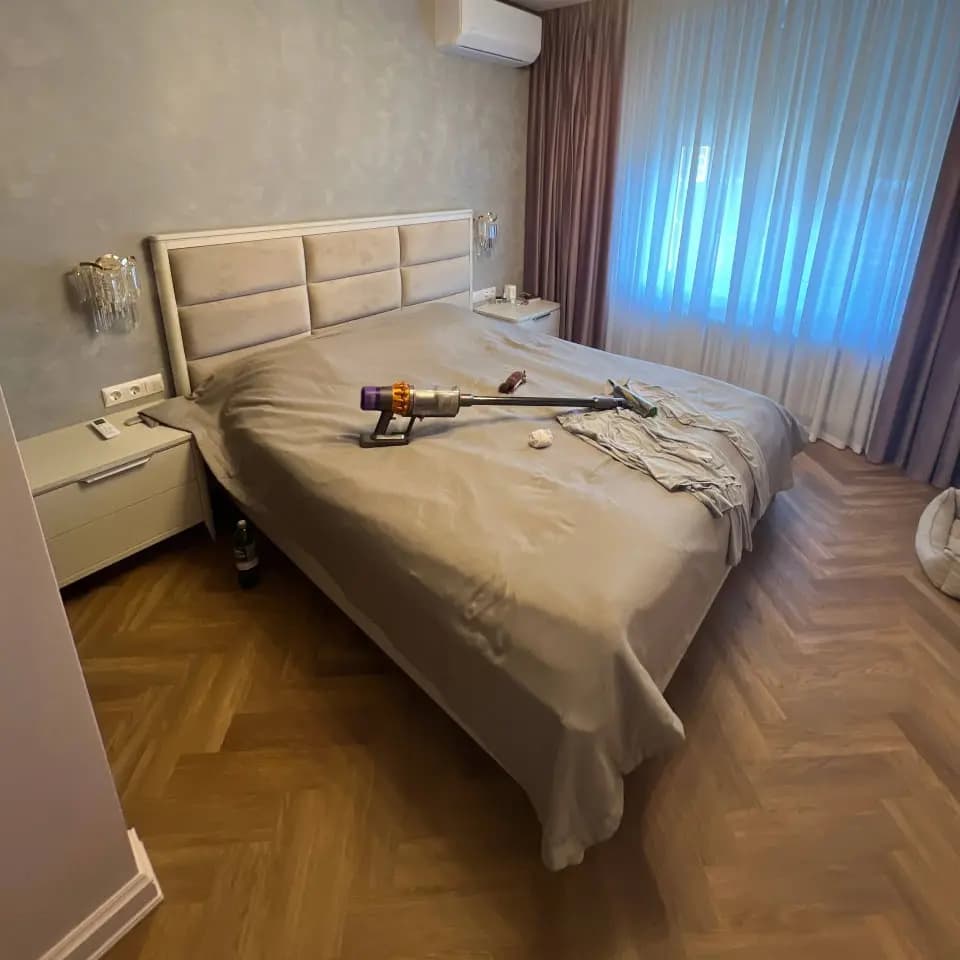
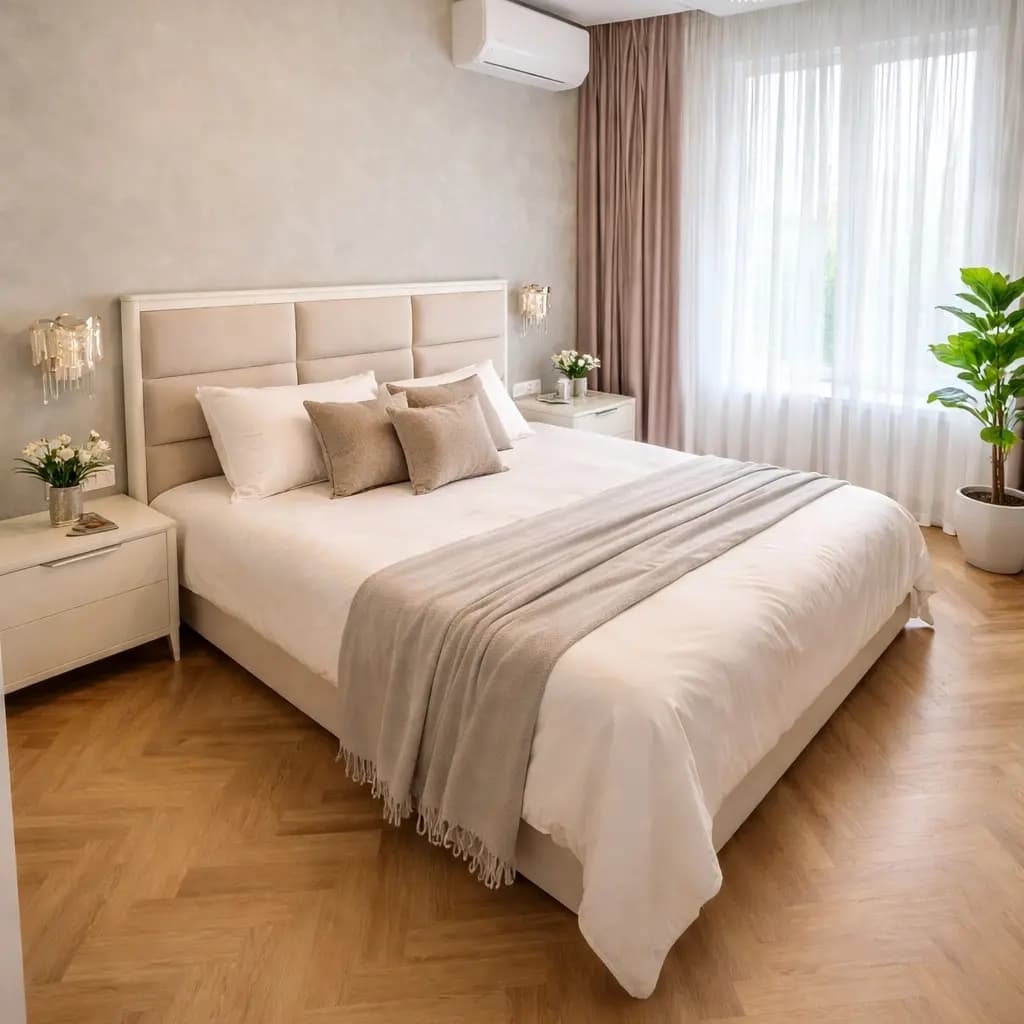
Transitional Kids' Bedroom Virtual Staging FAQ
What makes a kids' room transitional rather than traditional?
Transitional design pulls the warmth and comfort of traditional bedding, millwork, and wood tones, then pairs them with cleaner contemporary lines and a quieter palette. A painted spindle bed beside a streamlined walnut dresser is the classic transitional move. So is layering a quilted coverlet over crisp percale and topping it with one block-print pillow rather than three ruffled pieces. The result reads as warm but current, suitable for almost any family touring the home.
What palette works best for a transitional kids' room?
Soft warm whites as the base, with one accent color in a chalky finish. Sage green, dusty blue, warm taupe, and faded clay all photograph beautifully and appeal to a wide buyer pool. Avoid primary colors and avoid the high-saturation pastels common in nursery catalogs. One accent wall behind the bed plus tonal bedding gives the room enough character to feel designed without locking it to a single child's age or taste.
Should I stage a kids' room as gender-neutral?
Almost always yes for staging photos. Buyers tour with their own kids in mind, and a strongly gendered room asks them to mentally redecorate. A transitional palette of sage, soft blue, oat, and warm white reads as inviting to families with daughters or sons. If the seller insists on a more traditional gendered room, lean on muted color rather than overt theme. The room should welcome any child, not lecture the buyer about decorating.
What size rug should I use in a transitional kids' room?
Size up. An 8x10 wool flatweave is the minimum in a standard 11x12 bedroom, and 9x12 works better if the room can take it. The rug should extend at least 24 inches past the foot of the bed and run under the front legs of any chair or dresser within the seating area. A rug that stops short of the furniture is the single most common staging mistake I see in MLS photos. Generous sizing makes the whole room read larger.
How does AI virtual staging handle a transitional kids' room?
Transitional design depends on proportion and material mix, both of which AI staging tools handle well. I upload a clean empty-room photo, render two or three furniture layouts, swap the bedding palette between sage and chambray, and test a spindle bed against a low upholstered headboard. The render also lets me preview a fabric drum ceiling fixture against a brass schoolhouse, then commit to the version that flatters the architecture. The whole iteration takes minutes, not days.
Learn More
Helpful guides related to Transitional kids' bedroom virtual staging.