

Transitional Bedroom
Virtual Staging
Transform your bedroom with transitional virtual staging. Professional AI-powered results in 60 seconds.
Quick Answer
Transitional is the most misunderstood label in residential staging. It is not a watered-down compromise between traditional and contemporary. Done well, it is a deliberate negotiation that reads cleaner than traditional, warmer than modern, and broadly accessible without surrendering personality. For a primary bedroom, transitional is often the safest creative choice because the buyer pool is genuinely diverse, family relocators, downsizers from larger Colonials, first-time luxury buyers crossing over from rentals, and the room must invite all three without committing fully to any aesthetic camp. The execution rests on three honest moves. First, simplify silhouettes while keeping fabric warm, an upholstered platform bed in undyed linen rather than a tufted Chesterfield headboard, paired with side tables that have legs rather than a heavy plinth. Second, hold the palette to two warm neutrals plus one quiet accent, mushroom, oat, and a deep ink blue is a durable trio. Third, mix material families intentionally, one wood tone, one metal finish, one stone or ceramic, no more. The room should feel like someone with taste decided rather than defaulted. AI staging tools handle this style well because the visual rules are clear and consistent. Trouble appears when prompts try to add traditional flourishes onto a modern shell, which produces an awkward middle that reads as indecision rather than intention.
Key Takeaways
- 1Transitional style features: Blend of traditional and contemporary
- 2Virtual staging costs just $0.10 per photo
- 3Results delivered in approximately 60 seconds
- 4Staged homes sell 30-50% faster (NAR)
Staging Insight
Transitional bedrooms perform across nearly every metro where aistage.pro users sell, but the regional accents differ. Atlanta intown listings in Morningside and Virginia-Highland respond to softer linen tones with a single black metal element, often a slim picture light or a thin frame. In suburban Charlotte, particularly Myers Park and SouthPark, buyers expect more wood grain, walnut nightstands, oak floors left visible, and a bench at the foot of the bed in nubby boucle. Denver's Wash Park and Cherry Creek listings lean cooler, putty walls and steel-framed art, balanced by a heavy wool rug. The Bay Area peninsula, Burlingame, San Mateo, Palo Alto, prefers a quieter version, undyed bedding, an oak Shaker-style frame, no patterns. Miami's Coconut Grove asks for breezier transitional, white plaster walls, raffia bench, a single rattan side chair. Seattle buyers in Madrona and Capitol Hill respond to layered greige with brass pulls and a moody charcoal art piece. Importantly, transitional needs a regional read on art. A Western landscape in oils works in Boulder and reads strange in Brooklyn Heights. Photography study works in any market. Calibrate the artwork before everything else, then let the furniture follow.
Quick Answer
Transitional bedroom virtual staging uses AI to add blend of traditional and contemporary to empty room photos. Costs as low as $0.10 per image vs $2,000-5,000 for physical staging. Results delivered in under 60 seconds.
Key Takeaways
- 1Transitional style features: Blend of traditional and contemporary
- 2Perfect for bedroom spaces that need professional appeal
- 3AI processing delivers results in under 60 seconds
- 420,000x more affordable than traditional physical staging
How much does transitional bedroom virtual staging cost?
Transitional bedroom virtual staging costs as low as $0.10 per image with Agent Lens. This is up to 20,000x cheaper than physical staging which costs $2,000-5,000 for an entire home. Our AI delivers professional blend of traditional and contemporary staging in under 60 seconds.
About Transitional Style
Transitional staging bridges the gap between traditional warmth and contemporary simplicity, creating universally appealing spaces. This style balances classic furniture silhouettes with cleaner lines, neutral color palettes with subtle texture, and formal layouts with comfortable, livable pieces. The result is sophisticated yet approachable—ideal for reaching the broadest possible buyer pool. Transitional staging works exceptionally well in properties where the architecture blends period details with modern updates.. This style is perfect for bedroom spaces looking to attract buyers with a contemporary, refined aesthetic. Virtual staging allows you to showcase this design without the cost or logistics of physical furniture.
Transitional Design for Your Bedroom
### Anchor with calm, not contrast
The quickest way to ruin a transitional bedroom is heavy contrast, a black headboard against bone walls, white bedding, and a black art piece above. The room photographs as a series of competing zones rather than a continuous space. Instead, anchor with calm. Choose a headboard within a few shades of the wall color, an oat upholstered piece against a warm white wall reads as confident restraint. Pull contrast down to specific objects, the lamp bases, the rug border, the framing of the art, where the eye reads them as decisions rather than collisions. Bedding should sit firmly in the warm neutral family, ivory percale, a heavier sand-colored coverlet, a single throw in a slightly deeper tone. Skip the high-contrast euro shams that builder-grade catalog photography loves. Buyers under thirty-five reading transitional listings online have grown skeptical of obvious staging conventions and respond better to bedrooms that look genuinely lived in by someone with editing instincts.
### Layer texture so the room feels finished
Transitional bedrooms collapse without texture variety because the silhouettes are simple and the palette restrained. The tactile work has to do the heavy lifting. Combine three different fabric weights in the bedding alone, a smooth percale sheet, a waffle or matelassé coverlet, a chunkier knit or linen throw. The rug should have visible pile and a slight irregularity, hand-loomed wool, jute layered under a smaller wool runner, or a vintage piece with patina. Drapery in lined linen reads correctly in nearly every transitional room and forgives slightly off proportions because the fabric falls in soft folds. Avoid synthetic velvet at all costs in this style, the sheen reads wrong on camera and pulls the room toward something it is not. Add one organic element, a clay vessel, a wooden bowl, a pair of pillar candles in stone, on a nightstand or dresser. Finally, let the metal finish stay quiet. Brushed brass, oil-rubbed bronze, or warm nickel all work. Polished chrome and high-shine gold both push the room out of transitional and into something more identifiable, which defeats the entire purpose of choosing this style for a broad buyer pool. Subtle, intentional, materially honest, that is the brief.
Transitional Bedroom Staging Benefits
Why Virtual Staging Works for Bedrooms
Transitional Bedroom Staging Tips
Pick one wood tone and hold it
Transitional spaces tolerate one wood tone across nightstands, bench, and frames. Mixing oak with walnut and cherry in the same bedroom muddies the read. If the floor is a strong red oak, pull furniture into a closely related warm mid-tone rather than fighting it with cool greys.
Default to oversized but simple art
A single large abstract or a quiet landscape above the bed works harder than a gallery wall in transitional rooms. Frame it in a slim oak or matte black profile and hang it lower than instinct suggests, around six to eight inches above the headboard, so the bed and art read as one composed unit.
Use shams to set the tone
Two euro shams in textured linen, two standard pillows in matte cotton, and a single lumbar pillow in a quiet weave will photograph better than any decorator pillow stack. Buyers can imagine themselves in the bed because the styling does not announce itself.
Keep the nightstands working
Transitional reads as livable when the nightstands look used by adults, a stack of two well-chosen books, a clay lamp, a small dish, a glass of water on one side. Empty styled nightstands signal staging fatigue. Buyers want to project their evening routine into the room.
Match drapery to wall, not bedding
Tone drapery a half-step deeper than the wall color so it disappears into the architecture and lets the bed dominate. Drapery that competes with the bedding palette splits the visual focus and the room loses its anchor. This single move is the cheapest way to make a transitional bedroom feel custom.
Stage Your Bedroom in Transitional Style Today
Get professional transitional virtual staging in 60 seconds
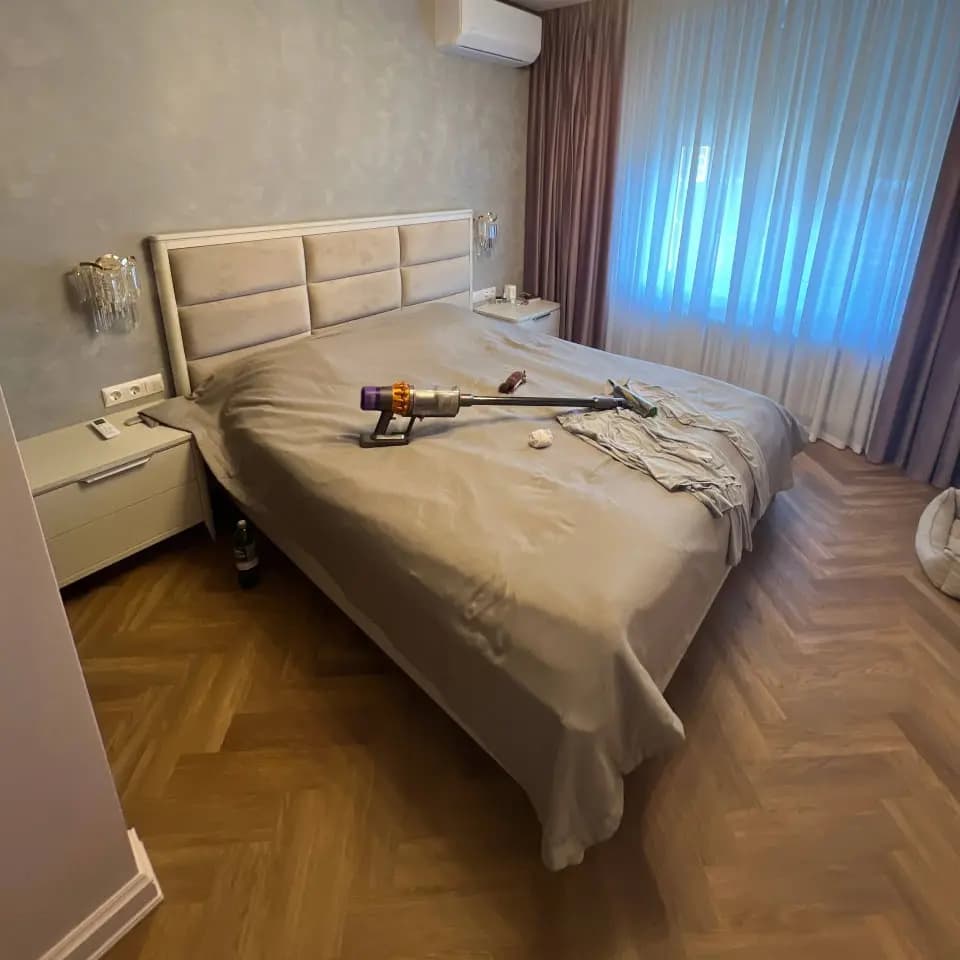
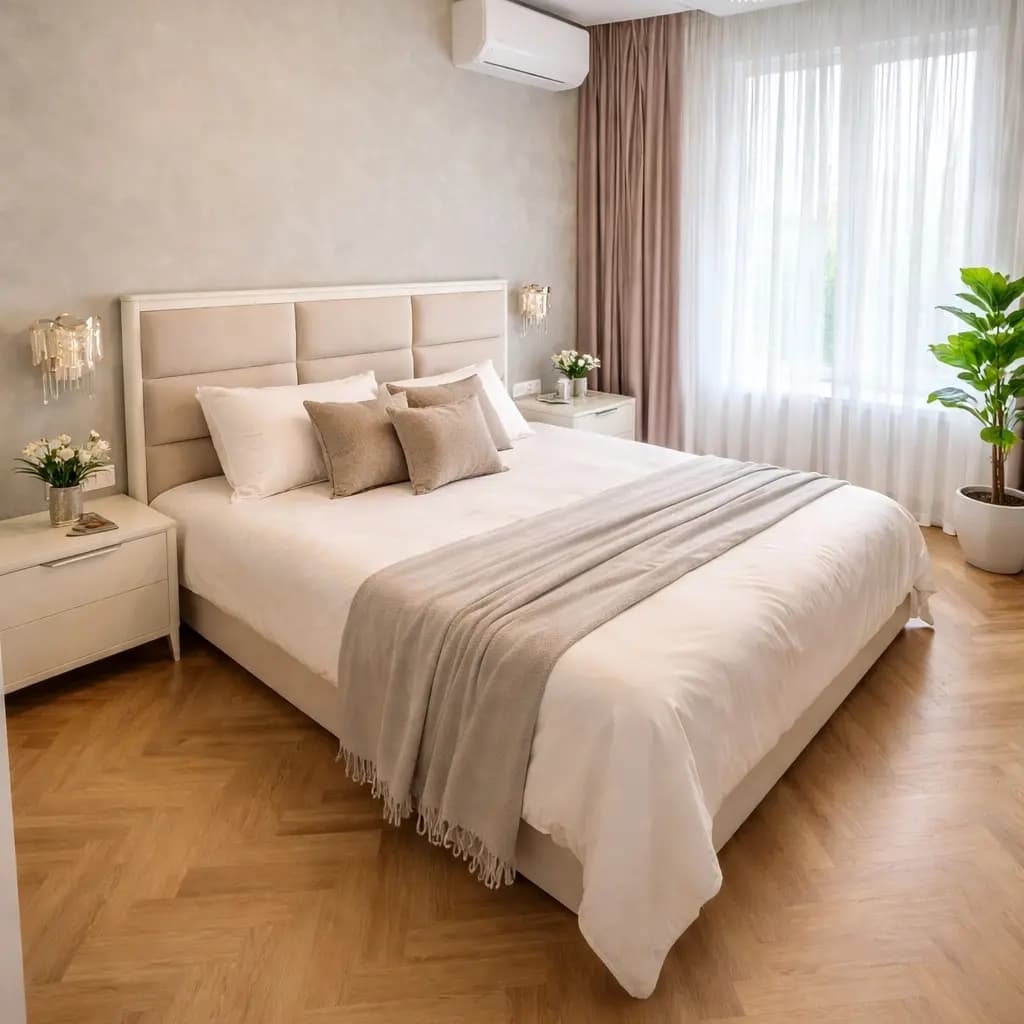
Transitional Bedroom Virtual Staging FAQ
What separates transitional from contemporary in a bedroom?
Contemporary leans cooler, harder, and more graphic, with sharper lines and often a heavier hand on metal and lacquer. Transitional softens those silhouettes with warmer fabric, organic texture, and a palette built around neutrals rather than contrast. A transitional bed has an upholstered headboard with a quiet shape; a contemporary one might use a low platform with a sharp profile. The two styles can coexist in a home, but the bedroom benefits from transitional warmth even when the public rooms read more contemporary because rest and restraint pair naturally.
Does transitional staging work for older homes with strong architectural features?
Yes, in fact transitional is often the strongest match for homes with significant millwork, plaster details, or original built-ins. The simplified furniture silhouettes let the architecture remain the protagonist while the warm palette respects the period feeling. Forcing a fully traditional stage into a Craftsman or a Colonial Revival bedroom can read as a museum display. Transitional reads as a family who appreciates the bones of the house without freezing it in time, which is what most buyers in heritage markets quietly want to do.
How do agents avoid transitional looking generic in listing photos?
Generic happens when stagers default to identical neutral kits across listings. Defeat that by choosing one signature element per bedroom, a hand-loomed rug with a particular pattern, a unique ceramic lamp, a piece of original art, that gives the room a fingerprint. Photographers should shoot at consistent angles and let warm light through linen drapery do the atmospheric work. Virtual staging through aistage.pro can preview multiple signature options against the same empty room so agents commit to the variant most likely to differentiate the listing in their local feed.
Should the bedroom flooring match the staging direction?
Flooring is usually fixed, but the staging should respect what is there. A wide-plank white oak floor pairs effortlessly with transitional staging because both share warm neutrality. A red oak floor demands warmer staging tones, deeper creams and camels rather than cool greiges. Carpeted bedrooms in beige or grey tolerate transitional staging if the rug layered on top introduces texture and a slightly different tone. Replacing flooring before listing only pays off when the existing surface actively reads damaged or dated.
Can transitional bedrooms include some color?
Color belongs in transitional rooms, but in measured doses. A muted ink blue, a soft sage, a clay rust, or an aged ochre can appear in a single piece of art, a throw, or a pair of small pillows. The room remains transitional as long as the architecture and bed read in warm neutrals and the color enters as a deliberate accent rather than a competing field. Avoid painting an accent wall in this style. The architecture should remain quiet so the layered textures and curated objects can carry the personality of the room.
Learn More
Helpful guides related to Transitional bedroom virtual staging.