

Traditional Bedroom
Virtual Staging
Transform your bedroom with traditional virtual staging. Professional AI-powered results in 60 seconds.
Quick Answer
Traditional bedroom staging is having a quieter resurgence than most agents realize. The pendulum that swung hard toward gray-and-white minimalism a few years ago has corrected, and buyers in mature suburban markets are responding to warmth, pattern, and craft again. I see it on every showing weekend. Buyers linger in bedrooms that feel collected rather than catalog-shopped. A traditional treatment works when the architecture supports it—paneled doors, crown molding, hardwood floors, plaster walls. It also works for buyer demographics that read polished traditional as a marker of quality and stewardship. The risk is leaning too far into period costume. A bedroom with a four-poster bed, heavy drapery, brass library lamps, and a wallpaper that fights every other surface reads as overstuffed in agent photography. The discipline of traditional staging is editing—keeping the silhouettes warm and familiar while pulling back on visual noise. With aistage.pro I preview how a traditional bedroom photographs against a home's actual baseboards and floors, which lets me dial in the wood tones and pattern density before we lock the look. Done with restraint, traditional bedrooms photograph as timeless and immediately livable, which is the visual register that converts mature buyer pools into showings and offers.
Key Takeaways
- 1Traditional style features: Classic elegance, warm colors, timeless appeal
- 2Virtual staging costs just $0.10 per photo
- 3Results delivered in approximately 60 seconds
- 4Staged homes sell 30-50% faster (NAR)
Staging Insight
Traditional staging carries the most weight in the older suburbs of the East Coast and Upper Midwest. Westchester County colonials, Bryn Mawr stone houses, Lake Forest Tudor revivals, and Grosse Pointe Georgian houses all expect a traditional bedroom presentation to land. In those markets I specify a sleigh bed or a turned-post bed in walnut or mahogany, a skirted bench at the foot, a quilt folded over a luggage rack, and a pair of brass library lamps on the nightstands. Wallpaper works in those rooms—a small block print, a botanical, or a faded damask—because the architecture gives the pattern enough breathing room. In Charleston single houses, Savannah row houses, and the historic neighborhoods of Richmond, traditional pulls warmer with painted antique pieces and chintz patterns in faded tones. Avoid pushing traditional in homes built in the recent decades with flush trim and slab doors. The silhouette mismatch reads as a costume on the wrong body. Match the style to the architecture and the regional eye, and the bedroom photographs as inevitable rather than imposed.
Quick Answer
Traditional bedroom virtual staging uses AI to add classic elegance, warm colors, timeless appeal to empty room photos. Costs as low as $0.10 per image vs $2,000-5,000 for physical staging. Results delivered in under 60 seconds.
Key Takeaways
- 1Traditional style features: Classic elegance, warm colors, timeless appeal
- 2Perfect for bedroom spaces that need professional appeal
- 3AI processing delivers results in under 60 seconds
- 420,000x more affordable than traditional physical staging
How much does traditional bedroom virtual staging cost?
Traditional bedroom virtual staging costs as low as $0.10 per image with Agent Lens. This is up to 20,000x cheaper than physical staging which costs $2,000-5,000 for an entire home. Our AI delivers professional classic elegance, warm colors, timeless appeal staging in under 60 seconds.
About Traditional Style
Traditional staging evokes a sense of established comfort and timeless sophistication, drawing inspiration from 18th and 19th century European décor. Rich wood tones, symmetrical furniture arrangements, and ornate details create an atmosphere of refined elegance. Popular elements include wingback chairs, formal dining sets, layered window treatments, and classic patterns like damask or toile. This style appeals to buyers seeking permanence and a connection to classical design principles.. This style is perfect for bedroom spaces looking to attract buyers with a contemporary, refined aesthetic. Virtual staging allows you to showcase this design without the cost or logistics of physical furniture.
Traditional Design for Your Bedroom
Traditional bedroom staging is built on three pillars: a bed with weight, layered textiles in classic patterns, and lighting that reads as collected rather than coordinated. Each pillar has its own discipline.
### The Bed And Its Layers
The bed should have presence. A turned-post bed in walnut or mahogany, a sleigh bed with a curved headboard, or an upholstered four-poster in linen all work. Skip ornate carved headboards with heavy gilding; those tip into period costume and date the photographs. Bedding layers heavily but in a controlled palette: a fitted percale, a flat sheet folded back to show the trim, a quilt in a small block print or a tone-on-tone matelassé, and three to four pillows. The pillow stack reads traditional when it includes two euro shams in a soft pattern, two standard shams in white piped percale, and one lumbar in an embroidered or block-printed cotton. A folded throw at the foot of the bed in a wool or cashmere weave finishes the layering. Drape a quilt over a luggage rack at the bed's foot for a collected, lived-in feel that photographs warmly.
### Textiles, Lighting, And Pattern Discipline
Textiles carry the traditional story but need editing. I limit pattern to two surfaces maximum: bedding and one curtain panel, or wallpaper and bedding. Three patterned surfaces start to fight in photos. Choose patterns from the same family—a small block print on the bed, a slightly larger version of the same print on roman shades or pillows. Solids fill the rest. Window treatments are floor-length linen or cotton drapery panels in a soft color, often layered over plain woven Roman shades. Skip valances and swags; those date traditional staging immediately. Lighting layers like a luxury treatment but with traditional silhouettes: a pair of ceramic or brass library lamps on the nightstands, a brass picture light above artwork, and a small chandelier in the center of the ceiling. Brass, oil-rubbed bronze, and antique pewter all work; chrome reads transitional and breaks the read. Art is one large landscape oil or a botanical print framed in walnut or gilt above the bed. Skip gallery walls. Finish with a wool rug in a faded medallion or quiet tonal pattern under the bed, sized so the front legs of the nightstands rest on the rug. Plenty of warmth, plenty of texture, and a clear focal hierarchy that photographs as a real bedroom in a real home rather than a furniture showroom.
Traditional Bedroom Staging Benefits
Why Virtual Staging Works for Bedrooms
Traditional Bedroom Staging Tips
Choose A Bed With Weight
A turned-post bed in walnut or mahogany, a sleigh bed, or an upholstered four-poster in linen anchors a traditional bedroom. Skip ornate gilded carving; clean traditional silhouettes age better in photographs. The bed should command the room without requiring bedding gymnastics to compete with the architecture or trim work.
Limit Patterns To Two Surfaces
Pattern is part of the traditional vocabulary, but three or more patterned surfaces fight in agent photography. Pick two: bedding and roman shades, or wallpaper and bedding. Choose patterns from the same family in different scales for cohesion. Solids fill the rest of the room and let the pattern moments breathe in wide-angle shots.
Layer A Quilt Over A Luggage Rack
A folded quilt or throw draped over a luggage rack at the foot of the bed signals collected and lived-in without adding clutter. The horizontal line photographs well in agent shots and gives buyers a lifestyle cue. Choose a quilt in a soft block print or matelassé in tones pulled from the bedding palette.
Skip Valances And Heavy Swags
Floor-length linen or cotton drapery panels mounted close to the ceiling, optionally layered over plain woven Roman shades, deliver the traditional read without dating the room. Valances, swags, and elaborate ruffled treatments tip immediately into period costume and shrink the room in photos. Keep the window treatment dignified and quiet.
Pair Brass Library Lamps With A Picture Light
A pair of ceramic or brass library lamps on the nightstands plus a brass picture light above the bed's artwork reads as classic traditional layering. The picture light adds a warm glow at the focal point that photographs beautifully. Avoid mixing too many metal finishes; pick brass or oil-rubbed bronze and let it carry across the room.
Stage Your Bedroom in Traditional Style Today
Get professional traditional virtual staging in 60 seconds
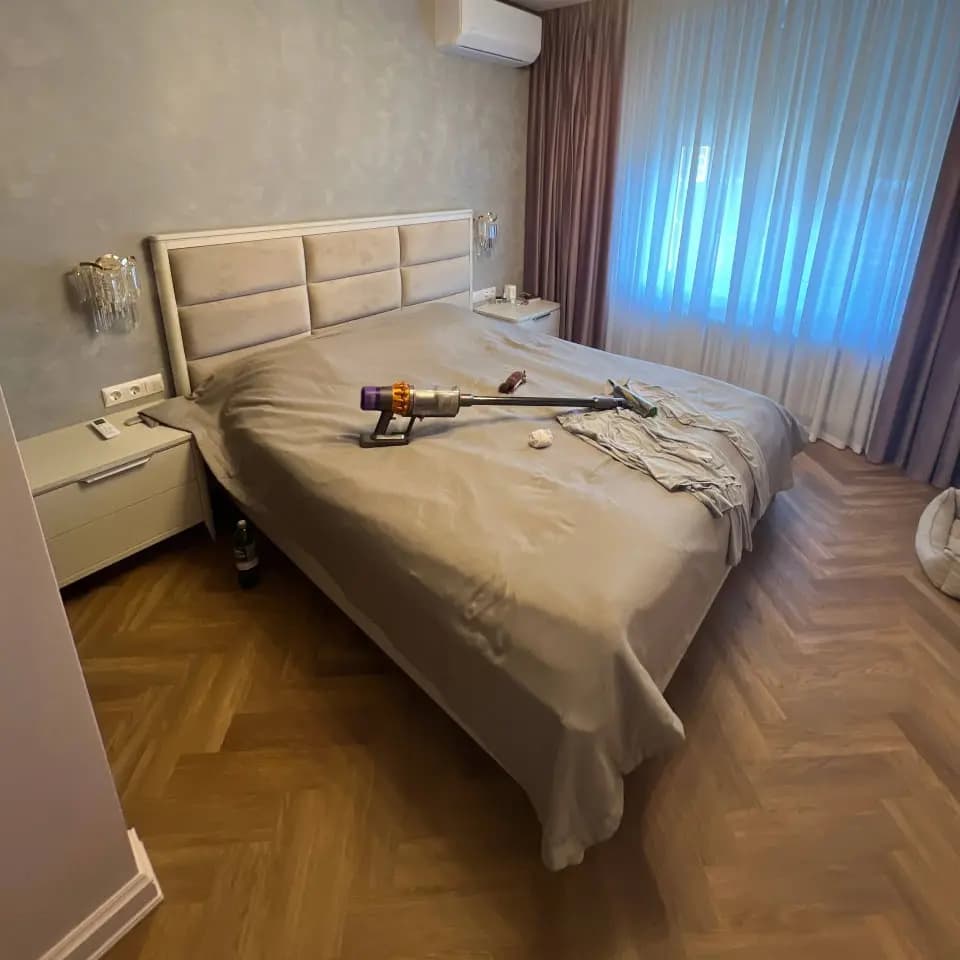
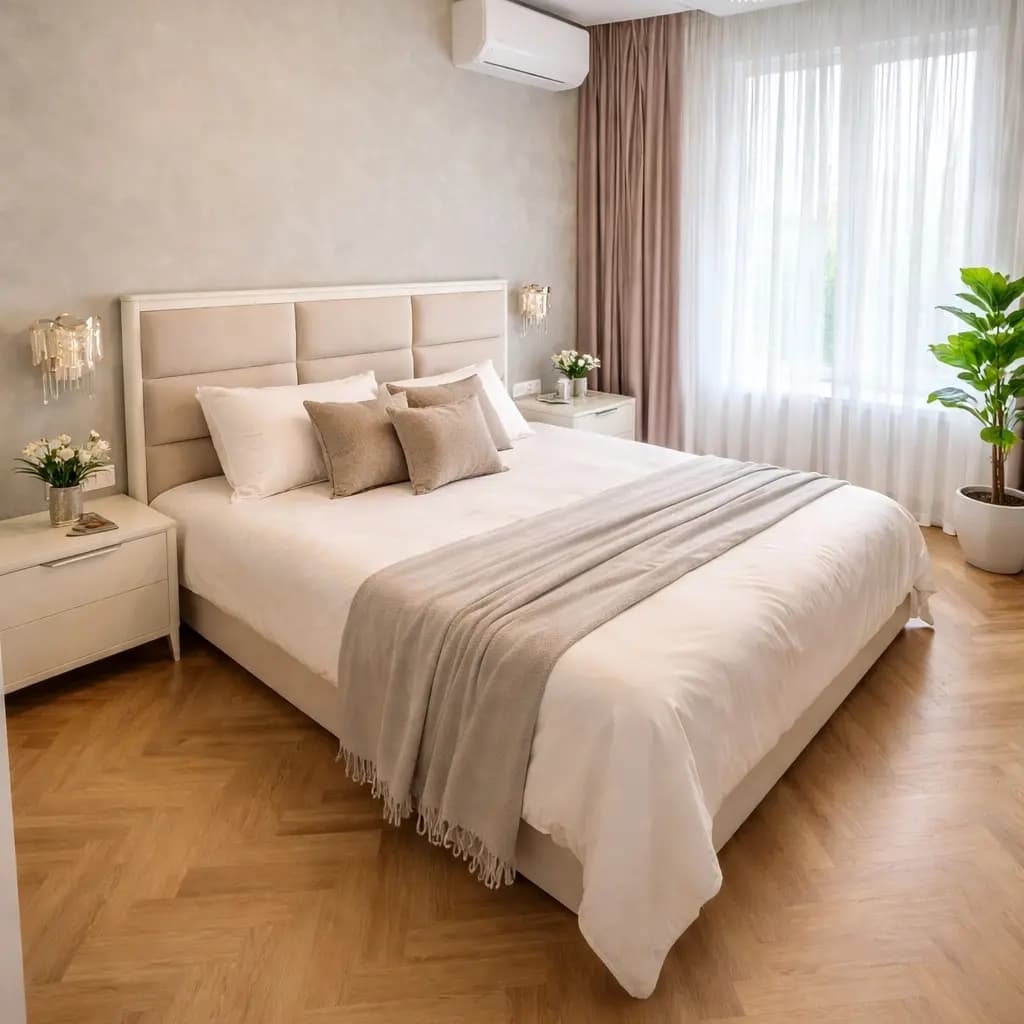
Traditional Bedroom Virtual Staging FAQ
Is traditional staging too dated for current buyers?
Not when the home's architecture supports it. Buyers in mature suburbs of Westchester, Bryn Mawr, Lake Forest, and similar markets actively prefer traditional bedrooms because the style matches the home's bones and signals stewardship. The mistake is pushing traditional in flush-trim new construction or modern lofts, where the silhouettes clash with the architecture. Match the style to the home and the comp set, and traditional reads as timeless rather than dated. Restraint and edit are the keys to keeping it current.
What wood tones work best in a traditional bedroom?
Walnut and mahogany lead the traditional palette. Cherry has fallen somewhat out of favor in current buyer surveys but still works in homes from the period when it was original. Painted antique pieces in soft white, sage, or pale blue read as collected and add lightness to the room. Avoid blonde oak in true traditional; it can read transitional or coastal. Mix wood tones intentionally—a walnut bed, a painted nightstand, a mahogany dresser—so the room photographs as collected over time rather than catalog-bought.
Should I use wallpaper in a staged traditional bedroom?
Yes, sparingly and on a single wall or as the bed wall treatment. Choose a small block print, a botanical, or a faded damask in muted tones. The wallpaper photographs as architectural rather than decorative when it stays in a tight color range with the rest of the room. Skip bold florals, large-scale toiles, and saturated colors that limit appeal. If the seller is hesitant, a grasscloth in a warm neutral delivers the traditional texture cue without committing to a printed pattern.
How do I keep a traditional bedroom from feeling stuffy?
Edit ruthlessly and keep the palette quiet. Skip elaborate window treatments, multiple gallery walls, decorative pillow piles, and matched bedroom suites. Choose two patterns maximum, layer textiles in tones rather than colors, and let the bed and one piece of art carry the focal weight. White or warm white walls, white trim, and one grounding wall texture or wallpaper photograph fresh while still respecting traditional vocabulary. The discipline that prevents stuffiness is editing, not minimalism.
What art works above a traditional bed?
One large piece, centered, in a substantial frame. A landscape oil in muted tones, a framed botanical print, or a quiet still life in walnut or gilt frame all work. Skip gallery walls of small frames, modern abstracts, and graphic prints; those break the traditional read in photos. The frame should be substantial without being ornate—a wide flat or carved profile in walnut, mahogany, or aged gilt. A brass picture light above the frame adds warmth and directs the eye to the focal point.
Learn More
Helpful guides related to Traditional bedroom virtual staging.