

Traditional Master Bedroom
Virtual Staging
Transform your master bedroom with traditional virtual staging. Professional AI-powered results in 60 seconds.
Quick Answer
Traditional primary bedrooms are easier to stage badly than almost any other category. The standard mistakes are heavy florals, dust ruffles touching the floor, four-poster beds in dark mahogany, and color schemes that haunt the room rather than warm it. Real traditional staging respects the bones of historical design while allowing the room to breathe in current light. The buyer for a traditional master is not asking for a museum. They want a familiar, gracious bedroom that feels welcoming the moment they walk in. In working markets across the South, the Mid-Atlantic, and parts of the Midwest, traditional remains the default for upper-middle-tier homes, especially in established neighborhoods with mature trees and brick construction. The agent who knows how to tune traditional for the current buyer wins these listings consistently. A four-poster in a softer stained finish, a tailored upholstered headboard with nailhead trim, a hand-knotted Persian or Oushak rug, and bedding in a soft palette layered with one classic pattern usually does the work. AIStage helps you offer two or three traditional variations to match buyer feedback, which matters because traditional is a wide style that ranges from English country to American colonial to French provincial, and a single template rarely fits every house.
Key Takeaways
- 1Traditional style features: Classic elegance, warm colors, timeless appeal
- 2Virtual staging costs just $0.10 per photo
- 3Results delivered in approximately 60 seconds
- 4Staged homes sell 30-50% faster (NAR)
Staging Insight
Traditional primary suites still drive offers in specific markets where buyers actively prefer the style. Atlanta neighborhoods like Buckhead, Druid Hills, and Brookhaven respond to traditional staging that includes turned-leg furniture, paneled headboards, and soft warm color palettes. Push the millwork ivory and the walls toward a soft greige or pale aqua. In the Boston suburbs, particularly Wellesley, Concord, and Newton, traditional carries Yankee restraint. Choose tailored upholstery, a classic four-poster in maple or cherry rather than mahogany, and a hand-loomed wool rug with a quiet pattern. Avoid heavy florals. The buyer wants tradition, not theater. In Charleston, Savannah, and parts of Richmond, traditional bedrooms allow more romance. Linen canopy beds, antique armoires, soft seafoam or pale rose walls, and bedding with classic embroidered detail all work. Add a slipper chair in a faded chintz to acknowledge the regional inheritance. In parts of the Midwest, like Indianapolis, Columbus, and Cincinnati, traditional reads slightly more conservative. Lean into matching wood furniture suites, paneled walls, and warm tones rather than experimenting with color. The dialect of traditional shifts noticeably across these regions, and matching the local accent makes the listing feel right.
Quick Answer
Traditional master bedroom virtual staging uses AI to add classic elegance, warm colors, timeless appeal to empty room photos. Costs as low as $0.10 per image vs $2,000-5,000 for physical staging. Results delivered in under 60 seconds.
Key Takeaways
- 1Traditional style features: Classic elegance, warm colors, timeless appeal
- 2Perfect for master bedroom spaces that need professional appeal
- 3AI processing delivers results in under 60 seconds
- 420,000x more affordable than traditional physical staging
How much does traditional master bedroom virtual staging cost?
Traditional master bedroom virtual staging costs as low as $0.10 per image with Agent Lens. This is up to 20,000x cheaper than physical staging which costs $2,000-5,000 for an entire home. Our AI delivers professional classic elegance, warm colors, timeless appeal staging in under 60 seconds.
About Traditional Style
Traditional staging evokes a sense of established comfort and timeless sophistication, drawing inspiration from 18th and 19th century European décor. Rich wood tones, symmetrical furniture arrangements, and ornate details create an atmosphere of refined elegance. Popular elements include wingback chairs, formal dining sets, layered window treatments, and classic patterns like damask or toile. This style appeals to buyers seeking permanence and a connection to classical design principles.. This style is perfect for master bedroom spaces looking to attract buyers with a contemporary, refined aesthetic. Virtual staging allows you to showcase this design without the cost or logistics of physical furniture.
Traditional Design for Your Master Bedroom
### Architectural Choices That Carry Traditional Staging
Traditional bedrooms reward homes with strong architectural details, and the staging should highlight rather than fight those details. Crown molding, chair rails, paneled wainscoting, and millwork all photograph beautifully when painted in a softer creamy white rather than a stark white. If the room lacks these elements and the home is in a market that expects them, AIStage can render added paneling or applied molding to lift the architecture without committing to a real renovation. A fireplace in the bedroom, even a small one, becomes a major asset and should be styled with a polished brass screen, a single piece of classical art above, and a small pair of candlesticks rather than a cluttered mantel.
Window treatments matter more in traditional than in any other style. Pinch-pleat or goblet-pleat drapery, hung from a polished brass or wooden rod, in a pale linen or a quiet damask, gives the room the formal layer that buyers expect. Drapery should puddle slightly at the floor or break cleanly, depending on the regional dialect, and should always layer over a fine roller shade or a sheer for actual privacy. Hardwood floors in a medium oak or cherry stain, with a good wool rug centered under the bed, complete the traditional foundation.
### Bed, Bedding, And The Detail Layer
The bed is the primary stage. Choose either a tailored upholstered headboard with nailhead trim, a classic four-poster in a softer wood tone, or a paneled wood headboard. Avoid the temptation to go for a heavily carved sleigh bed unless the home is genuinely period and the buyer pool will recognize it. Bedding should layer in tonal whites and soft accents. A fitted sheet, a quality flat sheet folded back over the duvet, a duvet in a quiet white or ivory, and a folded coverlet at the foot in a complementary tone all read as traditional without becoming heavy. Pillows want a graceful arrangement, two euro shams in a tonal embroidery, two standard shams in a contrasting weave, two sleeping pillows, and a single lumbar in a quiet pattern like a small floral, a stripe, or a faded ikat.
Nightstands should match in style but ideally not be identical, since traditional buyers respond to the sense of a slowly assembled room. Pair a small turned-leg nightstand on one side with a slightly larger chest of drawers on the other, both in compatible wood tones. Top each with a porcelain or brass lamp with a pleated linen shade, a small framed photograph, and a stack of two cloth-bound books. The persona for traditional primary suites tends to be a couple in their fifties or sixties, often with grown children, who appreciate craftsmanship and want the bedroom to feel like a private retreat with hospitality built in.
Traditional Master Bedroom Staging Benefits
Why Virtual Staging Works for Master Bedrooms
Traditional Master Bedroom Staging Tips
Soften The Wood Tones Beyond Standard Mahogany
Heavy mahogany furniture feels dated and reads as last-generation traditional. Choose softer wood finishes like cherry, walnut, or a hand-rubbed maple to keep the staging feeling fresh while staying true to the style. The buyer still gets the gracious, classic silhouette but without the heavy darkness that makes a room feel closed. Mixing two compatible wood tones reads as collected rather than matchy.
Layer Bedding In Tonal Whites With One Quiet Pattern
Stacked layers of white and ivory bedding with a single restrained pattern, like a small embroidered detail or a soft stripe, photograph as elevated traditional. Heavy florals and saturated jewel tones tend to date the photograph quickly. The pattern should feel like an heirloom rather than a current trend, even if it is freshly purchased, and should appear on no more than one or two pillows in the arrangement.
Hang Drapery From The Ceiling, Not From The Window Frame
Floor to ceiling drapery makes traditional bedrooms feel taller and more gracious, and it photographs as intentional rather than apologetic. Use pinch-pleat or goblet-pleat headers in a quiet linen or pale damask, hung from a polished brass or stained wood rod that extends past the window casing. Layer over a sheer or a fine roller shade for actual function, and let the drape just kiss or lightly puddle on the floor.
Add A Reading Chair And A Side Table In The Corner
A traditional primary suite reads as fully realized when there is a quiet seating moment in addition to the bed. A wing chair, a slipper chair, or a tufted bench with a pillowed back in a soft fabric, paired with a small turned-leg side table and a porcelain table lamp, completes the room. Add a single book on the table and a soft throw across the chair to suggest a real reading habit rather than a staged tableau.
Choose Art With A Sense Of Heritage
Traditional bedrooms benefit from art that feels inherited rather than recently purchased. A botanical print pair, a quiet landscape oil, a classical figure study, or an architectural drawing in an antiqued gold frame all read traditional without becoming costume. Avoid loud abstracts and contemporary photography unless the home is intentionally transitional. The art should feel like it has lived in the family for at least one generation, even if it was selected last week.
Stage Your Master Bedroom in Traditional Style Today
Get professional traditional virtual staging in 60 seconds
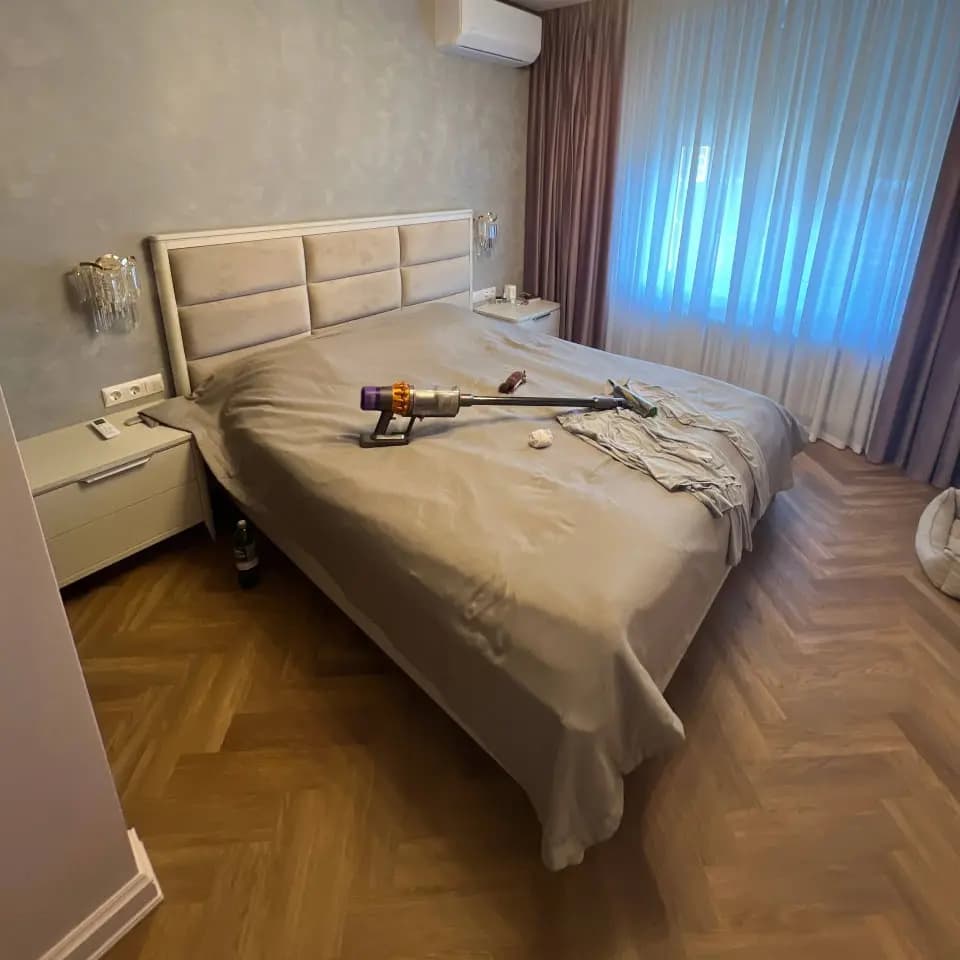
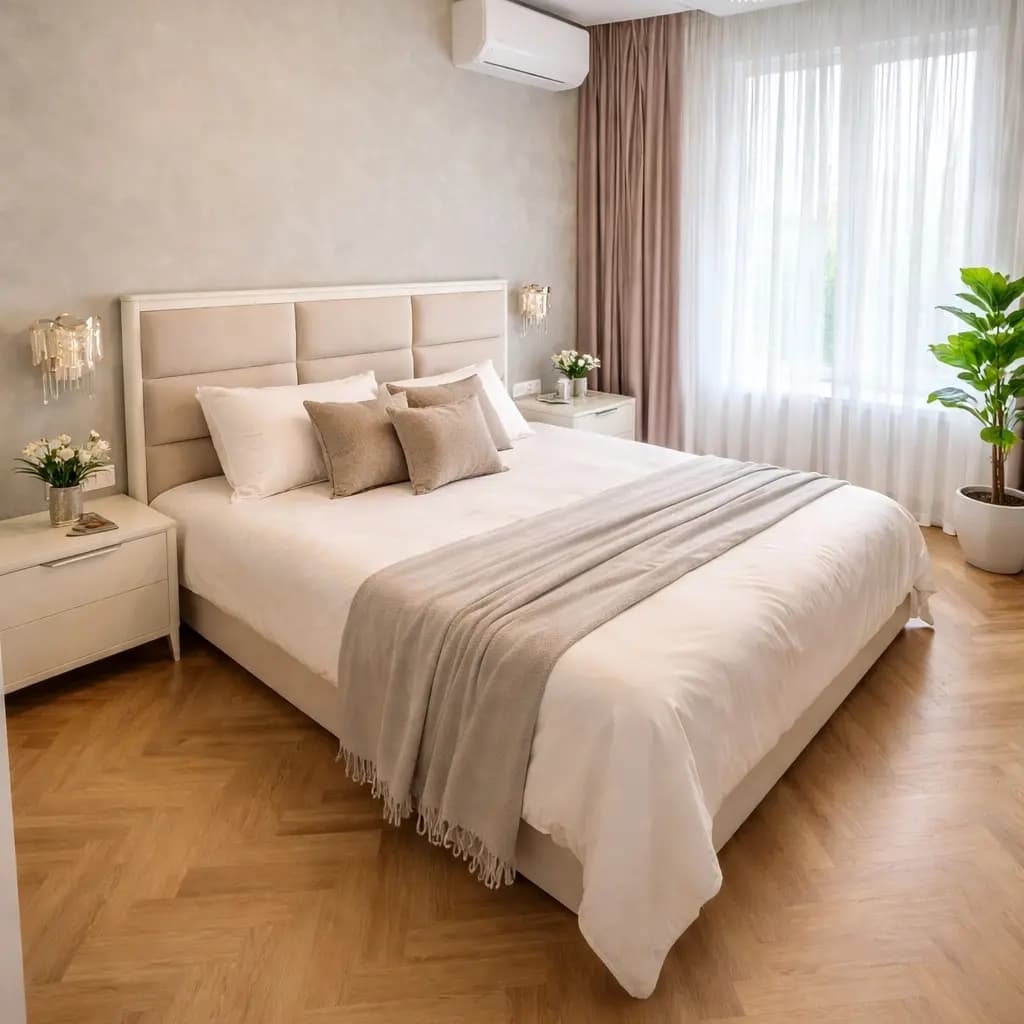
Traditional Master Bedroom Virtual Staging FAQ
Is traditional staging still relevant for younger buyers in 2026?
Traditional remains highly relevant in specific markets and price tiers, especially established neighborhoods with mature architecture. Younger buyers shopping in those areas often want traditional bones with slightly fresher styling, which means softer wood tones, tailored rather than ornate upholstery, and lighter color palettes. The category itself is not dated. Heavy-handed traditional staging from previous decades is what feels old. A well-tuned traditional primary suite, with quiet patterns and graceful proportion, still wins offers in places where the architecture supports it and the buyer pool actively appreciates the style.
How do I keep a traditional bedroom from feeling dark or heavy?
Lighten the wall color first, then the trim, then the wood tones in furniture. A traditional bedroom photographs best with walls in a soft greige, pale aqua, or buttery cream, trim in a creamy off-white, and furniture in cherry or walnut rather than mahogany. Replace heavy velvet drapery with linen, swap a damask bedspread for layered tonal whites, and bring in a substantial wool rug in a lighter ground color. Add a generous floor lamp and a couple of porcelain table lamps with linen shades to lift the lighting beyond what the overhead fixture provides.
Should I use a four-poster bed or an upholstered headboard for traditional staging?
Both work, and the choice depends on the room's architecture and the buyer pool. A four-poster in a medium wood tone reads as classic traditional and works beautifully in homes with strong architectural detail like crown molding and paneled walls. An upholstered headboard with nailhead trim feels slightly more current and works well in homes with simpler bones or buyers who want traditional without committing to the full period look. In smaller bedrooms, the upholstered option photographs lighter. In larger primary suites with high ceilings, a four-poster fills the volume gracefully.
Can I mix antique pieces with newer furniture in a traditional staged bedroom?
Yes, and a thoughtful mix usually outperforms a fully matched suite. A pair of antique nightstands beside a newer upholstered bed, or a vintage chest of drawers paired with a contemporary mirror, signals that the home has been lived in by people who collect rather than buy in sets. Keep the wood tones compatible, the silhouettes within the same general formality range, and limit the antique pieces to two or three so the room does not start to feel like a shop. The mix is what gives traditional staging its warmth and credibility.
What rug works best in a traditional primary bedroom?
A hand-knotted Persian or Oushak rug, an English-style needlepoint, or a softly patterned wool rug in faded ground colors will all serve traditional staging well. Choose a rug large enough to extend at least two feet beyond each side of the bed and well past the foot, so the front legs of any bench or chair sit on it. Faded antique-style rugs photograph more gracefully than freshly woven bright ones, and they pair with a wider range of bedding palettes. Avoid bold geometric or transitional patterns, which push the room toward contemporary.
Learn More
Helpful guides related to Traditional master bedroom virtual staging.