

Traditional Family Room
Virtual Staging
Transform your family room with traditional virtual staging. Professional AI-powered results in 60 seconds.
Quick Answer
Traditional family rooms remain the most listed style across the eastern half of the country, and for good reason. Buyers walking through a colonial in Greenwich, a Tudor in Bryn Mawr, or a center-hall in Wellesley expect to see rooms that respect the bones of the house. Fifteen years of selling these properties has taught me that traditional staging is unforgiving in photos. It can look stuffy and dated within a single misstep, or it can look enduring and grown-up if the proportions, fabrics, and color values are calibrated correctly. The difference is rarely budget. It is judgment. AI virtual staging gives agents a low-stakes way to test traditional schemes before a photographer arrives, including the choice between a tufted Chesterfield and a roll-arm sofa, between a Persian-style rug and a Tabriz-pattern wool, between cream and khaki paint. For the family room specifically, the goal is to communicate that this is a room where holidays will be spent, not a room where guests will be tolerated. Warmth, layering, and an undeniable sense of comfort do that work. The pages that follow outline the moves that hold up across regions and the choices that sabotage otherwise good listings.
Key Takeaways
- 1Traditional style features: Classic elegance, warm colors, timeless appeal
- 2Virtual staging costs just $0.10 per photo
- 3Results delivered in approximately 60 seconds
- 4Staged homes sell 30-50% faster (NAR)
Staging Insight
In the Northeast, traditional reads true when the staging leans English country: a Lawson sofa in cream, a Chesterfield in oxblood leather, oil portraits, blue-and-white porcelain, and a Heriz rug in faded reds and ivory. Connecticut towns like Darien and New Canaan respond to this register strongly. In the South, particularly in Buckhead, Mountain Brook, and River Oaks, traditional bends toward the Southern interpretation: lighter fabrics, Schumacher chinoiserie, brass lamps with pleated shades, and pecan or mahogany casegoods. Midwestern buyers in Hinsdale or Edina prefer a quieter traditional with less pattern, often centered on a stone fireplace with built-ins flanking. West Coast traditional, found in Hancock Park and Pasadena, layers Spanish revival cues such as terracotta, wrought iron, and warmer plaster walls into the otherwise classical template. Match the regional dialect of traditional. A staging that reads correct in Birmingham will read theatrical in Seattle.
Quick Answer
Traditional family room virtual staging uses AI to add classic elegance, warm colors, timeless appeal to empty room photos. Costs as low as $0.10 per image vs $2,000-5,000 for physical staging. Results delivered in under 60 seconds.
Key Takeaways
- 1Traditional style features: Classic elegance, warm colors, timeless appeal
- 2Perfect for family room spaces that need professional appeal
- 3AI processing delivers results in under 60 seconds
- 420,000x more affordable than traditional physical staging
How much does traditional family room virtual staging cost?
Traditional family room virtual staging costs as low as $0.10 per image with Agent Lens. This is up to 20,000x cheaper than physical staging which costs $2,000-5,000 for an entire home. Our AI delivers professional classic elegance, warm colors, timeless appeal staging in under 60 seconds.
About Traditional Style
Traditional staging evokes a sense of established comfort and timeless sophistication, drawing inspiration from 18th and 19th century European décor. Rich wood tones, symmetrical furniture arrangements, and ornate details create an atmosphere of refined elegance. Popular elements include wingback chairs, formal dining sets, layered window treatments, and classic patterns like damask or toile. This style appeals to buyers seeking permanence and a connection to classical design principles.. This style is perfect for family room spaces looking to attract buyers with a contemporary, refined aesthetic. Virtual staging allows you to showcase this design without the cost or logistics of physical furniture.
Traditional Design for Your Family Room
### Furniture, Color, and Layered Pattern
A traditional family room is built on a strong sofa, a coordinated pair of chairs, and a substantial coffee table or upholstered ottoman. I prefer a roll-arm sofa in a warm cream linen or a Lawson in pale gold, paired with two wing chairs or club chairs in a coordinated check or stripe. The coffee table should be substantial: a leather-topped ottoman in cognac, a butler's tray on a stand, or a solid mahogany rectangle with claw feet. The rug carries enormous weight. A wool Persian-style rug in faded reds, navy, and ivory pulls the entire palette together and forgives wear in photos. Walls work best in Benjamin Moore Manchester Tan, Farrow and Ball Joa's White, or a soft buttery cream like Sherwin-Williams Antique White. Trim should be a half-shade lighter, never stark white, which fights traditional fabrics. Layered pattern is the signature: a solid sofa, a checked chair, a striped pillow, a floral lumbar. Three patterns in three scales, sharing two colors, holds together every time.
### Lighting, Art, and the Personal Touch
Traditional family rooms need warm, low light. Specify table lamps with pleated silk shades on the console behind the sofa and on side tables flanking the seating. A pair of brass library lamps with green glass shades on built-ins reads correct without trying too hard. Avoid recessed lighting as the only source. The fireplace should be the focal point, dressed with a real or convincing mantel, an oil landscape or framed mirror above, a pair of brass candlesticks, and a small stack of books. Bookshelves matter in traditional staging more than any other style. Fill them seventy percent with books, leaning some, stacking some, and twenty percent with collected objects: porcelain ginger jars, framed family photos in silver, small pieces of pottery. Leave ten percent breathing room. Window treatments make or break the photo: pinch-pleat drapes in a textured ivory linen, hung an inch below the ceiling and puddling slightly, communicate quality immediately. A traditional room without proper drapery looks like a model unit and buyers feel it.
Traditional Family Room Staging Benefits
Why Virtual Staging Works for Family Rooms
Traditional Family Room Staging Tips
Choose a roll-arm or Lawson sofa
These silhouettes read traditional without veering into formal. A roll-arm in warm cream linen or a Lawson in pale gold gives you a foundation that pairs with any pattern. Avoid Chesterfields in family rooms unless the home is genuinely English in style, since the formality reads stiff for everyday family use.
Layer three patterns in three scales
A solid sofa, a checked chair, a striped pillow, a floral lumbar. The patterns share two colors and vary in scale: large, medium, small. This is the canonical traditional formula and it photographs beautifully because the eye has somewhere to rest between each pattern.
Specify pleated silk lamp shades
Pleated silk shades with brass or porcelain bases produce the warm, diffused light traditional rooms require. Drum shades read transitional. Recessed lighting alone reads commercial. Three lamps at thirty inches creates a glow buyers associate with grandmother's house in the best possible way.
Dress bookshelves to seventy percent books
Traditional built-ins should look used, not styled. Fill them seventy percent with real books, including some leaned and some stacked horizontally. Twenty percent collected objects: porcelain jars, framed photos, small pottery. Ten percent breathing room. Empty shelves with three vases each scream model home and buyers register the staging immediately.
Hang pinch-pleat drapes properly
Pinch-pleat drapes in textured ivory linen, hung an inch below the ceiling and grazing the floor or puddling slightly, transform a traditional room. Cafe curtains and short panels look unfinished. The drapery line communicates the ceiling height of the home, which is one of the strongest signals of value in listing photos.
Stage Your Family Room in Traditional Style Today
Get professional traditional virtual staging in 60 seconds
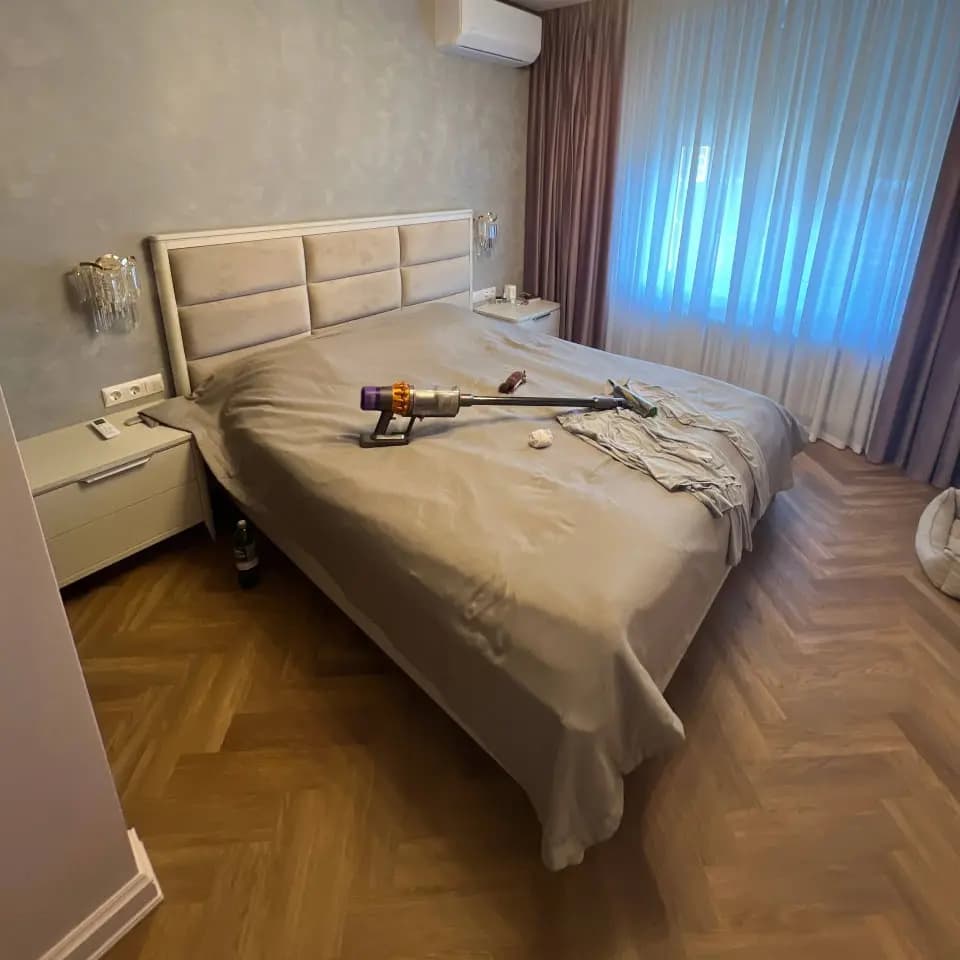
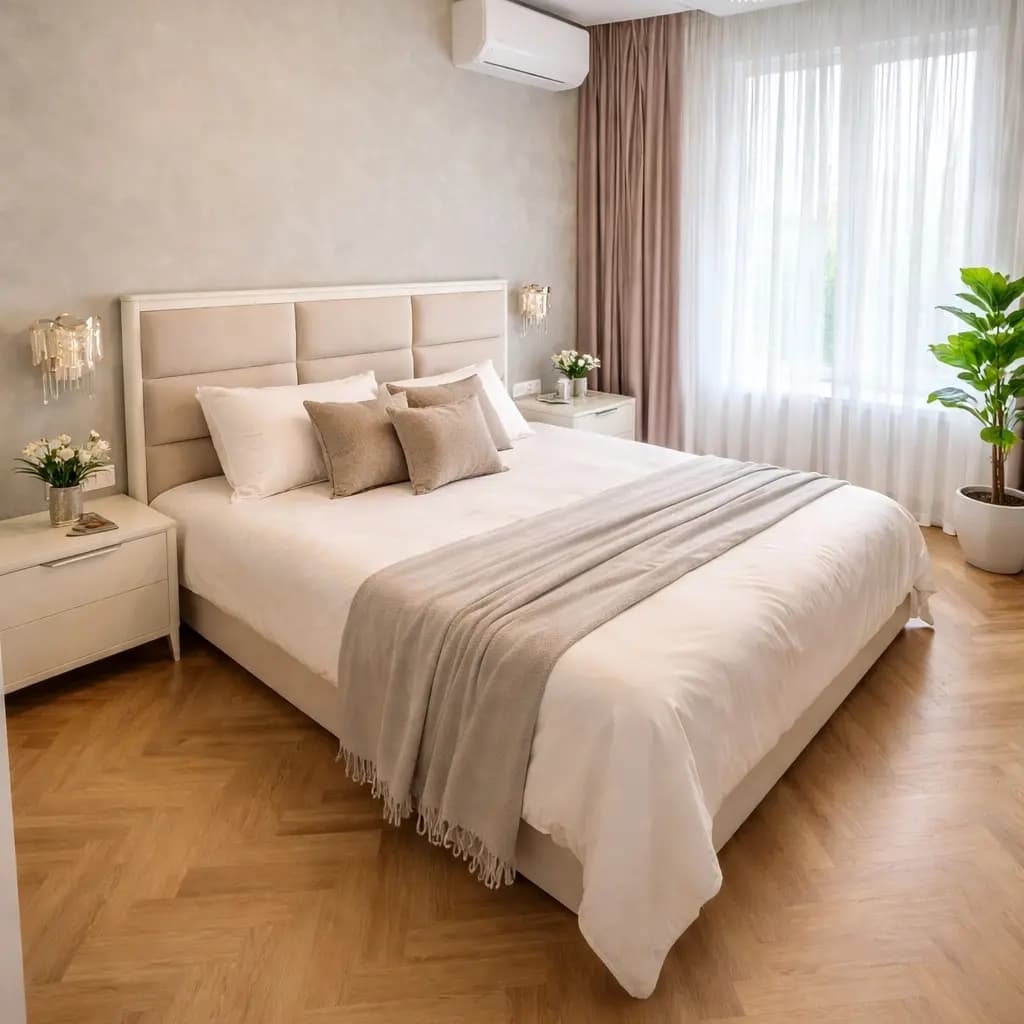
Traditional Family Room Virtual Staging FAQ
Does traditional staging still attract younger buyers?
Yes, when executed with restraint. Younger buyers who already chose a colonial or Georgian want the staging to honor the house, not fight it. The misstep is heavy floral upholstery, dark wood paneling, and dim rooms. A traditional family room with cream fabrics, a faded Persian rug, brass lighting, and clean window trim reads timeless to a thirty-five-year-old buyer. NAR home buyer surveys consistently show younger buyers value architectural character.
Can traditional and contemporary mix in the same listing?
Yes, and this is increasingly the brief I receive for transitional homes. The family room can lean traditional with a Lawson sofa, Persian rug, and pleated lampshades, while the kitchen and primary bedroom skew contemporary. The thread that ties the home together is consistent paint colors, hardware finishes, and floor stain. Mixing styles room to room only fails when each room screams its category. Subtle traditional and quiet contemporary coexist easily.
What is the right rug for a traditional family room?
A wool Persian-style rug, ideally an Heriz or Tabriz pattern, in faded reds, navy, and ivory. Size up: nine-by-twelve minimum for most rooms, ten-by-fourteen for larger spaces. Antique rugs photograph beautifully because the irregular wear reads authentic. New machine-made rugs in saturated jewel tones look stiff and fight the rest of the staging. Specify wool, not synthetic, in your virtual staging brief.
Should the fireplace be lit in the staged photo?
A subtle, real-looking fire renders well and adds warmth, particularly in fall and winter listings. Avoid the cartoon yellow flames some AI tools default to. If the fireplace is non-functional or the season is wrong, dress the firebox with a stack of birch logs or a screen instead. The mantel should always be styled: an oil landscape or mirror above, brass candlesticks, a small vessel, and one stack of books.
How do I keep traditional from looking dated?
Three rules. First, lighten the wall and trim colors. Old traditional rooms used cream walls and high-gloss white trim that yellow over time, so specify clean warm whites. Second, edit the pattern. Three patterns, sharing two colors, in three scales. Fourth pattern and the room reads grandma. Third, add one quiet contemporary element such as a sculptural ceramic lamp or a single abstract painting. The contrast keeps the traditional vocabulary feeling current rather than nostalgic.
Learn More
Helpful guides related to Traditional family room virtual staging.