

Transitional Family Room
Virtual Staging
Transform your family room with transitional virtual staging. Professional AI-powered results in 60 seconds.
Quick Answer
Transitional is the most-misused word in American interior design. Sellers and stagers alike apply it to anything that is not strictly modern or strictly traditional, which is to say, almost everything. Used precisely, the style describes a deliberate softening of traditional silhouettes, rolled-arm sofas with cleaner lines, classic wainscoting paired with contemporary art, brass or bronze hardware in a brushed rather than polished finish. Family rooms are the room where this style does the most commercial good. It appeals to the broadest cross-section of American buyers, from a thirty-five-year-old tech worker in Austin to a sixty-year-old empty nester in Charlotte, without alienating either. After more than a decade staging family rooms across the Sun Belt and Mid-Atlantic, I rely on AI virtual staging with transitional presets when the listing audience is genuinely broad and the agent cannot afford to bias the photos toward a single demographic. The render comes back with a furniture vocabulary that almost no buyer recognizes as either dated or trendy, which is exactly the strategic position a seller wants. Transitional family rooms photograph as warm, current, and likely to age well over the next ten years, all of which translates to confidence at the offer table.
Key Takeaways
- 1Transitional style features: Blend of traditional and contemporary
- 2Virtual staging costs just $0.10 per photo
- 3Results delivered in approximately 60 seconds
- 4Staged homes sell 30-50% faster (NAR)
Staging Insight
Transitional family-room staging hits hardest in markets where buyer pools span generations and tastes. Charlotte's Myers Park and Eastover, Raleigh's Five Points and Hayes Barton, Nashville's Belle Meade and Green Hills all reward this style. The architecture in these neighborhoods, brick Georgians, Tudors, and updated ranch homes, holds traditional bones that pure modernism fights. A transitional render respects the existing wainscoting and crown molding while introducing furniture that reads as 2020s rather than 1990s. In Atlanta, Buckhead and Morningside listings benefit from the same approach, especially when the seller has owned the home for two decades and is competing against new construction in surrounding submarkets. Texas markets like Dallas's University Park and Highland Park, Houston's West University and Bellaire, run similar buyer expectations. The style also carries weight in Northern Virginia, particularly McLean and Vienna, where federal-government buyers tend toward conservative taste with a desire for some contemporary edge. Match the AI render's color palette, warm whites, soft greiges, navy or olive accents, to the regional vernacular and the family-room photos pull above the listing's photographic peer set on Zillow and Compass.
Quick Answer
Transitional family room virtual staging uses AI to add blend of traditional and contemporary to empty room photos. Costs as low as $0.10 per image vs $2,000-5,000 for physical staging. Results delivered in under 60 seconds.
Key Takeaways
- 1Transitional style features: Blend of traditional and contemporary
- 2Perfect for family room spaces that need professional appeal
- 3AI processing delivers results in under 60 seconds
- 420,000x more affordable than traditional physical staging
How much does transitional family room virtual staging cost?
Transitional family room virtual staging costs as low as $0.10 per image with Agent Lens. This is up to 20,000x cheaper than physical staging which costs $2,000-5,000 for an entire home. Our AI delivers professional blend of traditional and contemporary staging in under 60 seconds.
About Transitional Style
Transitional staging bridges the gap between traditional warmth and contemporary simplicity, creating universally appealing spaces. This style balances classic furniture silhouettes with cleaner lines, neutral color palettes with subtle texture, and formal layouts with comfortable, livable pieces. The result is sophisticated yet approachable—ideal for reaching the broadest possible buyer pool. Transitional staging works exceptionally well in properties where the architecture blends period details with modern updates.. This style is perfect for family room spaces looking to attract buyers with a contemporary, refined aesthetic. Virtual staging allows you to showcase this design without the cost or logistics of physical furniture.
Transitional Design for Your Family Room
### What makes a sofa transitional rather than traditional
The primary distinction lives in the silhouette. A traditional sofa has a high rolled arm, deep skirting that hides the legs, and tufted or button-back detailing. A transitional sofa keeps a softer arm, often a track arm or a low rolled profile, but exposes turned wooden legs and skips the tufting. The upholstery should be a textured solid, slubbed linen, performance velvet in a muted tone, or a fine herringbone weave. Avoid bold patterns and anything chenille. Pair the sofa with a coffee table in a warm wood, walnut or stained oak, with either turned legs or a clean trestle base. Skip the glass-top tables and the ultra-modern slab-stone options. Both push the room out of transitional territory.
### The accent layer that makes the style work
Transitional family rooms succeed or fail on the secondary furniture and accessories. Specify two armchairs in a contrasting but harmonious fabric, ideally a small-scale geometric or a subtle stripe, in seats no larger than thirty inches wide. A wingback or barrel-back chair in a clean line photographs beautifully here. The rug should be a hand-knotted Persian or a vintage-look machine-made wool in muted tones, soft blues, faded reds, parchment, never bright white or pure gray. On the walls, a single oversized landscape painting or a grouping of three botanical prints in matching frames carries the traditional reference while keeping the composition contemporary. Lighting should include at least one ceramic table lamp with a linen shade, a brass picture light over the primary art piece if the home permits, and recessed cans or a single statement chandelier overhead. The fireplace mantel deserves attention, render two ceramic vases of different heights, a horizontal landscape painting or framed mirror leaning against the wall, and a single greenery sprig in the larger vessel. This composition reads as collected and intentional in MLS photos, which is the entire commercial point of choosing transitional staging in the first place.
Transitional Family Room Staging Benefits
Why Virtual Staging Works for Family Rooms
Transitional Family Room Staging Tips
Pick a sofa with exposed wooden legs
Skirted sofas read as traditional and date the room immediately. A sofa with turned or tapered wooden legs in walnut or stained oak signals transitional clearly. The leg height also makes the room feel airier in photos, which matters in family rooms where ceiling heights run lower than formal living spaces.
Mix one piece of vintage character
A single antique or vintage piece, an old leather club chair, a faded Persian rug, a brass-base lamp from the 1960s, anchors the room in time and prevents the transitional vocabulary from looking too catalog-perfect. The AI preset can render a vintage-feeling piece if you specify it explicitly in the brief.
Use brushed brass instead of chrome or matte black
Hardware finishes signal era faster than any other detail. Chrome and polished nickel push the room toward 1990s traditional. Matte black tips into modern farmhouse. Brushed brass or aged bronze sits squarely in transitional territory and works against both warm and cool wall colors without visual conflict.
Render drapery with a subtle pattern
Solid linen drapery is the safe transitional choice but a small-scale geometric or a subtle stripe in a muted tone elevates the render. Specify drapery panels with a faded blue and cream stripe or a tone-on-tone trellis pattern. Hang them floor-to-ceiling for the elongating effect that transitional rooms benefit from.
Style books on the coffee table, not objects alone
A stack of three to four hardcover books on the coffee table, topped with a single small ceramic object, communicates a reader-occupant better than a tray of decorative spheres. Choose books with cloth or leather spines in muted tones rather than bright dust jackets. This single styling choice separates transitional from generic builder-grade.
Stage Your Family Room in Transitional Style Today
Get professional transitional virtual staging in 60 seconds
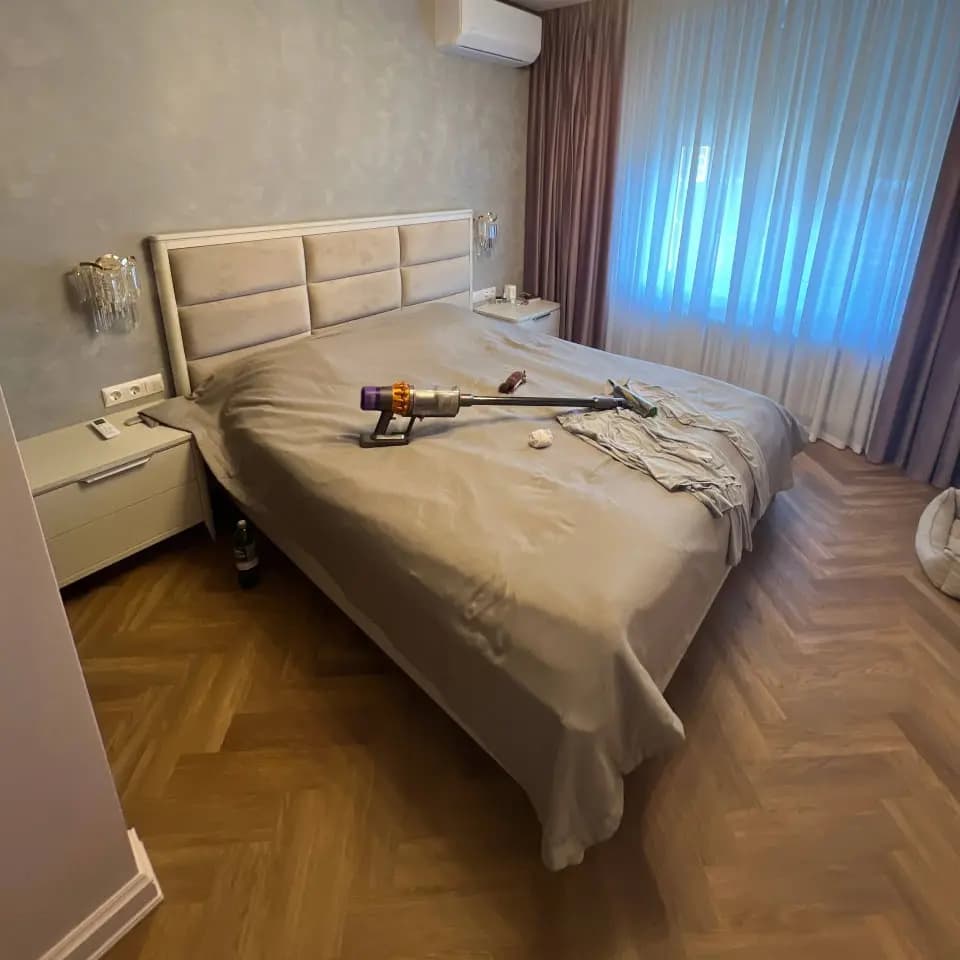
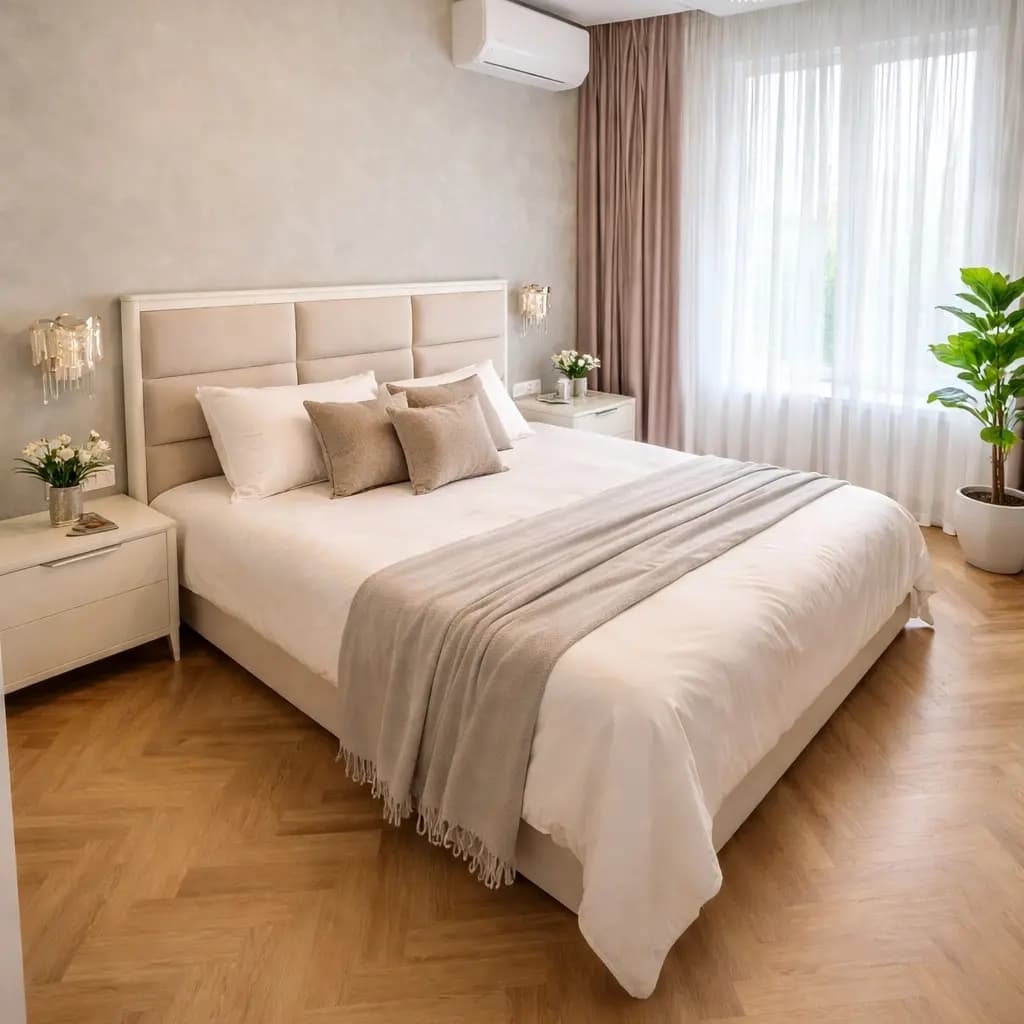
Transitional Family Room Virtual Staging FAQ
How is transitional different from contemporary or traditional?
Traditional uses heavy rolled arms, skirted sofas, button tufting, and ornate woodwork. Contemporary uses sharp lines, low profiles, lacquer, and chrome. Transitional sits between, taking the softness of traditional silhouettes and pairing it with cleaner finishes, exposed wood legs, and updated accessory choices. The result reads as warm and current without being trendy or stuffy.
Does transitional staging appeal to younger buyers?
Yes, more than agents often expect. Buyers under forty respond to the warmth and timelessness of transitional family rooms because the alternative they see most often, ultra-modern white-and-gray staging, has saturated the market. A transitional family room with a vintage rug, brushed brass lamps, and a track-arm linen sofa reads as design-literate and personal, which appeals across age groups.
Can transitional staging work for new construction homes?
Yes, and it often outperforms straight contemporary staging in builder homes. New construction tends toward neutral envelopes, white walls, light wood floors, that risk feeling flat in photos. Transitional furniture warms the space, introduces wood tones and subtle pattern, and gives buyers something to react to emotionally. It also helps the new home photograph as character-rich rather than blank.
What colors work best in a transitional family-room render?
Warm whites and soft greiges on the walls, paired with sofas in oatmeal, fog, or muted navy, and accent chairs in a contrasting but harmonious tone, faded olive, soft terracotta, dusty blue. Avoid pure white walls, bright primary colors, and anything in the trend-driven palette of the moment. The transitional family room should look as good in five years as it does this week.
How do I avoid a transitional render looking too safe or generic?
Add specificity. Specify one piece of vintage character, an antique leather chair, a Moroccan-inspired rug, a brass picture light over the art. Choose drapery with a subtle pattern rather than solid linen. Render the bookcase with actual books rather than decorative objects. These small choices push the render from catalog-generic into a room that feels like it belongs to a specific, thoughtful owner.
Learn More
Helpful guides related to Transitional family room virtual staging.