

Transitional Master Bedroom
Virtual Staging
Transform your master bedroom with transitional virtual staging. Professional AI-powered results in 60 seconds.
Quick Answer
Transitional is the workhorse style for primary suites in American resale. It bridges the gap between traditional architecture and the cleaner lines buyers respond to in agent photography. I lean on it constantly when a home has crown molding, paneled doors, and a fireplace, but the kitchen has been redone with shaker cabinets and quartz. The bedroom needs to acknowledge the bones of the house without committing fully to either era. Done well, a transitional primary suite reads polished and timeless. Done poorly, it reads like a furniture showroom from a few seasons ago. I see the second version too often on listings I tour for second opinions. The fix is not adding more—it is editing what is already there and making sure each piece earns its place in the frame. With aistage.pro, I can show a seller exactly how a transitional treatment will photograph against their existing trim and floors before they commit to the staging plan. That preview alone has saved several of my sellers from buying the wrong rugs or repainting unnecessarily. The result is a primary bedroom that feels considered, current, and broadly appealing across the buyer pool searching the MLS this week.
Key Takeaways
- 1Transitional style features: Blend of traditional and contemporary
- 2Virtual staging costs just $0.10 per photo
- 3Results delivered in approximately 60 seconds
- 4Staged homes sell 30-50% faster (NAR)
Staging Insight
In Charlotte's Myers Park and in Chicago's North Shore suburbs like Wilmette and Winnetka, transitional primary bedrooms work because the housing stock is genuinely transitional—original moldings paired with renovated baths and updated flooring. I match the staging to that hybrid reality. A grasscloth wallpaper on the bed wall, a low-profile platform bed in walnut with an upholstered headboard, and a pair of ceramic table lamps in a soft glaze. In Westchester County and Fairfield County colonials, I push slightly more traditional: turned spindle nightstands, a wool rug with a faded medallion, and a skirted bench. In Pacific Northwest craftsmans, the same transitional formula leans warmer—oiled walnut, ironstone lamp bases, a flat-weave rug. Texas markets like Houston's West University and Dallas's Lakewood expect a touch more polish: lacquered nightstands in a soft white, fluted detailing on the headboard, brushed brass hardware. Reading the regional vocabulary keeps the staging from feeling parachuted in.
Quick Answer
Transitional master bedroom virtual staging uses AI to add blend of traditional and contemporary to empty room photos. Costs as low as $0.10 per image vs $2,000-5,000 for physical staging. Results delivered in under 60 seconds.
Key Takeaways
- 1Transitional style features: Blend of traditional and contemporary
- 2Perfect for master bedroom spaces that need professional appeal
- 3AI processing delivers results in under 60 seconds
- 420,000x more affordable than traditional physical staging
How much does transitional master bedroom virtual staging cost?
Transitional master bedroom virtual staging costs as low as $0.10 per image with Agent Lens. This is up to 20,000x cheaper than physical staging which costs $2,000-5,000 for an entire home. Our AI delivers professional blend of traditional and contemporary staging in under 60 seconds.
About Transitional Style
Transitional staging bridges the gap between traditional warmth and contemporary simplicity, creating universally appealing spaces. This style balances classic furniture silhouettes with cleaner lines, neutral color palettes with subtle texture, and formal layouts with comfortable, livable pieces. The result is sophisticated yet approachable—ideal for reaching the broadest possible buyer pool. Transitional staging works exceptionally well in properties where the architecture blends period details with modern updates.. This style is perfect for master bedroom spaces looking to attract buyers with a contemporary, refined aesthetic. Virtual staging allows you to showcase this design without the cost or logistics of physical furniture.
Transitional Design for Your Master Bedroom
The transitional primary bedroom hinges on balancing one classical move with one contemporary move per major surface. That ratio keeps the room from drifting into either pure traditional or pure modern. I plan it room by room, starting with the bed wall and working outward.
### Bed Wall And Storage Pieces
For the bed, I pair a clean-lined upholstered headboard—shelter shape, light wing, or simple rectangle with a small nailhead detail—with traditional bedding cues. Layered shams in a tone-on-tone pattern, a quilt folded at the foot, and crisp white sheets. Nightstands should not match the headboard exactly; matched suites of furniture read dated. Instead, I specify nightstands in a wood tone that complements the floor, with one drawer and one open shelf, plus a ceramic or alabaster lamp on each. For the dresser wall, a low six-drawer dresser in walnut or painted oak with a framed mirror or a horizontal piece of art works across most floor plans. Skip the matching armoire. Buyers want closets; an armoire signals that the closet is undersized.
### Color, Texture, And Window Treatments
Color stays warm and quiet. Walls in a soft greige or warm white, trim in the same tone or one shade lighter, and the headboard in a complementary neutral. The accent comes through texture, not color: a chunky knit throw, a bouclé bench, a wool rug with a subtle pattern. I steer sellers away from accent walls in deep paint or busy wallpaper for the primary suite—buyers in transitional homes tend to read those as personal taste they will need to undo. Window treatments are floor-length linen panels in a tone that almost matches the wall, layered over woven roman shades for daylight control. The two together photograph as intentional and give the room depth without committing to a single era. For art, one large landscape or abstract above the bed, plus a single piece above the dresser, beats a gallery wall of small frames. Finish with a sisal-bound wool rug under the bed, large enough that the front legs of the nightstands sit on the rug. The composition reads grounded, the textures layer cleanly in photos, and the room photographs as the kind of primary suite buyers screenshot for their inspiration folder.
Transitional Master Bedroom Staging Benefits
Why Virtual Staging Works for Master Bedrooms
Transitional Master Bedroom Staging Tips
Mix One Classical And One Contemporary Move Per Surface
On each major surface—bed wall, dresser wall, window wall—pair one traditional cue with one modern cue. A shelter headboard with white percale linens. A walnut dresser with a horizontal abstract above. The mix reads transitional without slipping into period costume or sterile modern showroom.
Avoid Matching Furniture Suites
A bed, two nightstands, and a dresser in identical wood tone and finish reads dated. Vary the materials: upholstered headboard, walnut nightstands, painted dresser. The composition feels collected over time, which is the visual cue transitional buyers register as quality during showings and in agent photography.
Layer Linen Panels Over Woven Roman Shades
Floor-length linen drapery panels paired with woven natural-fiber roman shades give windows the depth transitional rooms need. Solo drapery feels too formal; solo shades feel unfinished. Together they photograph layered and intentional. Match drapery to wall color for a quiet effect that lets the bed wall do the heavy visual work.
Skip Accent Walls In Bold Paint Or Wallpaper
Transitional buyers tend to read deep accent walls and busy wallpapers as personal taste they will need to undo. A grasscloth in a soft neutral or a paneling treatment in the same wall color photographs as architectural and broad-appeal. Save bold paper for guest bedrooms or powder rooms where the commitment is lower.
Place A Sisal-Bound Wool Rug Under The Bed
A wool rug with a sisal or jute border under the bed bridges traditional and contemporary cues in one piece. Size it so the front legs of the nightstands rest on the rug. The texture grounds the bed wall in photos and reads as considered without competing with bedding patterns or wall art.
Stage Your Master Bedroom in Transitional Style Today
Get professional transitional virtual staging in 60 seconds
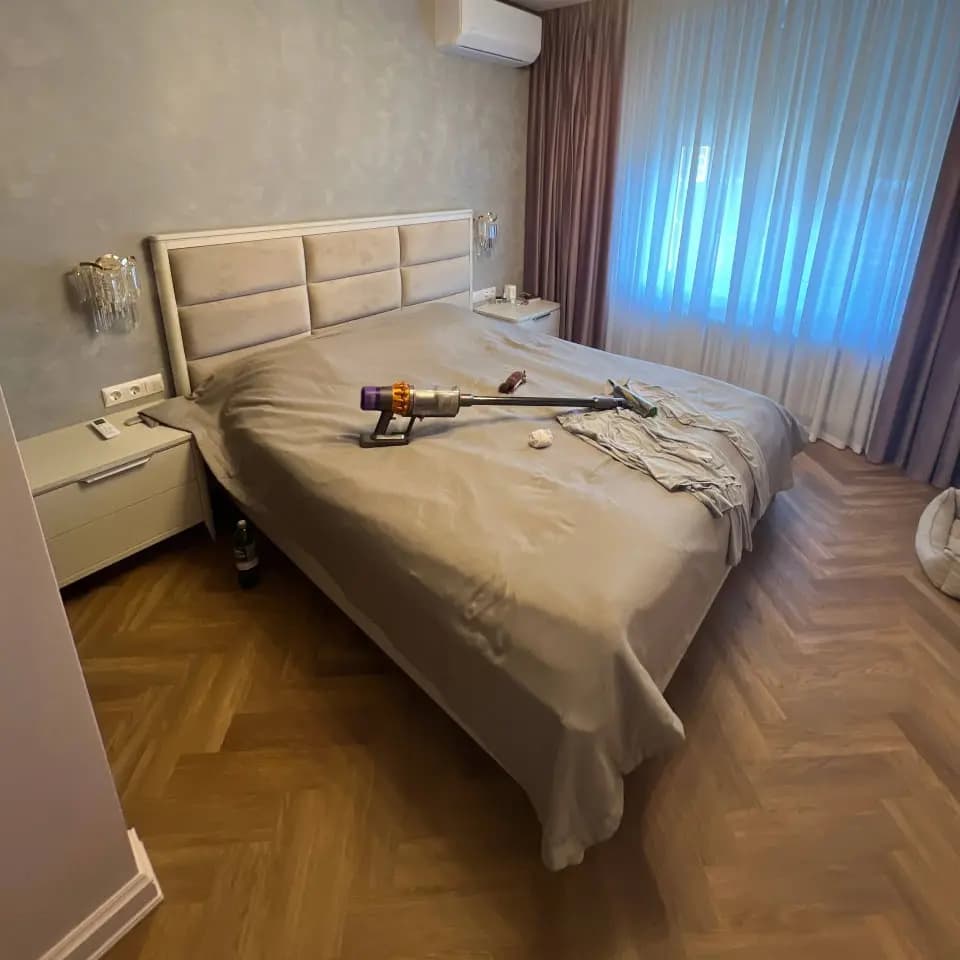
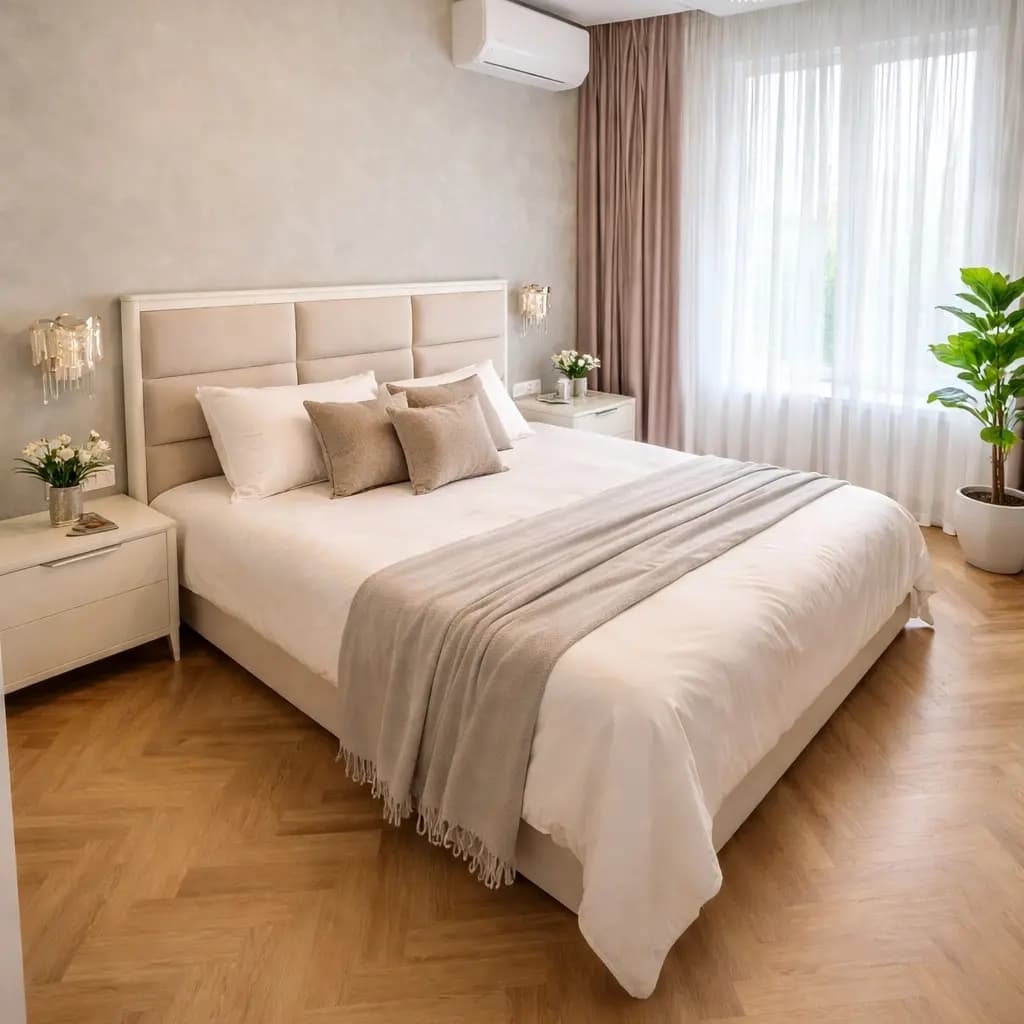
Transitional Master Bedroom Virtual Staging FAQ
What separates a transitional primary bedroom from a traditional one?
Transitional pulls the silhouettes cleaner and the palette quieter. A traditional bedroom might feature a four-poster bed, skirted nightstands, and patterned wallpaper. A transitional version of the same room uses a clean shelter headboard, walnut nightstands with simple hardware, and grasscloth or paint in a quiet neutral. The architectural details of the home remain the same; the staging just edits the visual noise so the room photographs current and appeals to a wider buyer pool.
Can I stage a transitional primary bedroom in a brand-new build?
Yes, and it often works better than a fully modern treatment. New construction with shaker cabinets, eight-inch baseboards, and traditional door styles reads transitional architecturally. Pushing the primary bedroom to pure modern creates a disconnect with the rest of the house. Transitional staging in a new build uses warmer woods, slightly more upholstery, and softer art choices than I would in a glass-and-steel contemporary, while keeping the silhouettes clean and the palette restrained.
How do I choose between transitional and modern for a primary suite?
Look at the home's architecture and the comparable sales in the area. If the house has crown molding, paneled doors, and a fireplace, transitional honors those elements. If the house has flush trim, slab doors, and floor-to-ceiling windows, modern is the right read. The neighborhood comp set matters too: in mature suburbs of Atlanta, Charlotte, or Boston, transitional outperforms modern. In contemporary developments around Scottsdale or Austin, modern often wins.
What artwork works best above a transitional bed?
One large piece, centered, in a frame that complements the headboard. I lean toward muted abstracts, soft landscapes, or quiet still lifes. The frame should be substantial without being ornate—a wide flat profile in walnut or painted in the wall color works across most rooms. Avoid gallery walls of small frames; they read busy in wide-angle photos and date the room. The single statement piece reads composed and gives photographers a clear focal point to anchor the shot.
Should the primary bedroom match the rest of the home's staging style?
It should harmonize, not match. A transitional primary suite can sit comfortably in a home with a slightly more contemporary kitchen or a more traditional formal living room. Continuity comes through palette, wood tones, and metal finishes rather than identical furniture silhouettes. I keep flooring, trim color, and one accent metal consistent across the staged spaces. The primary suite then reads as part of the same home while feeling distinct enough to function as its retreat.
Learn More
Helpful guides related to Transitional master bedroom virtual staging.