

Transitional Basement
Virtual Staging
Transform your basement with transitional virtual staging. Professional AI-powered results in 60 seconds.
Quick Answer
After fifteen years showing homes from Park Slope brownstones to Cape Cod ranches in Maryland, I can tell you the basement is where buyers either fall in love or quietly cross the property off their list. Transitional staging earns its keep down here because it threads a careful needle: warm enough to feel residential, restrained enough to read as flexible square footage. A finished lower level staged with a Lawson-arm sofa in oatmeal performance fabric, a walnut shaker-style media console, and a pair of slipcovered chairs in slate linen tells buyers this room serves a family, not just a hobby. Virtual staging matters in basements specifically because most listing photos taken in unfinished or sparsely furnished lower levels read as caves on the MLS thumbnail. The transitional vocabulary, Roman shades on egress windows, a low-pile wool rug in greige, brushed nickel sconces flanking a shiplap accent wall, gives an agent room to translate a 700-square-foot space into a media room, guest suite, or homework zone without committing the room to one identity. That ambiguity, handled well, is precisely what wins second showings in suburbs like Bethesda, Newton, and Wilmette where finished basements move the comp.
Key Takeaways
- 1Transitional style features: Blend of traditional and contemporary
- 2Virtual staging costs just $0.10 per photo
- 3Results delivered in approximately 60 seconds
- 4Staged homes sell 30-50% faster (NAR)
Staging Insight
Transitional basements perform differently across U.S. submarkets, and any agent staging one should account for the local building stock. In the Midwest, particularly Chicago suburbs like Oak Park and Evanston, basements are often deep with low ceilings and small hopper windows, so I stage with light-reflective surfaces, a creamy white Benjamin Moore Swiss Coffee on the walls, a brass arc floor lamp, and matte porcelain wood-look tile rather than dark engineered hardwood. In the Mid-Atlantic, walk-out basements in Northern Virginia townhomes typically offer better daylight, which lets me lean into deeper tones, espresso built-ins, a charcoal sectional, antique-brass picture lights. Coastal New England basements in towns like Marblehead or Westport carry moisture concerns, so my virtual stages avoid wall-to-wall carpet and feature area rugs over sealed concrete or LVP. In Texas markets like Plano and Frisco, basements are rare, but where they exist (typically in older Highland Park homes), buyers expect refined finishes that match the upstairs millwork. Tailor the staging vocabulary to the region's expectations, not a generic playbook.
Quick Answer
Transitional basement virtual staging uses AI to add blend of traditional and contemporary to empty room photos. Costs as low as $0.10 per image vs $2,000-5,000 for physical staging. Results delivered in under 60 seconds.
Key Takeaways
- 1Transitional style features: Blend of traditional and contemporary
- 2Perfect for basement spaces that need professional appeal
- 3AI processing delivers results in under 60 seconds
- 420,000x more affordable than traditional physical staging
How much does transitional basement virtual staging cost?
Transitional basement virtual staging costs as low as $0.10 per image with Agent Lens. This is up to 20,000x cheaper than physical staging which costs $2,000-5,000 for an entire home. Our AI delivers professional blend of traditional and contemporary staging in under 60 seconds.
About Transitional Style
Transitional staging bridges the gap between traditional warmth and contemporary simplicity, creating universally appealing spaces. This style balances classic furniture silhouettes with cleaner lines, neutral color palettes with subtle texture, and formal layouts with comfortable, livable pieces. The result is sophisticated yet approachable—ideal for reaching the broadest possible buyer pool. Transitional staging works exceptionally well in properties where the architecture blends period details with modern updates.. This style is perfect for basement spaces looking to attract buyers with a contemporary, refined aesthetic. Virtual staging allows you to showcase this design without the cost or logistics of physical furniture.
Transitional Design for Your Basement
Transitional staging in a basement works because the style itself is a compromise between traditional warmth and modern restraint, and basements ask for exactly that compromise. A purely modern basement, all concrete and black metal, reads as a commercial taproom on listing photos. A purely traditional one, with floral upholstery and oil-rubbed bronze chandeliers, fights the lower ceiling height and looks costume-y. Transitional sits in the middle and gives buyers permission to imagine.
### Choosing the Right Furniture Vocabulary
For the main seating arrangement, I specify a track-arm or Lawson-arm sofa, never a tufted Chesterfield (too formal) and never a low-profile Italian modular (too cold). Upholstery should be a textured neutral: oatmeal boucle, slate herringbone, or a warm greige performance weave. Pair it with a single leather accent chair in cognac or saddle, a round walnut coffee table with tapered legs, and an end table in painted white oak. The mix of woods and finishes is intentional, transitional rooms read as collected, not matched. For media walls, I avoid floating shelves with too many decorative objects and instead specify a built-in cabinet with shaker doors painted in a muted sage or soft black, depending on the surrounding palette.
### Lighting and Color Strategy
Basement lighting is where most virtual stages fall apart. Overhead recessed cans alone produce flat, shadowless renders that look institutional. I always layer in a brass or matte black arc floor lamp behind the sofa, two ceramic table lamps with linen drum shades on the end tables, and picture lights above any wall art. Wall color stays in the warm neutral family, Sherwin-Williams Accessible Beige, Benjamin Moore Pale Oak, or Farrow and Ball Skimming Stone. Trim should match the wall in a satin finish to avoid stark contrast that emphasizes low ceilings. For the rug, choose a hand-loomed wool blend in an abstract pattern with two or three muted tones, not a high-contrast geometric. These choices add up to a basement that photographs warm and lived-in without looking dated, which is the entire point of transitional design.
Transitional Basement Staging Benefits
Why Virtual Staging Works for Basements
Transitional Basement Staging Tips
Specify a Lawson-arm sofa, not a sectional
Buyers struggle to visualize traffic flow when a basement is staged with a U-shaped sectional. A standard 84-inch Lawson-arm sofa with a single chaise option leaves room for the eye to travel and makes the space feel larger on the MLS thumbnail.
Use shaker built-ins, not floating shelves
Floating shelves photograph poorly in basements because shadows fall awkwardly. Shaker-style built-in cabinetry in a muted sage, soft black, or warm white reads as permanent architecture and signals quality construction to buyers.
Layer three light sources minimum
An arc floor lamp, two table lamps with linen shades, and any existing recessed cans. Without layered lighting, the virtual stage will render flat and the basement will feel like a den from 1995 instead of a contemporary family room.
Choose a wool-blend rug in muted abstract
High-contrast geometric rugs date quickly and clash with transitional furniture. A hand-loomed wool blend in oatmeal, taupe, and ivory grounds the seating area and softens the acoustic profile that buyers feel even through photos.
Paint trim and walls in the same warm neutral
Stark white trim against beige walls emphasizes how low the basement ceiling actually is. Matching the trim to the wall in a satin finish, with colors like Pale Oak or Skimming Stone, lets the eye move uninterrupted and makes the space read taller.
Stage Your Basement in Transitional Style Today
Get professional transitional virtual staging in 60 seconds
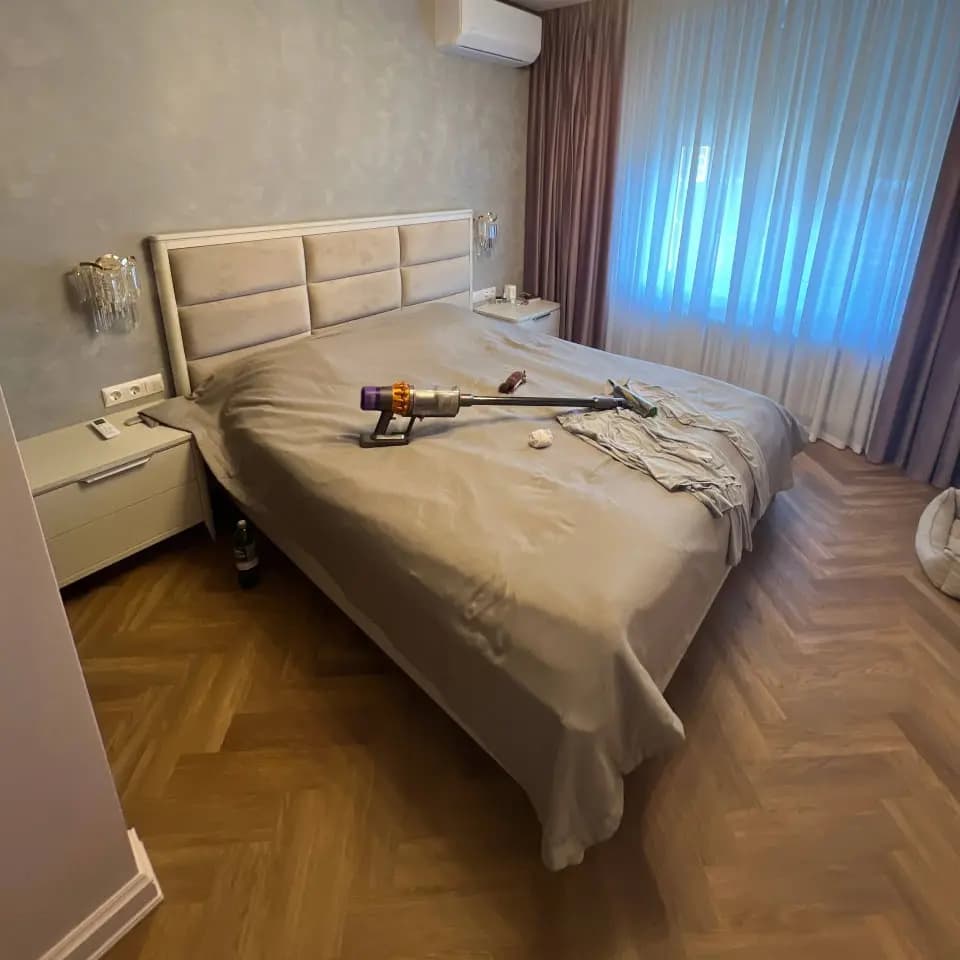
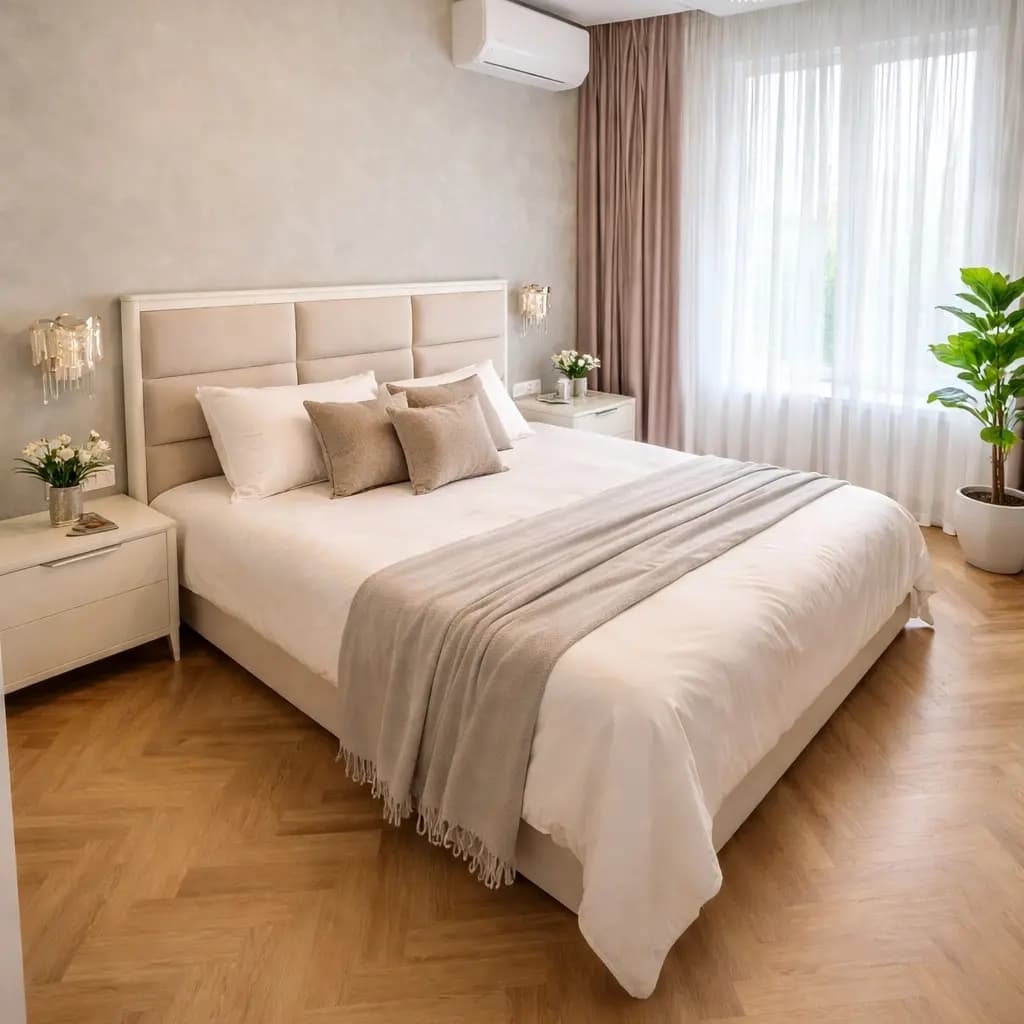
Transitional Basement Virtual Staging FAQ
Does transitional staging work for unfinished basements too?
Virtual staging can transform unfinished basements, but transitional vocabulary works best when the existing space has at least drywall, finished flooring, and basic lighting. For raw basements with exposed joists and concrete floors, the virtual stage has to construct too much, which buyers often perceive as misleading. In those cases, I recommend pairing virtual staging with clear MLS language indicating the photos show a buyer's potential build-out.
What ceiling height do I need for a transitional basement stage to look right?
Anything above seven feet works well. Below that, virtual stagers should avoid tall floor lamps, oversized art, and high-back wing chairs, which all emphasize the compression. For ceilings between seven and seven and a half feet, I specify low-profile Lawson sofas, horizontal art, and brass picture lights instead of pendants. The transitional palette itself helps disguise compressed proportions through color continuity.
Should I stage the basement as a media room or guest suite?
Stage it as a flex room with media leanings. A primary seating arrangement facing a built-in media wall reads as media room, but adding a small writing desk in the corner and leaving floor space open suggests guest, hobby, or work-from-home use. Transitional design supports this ambiguity better than modern (too rigid) or traditional (too tied to formal living).
How do small egress windows affect transitional basement staging?
Egress windows are required by code in most U.S. jurisdictions for any below-grade bedroom, and they often photograph as small dark rectangles. I specify Roman shades in a natural linen mounted above the window frame, which makes the window appear taller, and I add a brass picture light above any nearby art to balance the light source visually. Curtains that puddle on the floor should be avoided in basements.
What furniture finishes photograph best in transitional basement stages?
Mixed woods and metals. A walnut coffee table paired with a painted white oak end table, brass lamp bases, and matte black sconces creates the layered, collected feel transitional design depends on. Avoid all-matching sets, which read as showroom and signal to buyers that the staging is generic. The mixed palette also reproduces better in MLS compression where similar tones can blur together.
Learn More
Helpful guides related to Transitional basement virtual staging.