

Traditional Basement
Virtual Staging
Transform your basement with traditional virtual staging. Professional AI-powered results in 60 seconds.
Quick Answer
Traditional basements remain the right answer for a specific subset of US listings, and the agents who recognize the fit close more deals because of it. I stage traditional lower levels routinely in markets like Greenwich, the North Shore of Long Island, suburban Birmingham, Charleston's South of Broad, and the older Cleveland and Pittsburgh suburbs where center-hall colonials and Tudors dominate the streetscape. In these neighborhoods, a contemporary basement render reads as a mismatch with the upstairs vocabulary and can actually slow the listing because the buyer pool expects continuity. Done well, a traditional basement reads as a natural extension of a home with formal living spaces above. Coffered or beamed ceilings, raised-panel wainscoting, a hand-knotted Persian-style rug, and a leather chesterfield or English roll-arm sofa establish the language quickly. Virtual staging carries the load because few sellers maintain a fully furnished traditional basement; most have a treadmill, a tax-prep desk, and a folding table. We replace all of that with a coordinated furniture scheme rooted in the same 1900-1940 American and English design references that inform the upstairs trim package. The buyer registers the consistency immediately, and the lower level stops feeling like a leftover and starts feeling like a deliberate room.
Key Takeaways
- 1Traditional style features: Classic elegance, warm colors, timeless appeal
- 2Virtual staging costs just $0.10 per photo
- 3Results delivered in approximately 60 seconds
- 4Staged homes sell 30-50% faster (NAR)
Staging Insight
Regional traditional vocabularies vary more than agents typically acknowledge. New England traditional basements lean toward painted beadboard, navy-and-cream palettes, and a hooked wool rug; the reference is Federal and Greek Revival with a coastal accent. Mid-Atlantic Georgian homes in Chevy Chase or Princeton support a richer palette with library greens, walnut paneling, and a brass-tacked leather club chair. Southern traditional in Buckhead, Highland Park Dallas, or Old Metairie tolerates more pattern, including a chinoiserie wallpaper or a chintz draped lampshade in the corner reading nook. Midwest traditional, particularly in Lake Forest or Edina, balances Anglo-American references with a slightly cleaner trim profile. The mistake I correct most often is staging a New England traditional with Southern pattern density or vice versa. Match the regional vernacular and the staged photo will feel native to the neighborhood, not transplanted from a generic catalog page.
Quick Answer
Traditional basement virtual staging uses AI to add classic elegance, warm colors, timeless appeal to empty room photos. Costs as low as $0.10 per image vs $2,000-5,000 for physical staging. Results delivered in under 60 seconds.
Key Takeaways
- 1Traditional style features: Classic elegance, warm colors, timeless appeal
- 2Perfect for basement spaces that need professional appeal
- 3AI processing delivers results in under 60 seconds
- 420,000x more affordable than traditional physical staging
How much does traditional basement virtual staging cost?
Traditional basement virtual staging costs as low as $0.10 per image with Agent Lens. This is up to 20,000x cheaper than physical staging which costs $2,000-5,000 for an entire home. Our AI delivers professional classic elegance, warm colors, timeless appeal staging in under 60 seconds.
About Traditional Style
Traditional staging evokes a sense of established comfort and timeless sophistication, drawing inspiration from 18th and 19th century European décor. Rich wood tones, symmetrical furniture arrangements, and ornate details create an atmosphere of refined elegance. Popular elements include wingback chairs, formal dining sets, layered window treatments, and classic patterns like damask or toile. This style appeals to buyers seeking permanence and a connection to classical design principles.. This style is perfect for basement spaces looking to attract buyers with a contemporary, refined aesthetic. Virtual staging allows you to showcase this design without the cost or logistics of physical furniture.
Traditional Design for Your Basement
### Architectural Detail Drives The Photograph
Traditional basements live or die on architectural detail, and virtual staging is uniquely suited to add detail that would cost five figures to install physically. The base layer is wainscoting; I specify a 36-inch raised-panel wainscot in a creamy off-white below a wall above in a warm beige, soft sage, or library green depending on the regional brief. A coffered ceiling treatment in painted MDF reads as fully traditional even when applied digitally, and it solves the basement ceiling-height perception problem by adding a visual rhythm that compresses the read of any unevenness. Add a fireplace surround if a flue exists or if the home has a freestanding chimney; a traditional mantel with a marble surround in Calacatta or a New England slate transforms a corner into a focal point. Hardwood flooring, ideally a 5-inch white oak in a medium walnut stain laid over a vapor barrier, completes the architectural baseline. Skip carpet entirely; traditional rooms carry their pattern in the rug, not the broadloom.
### Furniture, Pattern, And The Comfortable Library Effect
The furniture program follows the architecture. A leather chesterfield or English roll-arm sofa in a warm cognac sets the tone; flank it with two upholstered club chairs in a small-scale plaid or a tone-on-tone stripe. A walnut or mahogany coffee table with a single brass-banded edge anchors the seating group, and a hand-knotted wool rug in a Heriz or Bidjar pattern covers the floor at 8x10 minimum. Lighting must layer. I specify a brass-and-glass flush mount centered in the room, two ceramic table lamps with linen shades on a pair of side tables, and one floor lamp behind a reading chair. Overhead recessed lighting stays dim and warm; the table and floor lamps do the photographic work. Accessories build the comfortable-library effect: a stack of leather-bound books, a brass desk accessory, a pair of bookends, and a single botanical print framed in dark wood. Drape one cashmere throw across the chesterfield arm. The photograph will read as a room that has been lived in for years, which is exactly the emotional appeal traditional staging is designed to deliver.
Traditional Basement Staging Benefits
Why Virtual Staging Works for Basements
Traditional Basement Staging Tips
Add architectural moldings before adding furniture
Traditional staging fails when expensive furniture sits in front of flat drywall. Brief the staging team to add a chair-rail and a raised-panel wainscot first, then build the furniture program against that backdrop. The molding is the single most credibility-building detail in a traditional basement render and sets up every subsequent furniture choice to land properly.
Pick one pattern and one solid for upholstery
Traditional rooms can absorb pattern, but only when the pattern is anchored against a solid. Pair a small-scale plaid on the club chairs with a solid leather chesterfield, or pair a tone-on-tone stripe on the sofa with solid leather chairs. Two pattern fabrics in the same view will fight each other in the photograph and undercut the otherwise calm composition the style demands.
Prioritize a hand-knotted-look rug
The rug carries enormous visual weight in a traditional basement. Specify a Heriz, Bidjar, or Sultanabad pattern in warm reds and navy or in softer rose and oatmeal for a gentler take. The rug should extend under the front legs of all seating and ideally fill the room within 18 inches of each wall. A skimpy rug shrinks the room's perceived footprint and pulls the staging toward casual rather than traditional.
Build a small bar nook rather than a full wet bar
A traditional basement benefits from a discrete drinks zone: a small mahogany or walnut credenza with a pair of decanters, three or four crystal glasses on a brass tray, and a leather-bound coaster set. The nook reads as gentlemanly and lived-in. A full-scale wet bar with quartz counters reads contemporary and fights the language. Edit toward the smaller gesture.
Frame art in dark wood, not gilt
Heavy gilt frames are easy to overuse and tip a traditional render toward formal-museum rather than residential. Default to dark walnut or mahogany frames around botanical prints, hunt scenes, or architectural studies. Keep the matting cream rather than pure white. The framing program should disappear into the room while quietly reinforcing the period vocabulary the rest of the staging establishes.
Stage Your Basement in Traditional Style Today
Get professional traditional virtual staging in 60 seconds
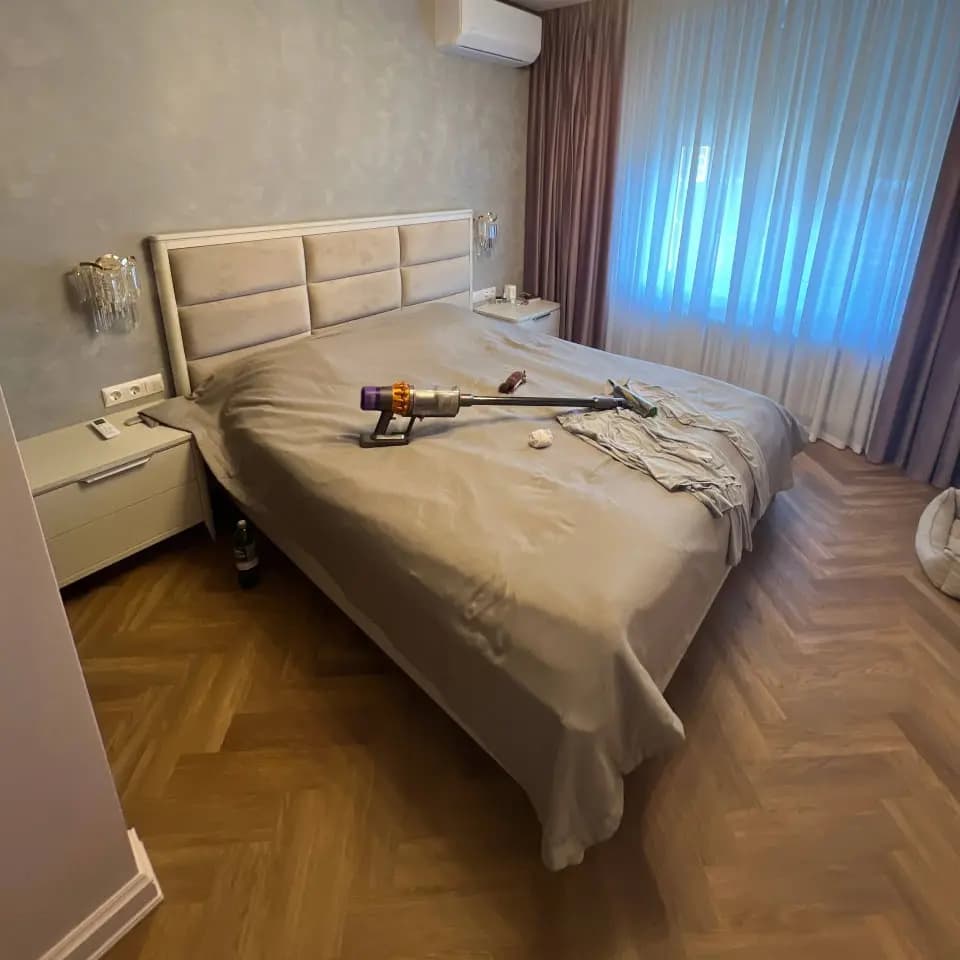
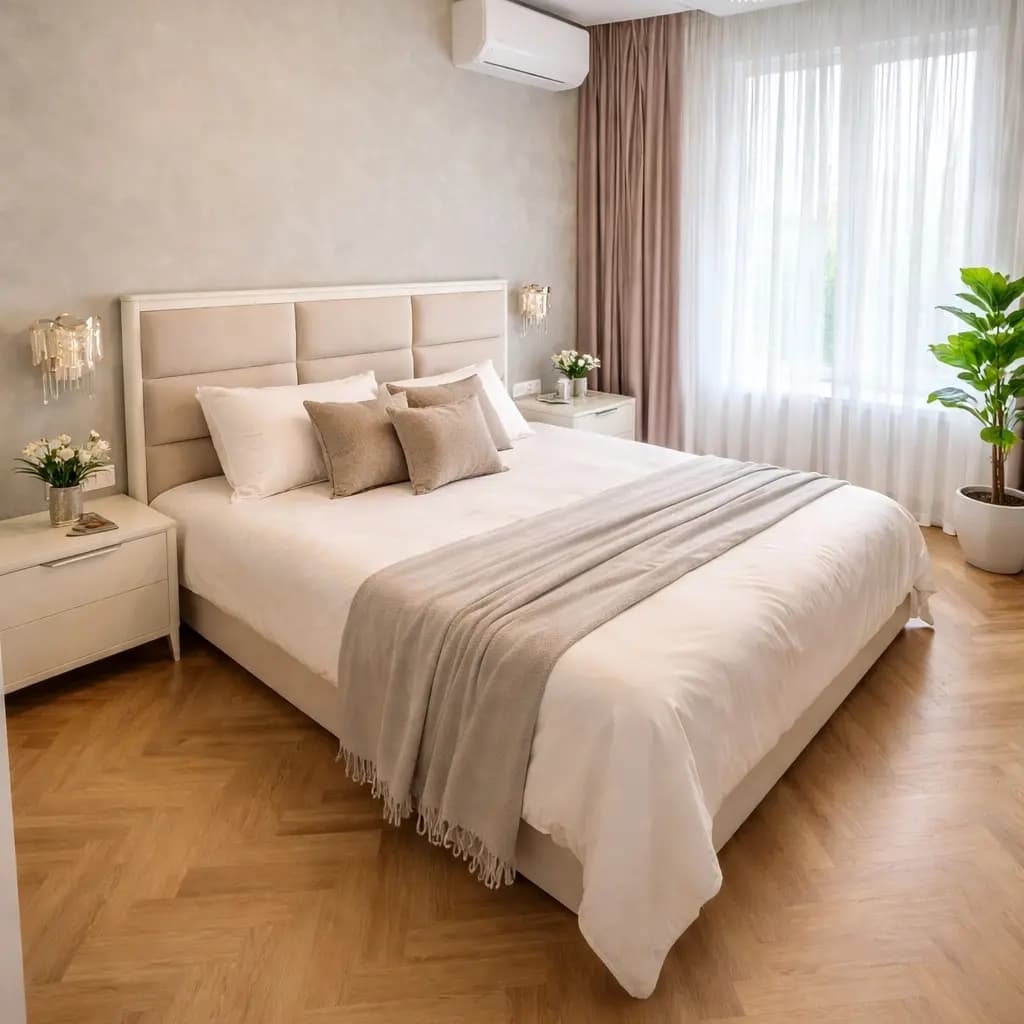
Traditional Basement Virtual Staging FAQ
Does traditional basement staging appeal to younger buyers?
It depends on the home and the neighborhood, not the buyer age alone. Younger buyers in established traditional neighborhoods like Wellesley, Bronxville, or Northwest DC actively seek traditional homes and respond well to coordinated traditional lower levels. The same buyers in Sun Belt new construction would not. Match the staging language to the architectural reality of the home and the local market expectation, and the buyer age question resolves itself.
Can I mix traditional and transitional in the same listing?
Yes, and it is often the right approach for older homes that have been partially updated. Stage the formal living and dining rooms fully traditional, then let the kitchen and primary bath read transitional. The basement can go either direction depending on the floor plan, but consistency within each level matters more than across levels. Buyers read homes by floor; mixed-style floors confuse the photograph.
What flooring works best for a traditional basement render?
Engineered hardwood in a 5-inch white oak with a medium walnut stain reads correctly across most regional traditional vernaculars. In New England coastal traditional, a painted wide-plank pine in a soft creamy white can substitute. Avoid laminate and avoid wall-to-wall carpet; both undercut the staging's authority. The flooring choice carries through every photograph and should not be the cheapest detail in the brief.
How do I handle a low basement ceiling in a traditional render?
Use a coffered ceiling treatment in painted off-white to introduce visual rhythm. The compartmentalized ceiling actually reduces the perception of low height because the eye reads the coffer pattern rather than the absolute ceiling plane. Pair with picture-frame moldings on the walls, layered warm lighting from table and floor lamps rather than overhead fixtures alone, and the photograph will absorb the low ceiling without making it the subject.
Is traditional staging fading in current US markets?
It is concentrating, not fading. Traditional remains the dominant language for established neighborhoods with strong architectural identity, and properties in those neighborhoods continue to reward traditional staging. What has faded is generic traditional staging applied indiscriminately to suburban tract homes built after 2000. Use the style where the architecture supports it and the listing will benefit; force it onto the wrong home and the photograph will fight itself.
Learn More
Helpful guides related to Traditional basement virtual staging.