

Traditional Guest Bedroom
Virtual Staging
Transform your guest bedroom with traditional virtual staging. Professional AI-powered results in 60 seconds.
Quick Answer
A traditional guest bedroom done well signals heritage rather than nostalgia. The distinction matters in markets where buyers are looking for homes with continuity, established neighborhoods, character architecture, multigenerational use cases. Traditional staging in a guest room communicates that this house has hosted family, will host more, and respects the rituals that come with extended visits. The execution leans on furniture with real silhouette, four-poster or sleigh beds in moderate height, a turned-leg dresser, framed botanical prints, layered bedding with hospitality cues like a folded quilt at the foot of the bed and a small glass on the nightstand. The trap is sliding into period costume. A traditional guest room should look like the family kept good furniture, refreshed the bedding regularly, and chose art with personal meaning. It should not look like a bed-and-breakfast set decoration. Pull back from heavy florals, ruffled shams, and matched fabric ensembles. Choose two or three traditional cues and balance them with a quieter palette than the catalog version of traditional would suggest. Cream walls, a single botanical print, a pair of brass lamps, a vintage rug with patina, an upholstered bench at the foot. Stop there. Buyers reading traditional staging want comfort and lineage, not commitment to a specific decade. Restraint reads as well-bred taste rather than themed décor.
Key Takeaways
- 1Traditional style features: Classic elegance, warm colors, timeless appeal
- 2Virtual staging costs just $0.10 per photo
- 3Results delivered in approximately 60 seconds
- 4Staged homes sell 30-50% faster (NAR)
Staging Insight
Traditional guest rooms read most powerfully in the heritage markets aistage.pro users serve. New England buyers in Wellesley, Concord, and Newton expect traditional with restraint, painted millwork, simple botanical prints, antique lamps, no fuss. Mid-Atlantic markets in Bryn Mawr, Chevy Chase, and Princeton respond to the same vocabulary with slightly more pattern, a small floral on a single euro sham, a striped throw, an heirloom rug. Charleston and Savannah buyers look for traditional with regional accents, four-poster beds, slim canopies, oyster-shell white walls, sweetgrass baskets. Atlanta intown listings in Druid Hills and Buckhead pull traditional warmer, walnut furniture, deeper saturation in the rug, a single oil portrait or landscape. Texas Hill Country and Dallas Highland Park lean into pattern, a quilt at the foot of every bed, layered curtains, a porcelain table lamp. The Pacific Northwest treats traditional gently, Portland's Eastmoreland and Seattle's Madison Park prefer painted furniture, soft palettes, restrained pattern. Read the listing's surrounding architecture and the typical buyer profile in the school district before committing to a traditional direction. Heritage staging that ignores regional accent reads as imported and never quite lands.
Quick Answer
Traditional guest bedroom virtual staging uses AI to add classic elegance, warm colors, timeless appeal to empty room photos. Costs as low as $0.10 per image vs $2,000-5,000 for physical staging. Results delivered in under 60 seconds.
Key Takeaways
- 1Traditional style features: Classic elegance, warm colors, timeless appeal
- 2Perfect for guest bedroom spaces that need professional appeal
- 3AI processing delivers results in under 60 seconds
- 420,000x more affordable than traditional physical staging
How much does traditional guest bedroom virtual staging cost?
Traditional guest bedroom virtual staging costs as low as $0.10 per image with Agent Lens. This is up to 20,000x cheaper than physical staging which costs $2,000-5,000 for an entire home. Our AI delivers professional classic elegance, warm colors, timeless appeal staging in under 60 seconds.
About Traditional Style
Traditional staging evokes a sense of established comfort and timeless sophistication, drawing inspiration from 18th and 19th century European décor. Rich wood tones, symmetrical furniture arrangements, and ornate details create an atmosphere of refined elegance. Popular elements include wingback chairs, formal dining sets, layered window treatments, and classic patterns like damask or toile. This style appeals to buyers seeking permanence and a connection to classical design principles.. This style is perfect for guest bedroom spaces looking to attract buyers with a contemporary, refined aesthetic. Virtual staging allows you to showcase this design without the cost or logistics of physical furniture.
Traditional Design for Your Guest Bedroom
### Choose comfort cues over period correctness
Traditional guest rooms work in modern listings when the styling chooses comfort cues over period costume. The cues that matter, a folded quilt at the foot of the bed, a small carafe and glass on the nightstand, a stack of two real books, a wool throw draped over a reading chair, a vase of cut greenery, signal hospitality rather than reproduction. The cues that backfire, ruffled shams, dust ruffles, matching fabric ensembles, stuffed animals on the bed, signal a theme rather than a home. Choose three comfort cues per guest room and resist adding a fourth. Buyers in heritage markets are sophisticated. They have seen the over-decorated traditional version and consciously want something quieter, more confident, more genuinely lived-in. Photographers can bring out comfort cues with shallow depth of field on the carafe or the book stack, which reads emotionally on listing pages and makes the room memorable.
### Pull the palette quieter than instinct suggests
The single largest mistake in traditional guest staging is over-saturation. Catalogs sell traditional with deep reds, navies, hunter greens, and mahogany finishes because saturation photographs strongly in studio settings. In a real guest bedroom, those choices crowd the room and date the listing instantly. Pull the palette quieter, walls in soft cream or warm white, bedding in ivory and dove with one quiet accent of muted ink blue or sage, drapery in a gentle stripe or a quiet solid. The rug can hold deeper color, an old Persian or Anatolian piece in faded reds and blues, and the room will absorb that intensity correctly because the rest of the palette is restrained. Furniture finish matters more than buyers consciously notice. Choose painted finishes, soft white nightstands, a pale grey dresser, or quietly stained wood, walnut with a satin finish, oak in a medium honey tone, rather than glossy mahogany or cherry. The polished period finishes read as imported antique store rather than family heirloom. Lamps should have ceramic or brass bases with linen shades, not pleated silk. Hang one or two framed botanical or architectural prints rather than a wall of small prints. Traditional restraint photographs as taste; traditional excess photographs as performance, and contemporary buyers consistently prefer the former.
Traditional Guest Bedroom Staging Benefits
Why Virtual Staging Works for Guest Bedrooms
Traditional Guest Bedroom Staging Tips
Add a folded quilt at the foot
A simple folded quilt or coverlet at the foot of the bed is the single most powerful traditional comfort cue. Choose a heritage textile, a faded floral, a hand-stitched pattern, a soft vintage piece, in a quiet color. The quilt signals hospitality and continuity better than any styling object.
Skip the canopy unless ceilings are tall
Four-poster beds work in rooms with ceilings nine feet or higher. Below that, a canopy crowds the eye and makes the room feel claustrophobic in photography. In tighter rooms, choose a turned-leg bed without posts and let the headboard do the traditional work without the vertical pressure.
Use one botanical print, framed simply
A single oversized botanical or architectural print in a slim oak or matte black frame above the bed reads as confident traditional. Multiple small prints or a gallery wall pulls the room into themed territory. Choose subject and frame carefully and let the single piece anchor the wall.
Layer drapery with care
Lined linen drapery in cream or oat works in nearly every traditional guest room. Avoid heavy patterned drapery, swags, or jabots, all of which date the room instantly. Hang the rod a few inches above the window casing and let the panels just kiss the floor for the cleanest traditional read.
Bring in one heritage rug
A vintage Persian, Turkish, or Anatolian rug grounds the traditional guest room without committing the rest of the staging to deep saturation. Choose a piece with visible patina and avoid bright reproduction rugs. The wear in the rug carries the heritage signal that the rest of the room can stay quiet around.
Stage Your Guest Bedroom in Traditional Style Today
Get professional traditional virtual staging in 60 seconds
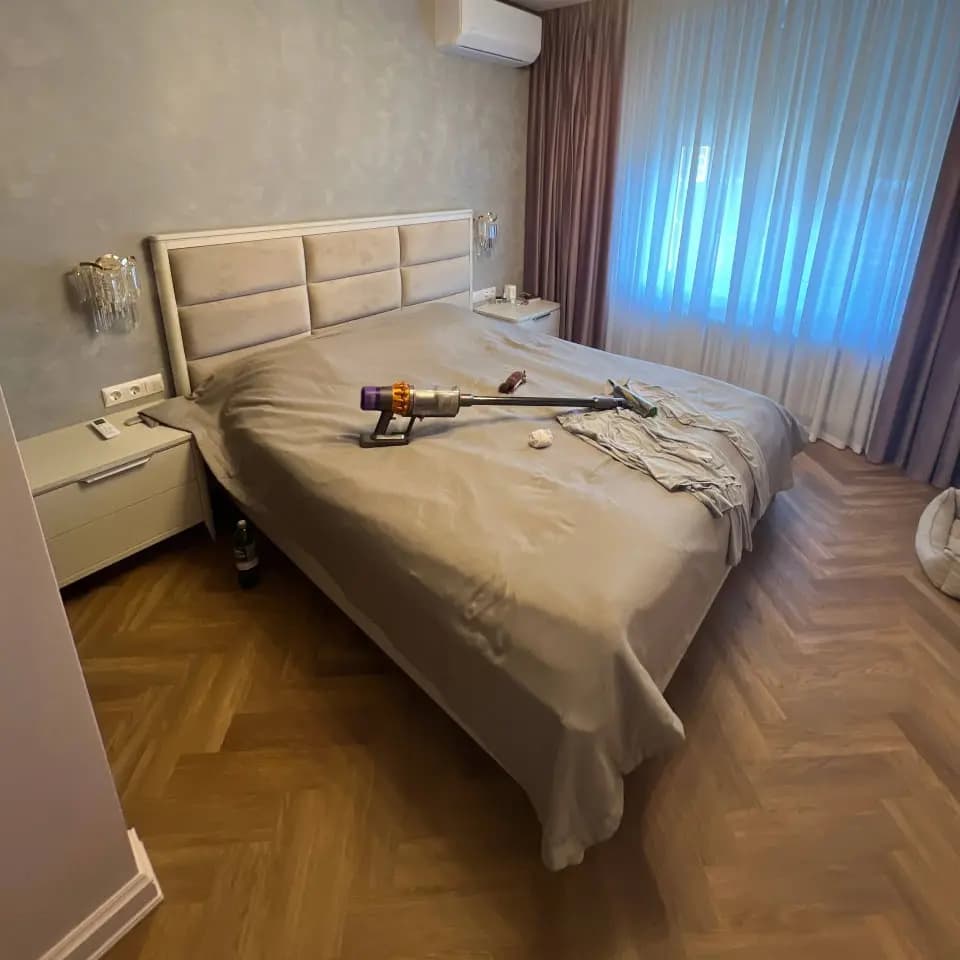
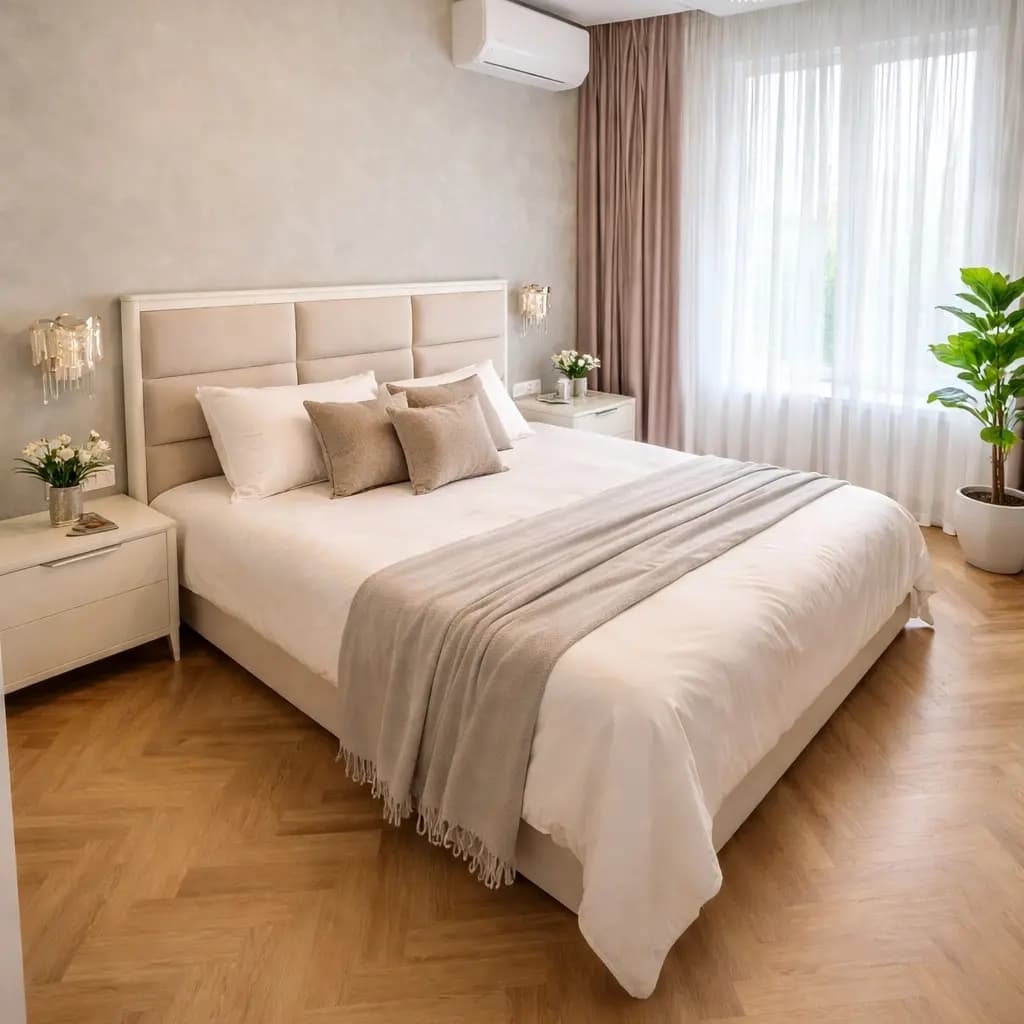
Traditional Guest Bedroom Virtual Staging FAQ
Does traditional staging still appeal to younger buyers?
Yes, when executed with restraint. Younger buyers tour heritage homes and respond to traditional staging that signals quality and continuity rather than period reproduction. The version that fails is heavily saturated, ruffled, matched-fabric traditional that reads as their grandparents' guest room. The version that succeeds reads quieter, fewer pattern moves, simpler bedding, less furniture, and uses one or two real heritage objects, an antique chair, a vintage rug, an oil painting, to anchor the room. Younger buyers often appreciate genuine heritage elements more than older buyers who lived through the catalog traditional era.
How does traditional differ from transitional in a guest bedroom?
Transitional simplifies traditional silhouettes and reduces pattern, leaning toward neutral palettes with traditional proportions. Traditional embraces silhouette and selective pattern more openly, a turned-leg dresser, a botanical print, a striped throw, a faded vintage rug. Both styles can stage a guest room well in heritage markets, but traditional reads warmer and more rooted while transitional reads cleaner and more current. Choose traditional when the architecture has strong period features and the surrounding listings lean classic. Choose transitional when the home is mixed in feeling or the buyer pool skews younger and design-conscious.
Should the guest bed in a traditional staging include a dust ruffle?
Generally no. Dust ruffles, particularly ruffled or pleated versions, date traditional staging immediately. If the bed frame is a platform or has a clean rail, no dust ruffle is needed. If the box spring is exposed and the look is wrong without coverage, choose a flat-tailored bed skirt in a quiet linen or cotton that hangs straight to the floor. The bedding should look layered and intentional rather than dressed in costume. Most contemporary buyers strip dust ruffles mentally on first look, so removing them simplifies the read.
How can virtual staging help with traditional bedrooms?
AI virtual staging through aistage.pro can preview multiple traditional directions, painted versus stained furniture, more or less pattern, before committing physical dollars. The risk is that AI tends to default to over-decorated traditional unless prompts explicitly request restraint. Write prompts that specify quiet palettes, single botanical print, simple bedding, no canopies under nine-foot ceilings. Compare two or three rendered variants against recent comparable listings in the neighborhood and choose the version that reads most current. The tool shines for testing drapery weight and rug placement before ordering anything physical.
What lighting suits a traditional guest bedroom?
Traditional reads best with three light sources at different heights, a flush-mount or simple chandelier overhead, a pair of ceramic or brass lamps on the nightstands with linen shades, and natural daylight through lined linen drapery. Avoid recessed cans as the dominant light, they flatten traditional textures and undercut the warm read. Bulb temperature should sit around two thousand seven hundred kelvin across all sources. Consistent warmth lets the layered fabrics and quiet palette photograph correctly. Mixed temperatures shift colors on camera and the carefully chosen traditional palette goes off, which reads as cheap rather than considered.
Learn More
Helpful guides related to Traditional guest bedroom virtual staging.