

San Francisco vs San Jose: Which city is better for real estate?
San Francisco and San Jose share a regional economy and almost nothing else in housing stock. San Francisco fits about 800,000 residents into 47 square miles of Victorian, Edwardian, and post-2010 mid-rise condos. San Jose spreads roughly one million people across 180 square miles of postwar ranch, Eichler tract, and 1990s-2010s suburban infill. Fifteen years bouncing between the two markets for relocation clients taught me that buyers treat them as different cities, not two faces of the Bay Area. San Francisco listings live and die on era authenticity: a Cole Valley Edwardian wants restored crown molding and a tasteful nod to the original parlor. San Jose listings live and die on functional flow: an Eichler in Willow Glen needs the atrium honored, and a 1970s ranch in Almaden Valley needs an updated kitchen photographed cleanly. The buyer pools differ too. San Francisco draws single and DINK tech buyers, biotech professionals, and a strong international cohort. San Jose pulls dual-income engineering families with school-zone priorities and a multigenerational segment that's grown sharply. Virtual staging closes the visualization gap for both, but only when the dialect matches the metro's prevailing buyer pool. Lot geometry pushes staging in opposite directions too. SF's narrow 25-foot frontages reward layered interior staging, while San Jose's larger lots support backyards staged with full dining patios and play zones for school-aged children.
San Francisco vs San Jose
Real Estate Market Comparison
Thinking about buying or selling property? Compare the San Francisco, CA and San Jose, CA real estate markets side by side — from median prices and days on market to top neighborhoods and staging strategies.
Migration Insight
San Jose is a city of microneighborhoods, and lumping it together produces weak marketing. Willow Glen behaves like a small-town main street, with tree-lined streets, walkable Lincoln Avenue retail, and a buyer pool that values original Eichler atriums and Spanish Colonial bungalows. Almaden Valley pulls engineering families chasing top-rated schools like Bret Harte and Leland. Cambrian Park and Cupertino-adjacent pockets attract multigenerational buyers, which means staging should accommodate a primary suite plus a flexible second primary or in-law setup. San Francisco runs on entirely different signals. Noe Valley's stroller-heavy mid-block geometry rewards staged kid-friendly upper levels. Pacific Heights inventory expects formal dining and a real entertaining zone. SOMA and Mission Bay condos serve biotech and tech buyers who want a clean home office with a real door. Commute calculus diverges: San Jose buyers ask about the 85 and 87 to Apple, Nvidia, and Cisco campuses. San Francisco buyers ask about Caltrain to Stanford or shuttle stops near 24th and Mission. Lot size also reframes staging strategy. San Jose's typical 6,000 to 8,000 square foot lot supports a real backyard with a dining patio and lawn, while San Francisco's narrow lots reward tight, intentional rear-yard staging that reads as a curated garden rather than an entertaining zone meant for daily summer gatherings.
- Pacific Heights
- Noe Valley
- Marina District
- Russian Hill
- SoMa
- Willow Glen
- Rose Garden
- Almaden Valley
- Cambrian
- Los Gatos
San Francisco is the most expensive major market in the US with median prices over $1.3M. At these price points, professional staging is non-negotiable — buyers expect flawless presentation. Virtual staging delivers luxury presentation at a fraction of traditional staging costs.
San Jose sits at the heart of Silicon Valley with the highest median price of any major US city. Tech-savvy buyers expect impeccable, modern staging. Properties sell in weeks, making instant virtual staging essential for agents who need to list fast.
Market Dynamics: San Francisco vs San Jose
### Architectural Stock And Era Honesty
The two metros draw from radically different architectural pools. San Francisco's resale inventory is dominated by Victorian and Edwardian single-family and two-unit buildings, Marina-style stucco from the 1920s and 1930s, and mid-rise concrete-glass condos in Mission Bay and Dogpatch built since 2010. San Jose's stock skews postwar and suburban: 1950s and 1960s ranch homes in Willow Glen and Cambrian, Eichler tracts with signature atriums and post-and-beam construction in Fairglen and Fairmeadow, and 1990s-2010s tract development in Evergreen and Berryessa. According to RESA, staged homes sell faster, and the data is even stronger when the staging vocabulary matches the architecture. A Cole Valley Edwardian staged with mid-century walnut feels confused. An Eichler in Willow Glen staged with traditional wingback chairs feels wrong. NAR member surveys show that most seller agents say staging significantly decreases time on market when the styling matches the property's bones. The implication for both metros is concrete: agents need access to era-appropriate furniture libraries, and that's where virtual staging beats physical staging on cost and flexibility, especially when a single listing photo set has to serve relocation buyers, local move-ups, and investor audiences simultaneously.
### Buyer Demographics And Listing Strategy
San Francisco buyers skew younger, more often single or DINK, and heavily concentrated in tech, biotech, finance, and venture capital. The U.S. Census Bureau confirms San Francisco County has one of the smaller average household sizes among major California counties. Santa Clara County runs larger, with dual-income engineering families, a sizable South Asian and East Asian buyer cohort, and a growing multigenerational segment. Listing strategy follows. SF condos benefit from staged home office vignettes, defined dining zones in open-plan units, and warm lighting that counters the fog. San Jose listings benefit from staged primary suites that read as parental retreats, secondary bedrooms staged for school-aged children, and clearly delineated office or in-law setups. Zillow Research has documented divergent absorption rates between the two metros across cycles, with San Jose suburban inventory absorbing more steadily during family-formation peaks and San Francisco condo inventory tracking more closely with tech hiring cycles. Staging that anticipates the buyer profile converts faster than generic templates and earns trust with relocation buyers comparing both metros.
Key Takeaways
Price difference: $70,000 (5%)
San Francisco ($1,350,000) is $70,000 more affordable than San Jose ($1,420,000).
Speed difference: 5 days
Homes in San Jose sell in 25 days on average vs 30 days in San Francisco.
More affordable: San Francisco, CA
With a median price of $1,350,000, San Francisco offers more entry-level options for first-time buyers and investors.
Faster market: San Jose, CA
At 25 days on market, San Jose moves faster. Sellers in this market benefit most from being listing-ready on day one — virtual staging delivers in under 60 seconds.
Stage Your Listing in Either Market
Transform empty rooms into stunning staged photos in 60 seconds. Starting at $0.10 per image.
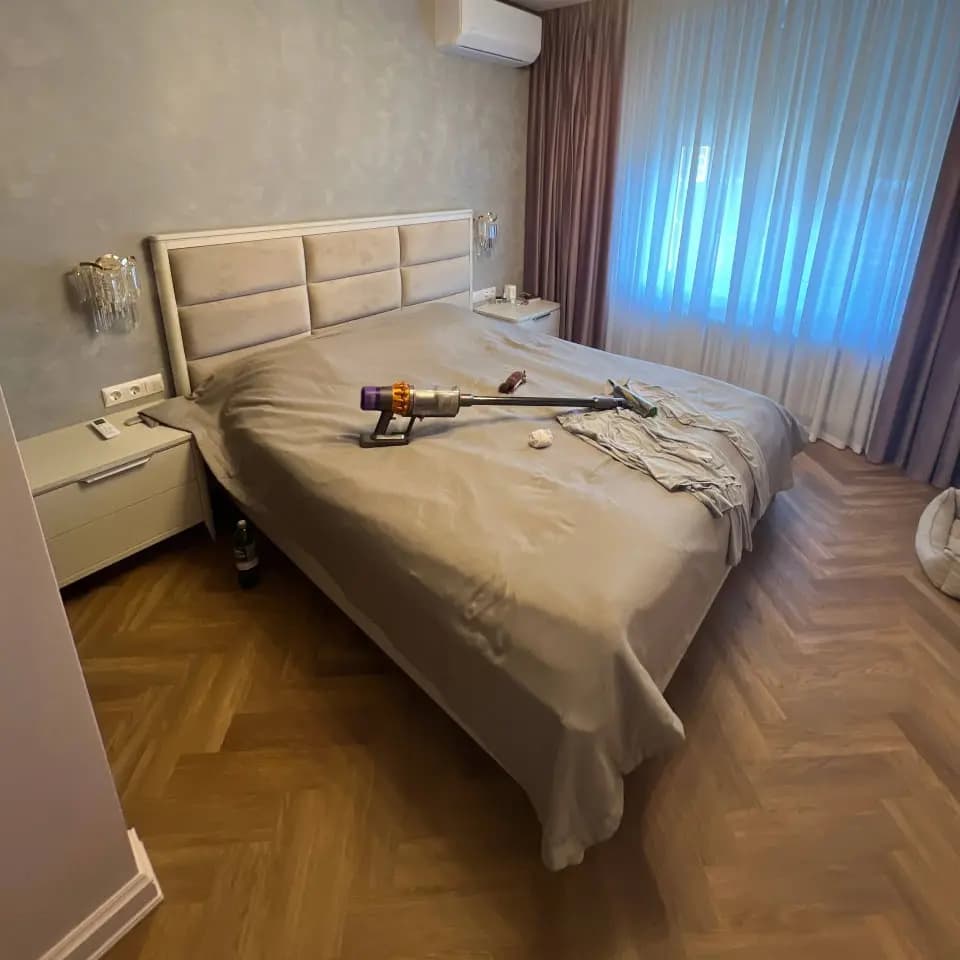
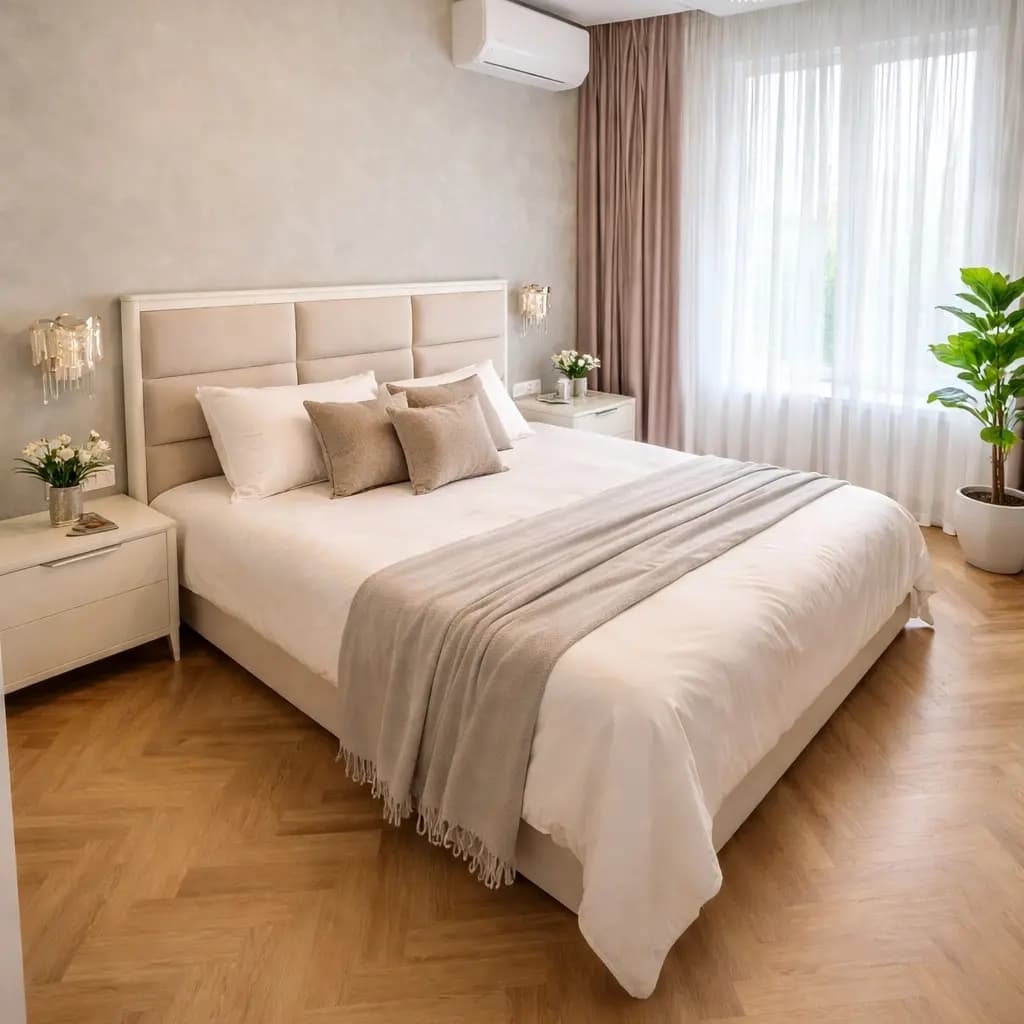
Deciding Between San Francisco and San Jose
Honor Eichler Atriums In San Jose
An Eichler atrium is the property's signature, not a problem to solve. Stage it with a single bench, a planted accent, and minimal furniture so the post-and-beam geometry photographs clearly. Avoid filling it with seating that obscures the original architecture.
Restore Period Detail Virtually In San Francisco
If a Cole Valley Edwardian has been over-modernized, virtual staging can reintroduce period-appropriate seating, a restored mantel surround, and bay-window vignettes. Buyers in District 5 and District 7 reward era authenticity heavily, so lean into it visually.
Stage A True Home Office In Both Metros
SOMA condos and Willow Glen ranches alike benefit from a staged home office with a real desk and a single ergonomic chair. Tech buyers in both metros scrutinize this room. A token nook or a desk shoved against a hallway wall hurts more than it helps.
Match Color Temperature To Light Conditions
San Francisco listings need warmer interior tones to counter fog-flattened daylight. San Jose listings can run cooler because the valley gets stronger direct sun. Adjust virtual staging color grading accordingly so the photos feel inviting, not clinical.
Stage Multigenerational Flex In Santa Clara County
Cambrian Park, Cupertino-adjacent, and Almaden Valley buyers often shop for multigenerational setups. Stage a downstairs bedroom or detached unit as a clearly functional second primary or in-law suite, not as a guest bedroom afterthought.
San Francisco vs San Jose FAQ
Is San Francisco or San Jose more affordable for homebuyers?
San Francisco is more affordable with a median home price of $1,350,000 compared to San Jose's $1,420,000 — a difference of $70,000 (5%). However, affordability also depends on local incomes, property taxes, and cost of living. Both markets offer opportunities for buyers at different price points.
Which market is hotter, San Francisco or San Jose?
San Jose is currently the faster-moving market with homes averaging 25 days on market, compared to 30 days in San Francisco. A shorter time on market typically indicates stronger buyer demand and more competition. Agents in San Jose need to list quickly — virtual staging helps get listings photo-ready in minutes, not weeks.
Should I stage my home when selling in San Francisco or San Jose?
Absolutely — staged homes sell faster and for more money in both markets. In San Francisco (median $1,350,000), even a 1-2% price increase from staging can mean thousands more at closing. In San Jose (median $1,420,000), the same applies. Virtual staging with Agent Lens costs just $0.10 per image, making it a no-brainer for agents in either market.
How does virtual staging help in competitive markets like San Francisco and San Jose?
Virtual staging transforms empty rooms into beautifully furnished spaces in under 60 seconds. In competitive markets, first impressions matter — 97% of buyers start their search online. Staged listing photos get more clicks, more showings, and higher offers. At $0.10 per image, virtual staging delivers professional results at a fraction of physical staging costs ($2,000-$5,000+).
How different are San Francisco and San Jose buyer profiles?
Substantially. San Francisco draws younger, more often single or DINK tech and biotech buyers concentrated in District 5, District 7, and Mission Bay condos. San Jose pulls dual-income engineering families with strong school-zone priorities and a growing multigenerational cohort in Cambrian, Almaden, and Evergreen. Stage to the buyer profile, not a generic Bay Area template, for measurably better conversion rates.
Which metro has more architectural variety in resale inventory?
San Francisco offers more pre-war architectural variety with Victorians, Edwardians, and Marina-style stucco. San Jose runs heavier on postwar ranch and Eichler tract homes, with Willow Glen and Fairglen as standout pockets. Both metros include modern condo and tract development, but the era mix differs sharply, which means staging libraries need to match each metro's dominant inventory carefully and avoid imposing a single Bay Area template across both markets.
Does virtual staging work for Eichler homes in San Jose?
Yes, when the furniture library includes mid-century post-and-beam-appropriate pieces. Eichlers reward low-profile sectionals, walnut credenzas, and minimal accessory clutter. The atrium should be staged sparingly so the original architecture reads clearly. Generic transitional virtual staging fights the bones and undermines the property's signature appeal to design-aware buyers, who often pay a premium specifically to acquire an authentic Eichler in restored condition with original detailing intact.
How should home office staging differ between the two metros?
Both metros benefit from staged home offices, but the spatial expectation differs. San Francisco condos in SOMA and Mission Bay need a small, well-lit office with a real desk and a door if possible. San Jose ranches and Eichlers can support a larger dedicated office with a credenza and meeting chair, and Almaden Valley buyers often expect that scale of room layout.
What lighting adjustments help photos in each metro?
San Francisco listings often suffer from flat, fog-diffused daylight that washes out interior color. Use warmer interior bulbs and stage with lamp-driven layered light to add depth. San Jose enjoys stronger direct sun and tolerates cooler interior palettes, but morning or late-afternoon shoots avoid harsh shadow contrast on stucco exteriors and through large picture windows that otherwise blow out highlights and ruin the staged interior composition.