

Los Angeles vs San Francisco: Which city is better for real estate?
Pitting Los Angeles against San Francisco is less a head-to-head and more a study in how two California metros built completely different housing DNA. LA spreads horizontally across roughly 503 square miles, with single-family pockets in Cheviot Hills, Mar Vista, and the Valley still defining the listing pool. San Francisco compresses into 47 square miles, where Edwardian flats in the Mission, Painted Ladies on Steiner, and post-1989 SOMA lofts push agents toward vertical thinking. After fifteen years writing copy for both markets, I keep returning to a basic divide: LA buyers shop the lot and the light, while San Francisco buyers shop the floor plate and the era. Inventory in LA leans toward 1950s ranches, Spanish Colonial Revivals along Wilshire, and Mid-Century Modern rebuilds in the hills. San Francisco stacks Victorian, Edwardian, and Marina-style stucco against the post-2010 condo wave in Mission Bay and Dogpatch. Climate shapes staging too. LA tolerates indoor-outdoor flow with sliders that stay open year-round; San Francisco staging has to argue that a fogged-in Tuesday is cozy, not gloomy. Agents who win listings in both metros translate the same property strengths through two different visual dialects, and virtual staging is how that translation happens at scale.
Los Angeles vs San Francisco
Real Estate Market Comparison
Thinking about buying or selling property? Compare the Los Angeles, CA and San Francisco, CA real estate markets side by side — from median prices and days on market to top neighborhoods and staging strategies.
Migration Insight
I cover both metros for relocation clients, and the patterns are stubbornly local. In LA, the Westside (Brentwood, Pacific Palisades, Santa Monica north of Montana) still drives the prestige conversation, while Highland Park, Eagle Rock, and Atwater Village absorb the buyers priced out of Silver Lake. San Francisco runs on a different geometry: District 7 (Pacific Heights, Marina, Cow Hollow) for legacy money, Noe Valley and Bernal Heights for tech families, and Mission Bay for Genentech and UCSF commuters. School boundaries matter on both ends, but in different ways. LAUSD assignment zones can swing a Sherman Oaks listing meaningfully; SFUSD's choice-based lottery means agents emphasize private feeders like Town School or Convent. Commute calculus diverges too. LA buyers ask about the 405 and surface streets to studios in Culver City or Burbank. San Francisco buyers ask about Caltrain, Muni Metro, and the shuttle stops. When I stage virtually for either market, I lean into those signals: a home office facing morning light for a SF Mission Bay condo, a generous outdoor kitchen for a Sherman Oaks ranch. Parking culture also reshapes framing. LA garages are utility zones; SF curb-cut parking is a selling feature that deserves an exterior shot emphasizing access.
- Beverly Hills
- Santa Monica
- Hollywood Hills
- Westwood
- Silver Lake
- Pacific Heights
- Noe Valley
- Marina District
- Russian Hill
- SoMa
Los Angeles is one of the most competitive and visually-driven real estate markets in the nation. With median prices approaching $1M, buyers expect polished listing photos. Professional staging — especially virtual staging — gives LA agents a critical edge in attracting luxury and mid-market buyers.
San Francisco is the most expensive major market in the US with median prices over $1.3M. At these price points, professional staging is non-negotiable — buyers expect flawless presentation. Virtual staging delivers luxury presentation at a fraction of traditional staging costs.
Market Dynamics: Los Angeles vs San Francisco
### Inventory Character And Architecture
The two metros draw from different architectural pools, and listing photos have to honor that. Los Angeles inventory skews toward postwar single-family: 1,400 to 2,200 square foot ranches in Mar Vista and Westchester, Spanish Revivals with red-tile roofs in Hancock Park, and contemporary rebuilds with steel-frame windows in the Bird Streets. San Francisco's stock is older and narrower. Victorians in Alamo Square, Edwardian two-units in Cole Valley, and Marina-style stucco bungalows on Chestnut Street dominate the resale pool. Newer construction in San Francisco concentrates in Mission Bay and Dogpatch, where mid-rise concrete-and-glass buildings replaced industrial parcels. According to Zillow Research, single-family inventory turnover patterns differ markedly between the two metros, with LA's larger lot sizes producing slower absorption on luxury tiers. RESA reports that staged homes consistently sell faster, but the staging vocabulary needs to match the era. A Painted Lady in Lower Pacific Heights wants restored mantels and bay-window seating, not the minimalism that flatters an LA hillside modern. Lot dimensions also push staging in opposite directions. LA's deeper lots accommodate true outdoor rooms, while SF's narrow 25-foot frontages reward tight, layered interior staging.
### Buyer Pool And Positioning
Buyer profiles diverge as much as the architecture. LA pulls entertainment industry, aerospace from El Segundo, and a steady relocation flow from New York and Chicago. San Francisco draws venture-backed tech, biotech around Mission Bay, and a strong international cohort routed through UCSF and Stanford research networks. The U.S. Census Bureau confirms both metros run older household-formation curves than the national average, which means staging needs to speak to second-time and third-time buyers, not first-timers. NAR member surveys show that most buyer agents say staging makes it easier for clients to visualize a property, and that figure climbs in markets where condo and TIC inventory dominates, like San Francisco. Practically, that means SF listings benefit from staged office nooks and clearly delineated dining zones in open-plan units, while LA listings reward staged outdoor living, pool decks, and casual dining patios that signal year-round use. Pricing tiers shift the staging budget too. Above the jumbo loan threshold in either metro, listing photos compete with curated portfolios from boutique brokerages, so the staged set has to feel cohesive across every room. Below that tier, staging works hardest in primary bedrooms and living rooms, where buyer attention concentrates during initial photo scans.
Key Takeaways
Price difference: $375,000 (28%)
Los Angeles ($975,000) is $375,000 more affordable than San Francisco ($1,350,000).
Speed difference: 12 days
Homes in San Francisco sell in 30 days on average vs 42 days in Los Angeles.
More affordable: Los Angeles, CA
With a median price of $975,000, Los Angeles offers more entry-level options for first-time buyers and investors.
Faster market: San Francisco, CA
At 30 days on market, San Francisco moves faster. Sellers in this market benefit most from being listing-ready on day one — virtual staging delivers in under 60 seconds.
Stage Your Listing in Either Market
Transform empty rooms into stunning staged photos in 60 seconds. Starting at $0.10 per image.
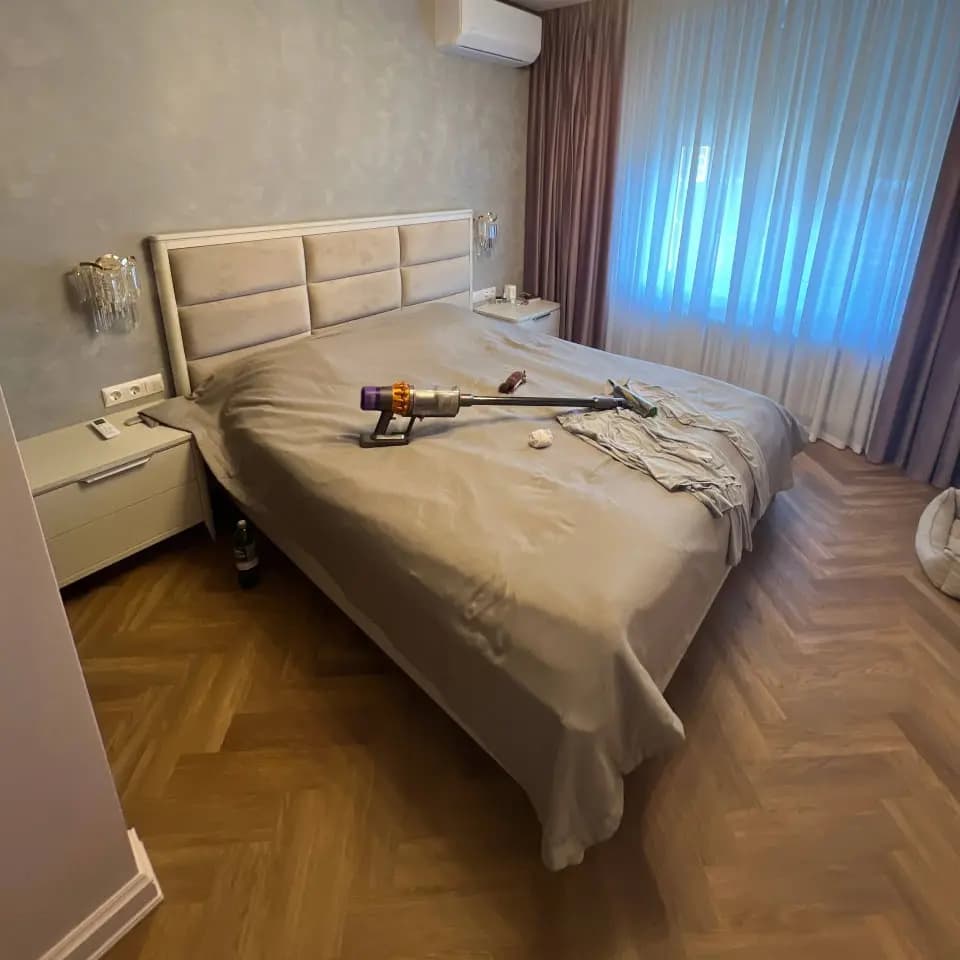
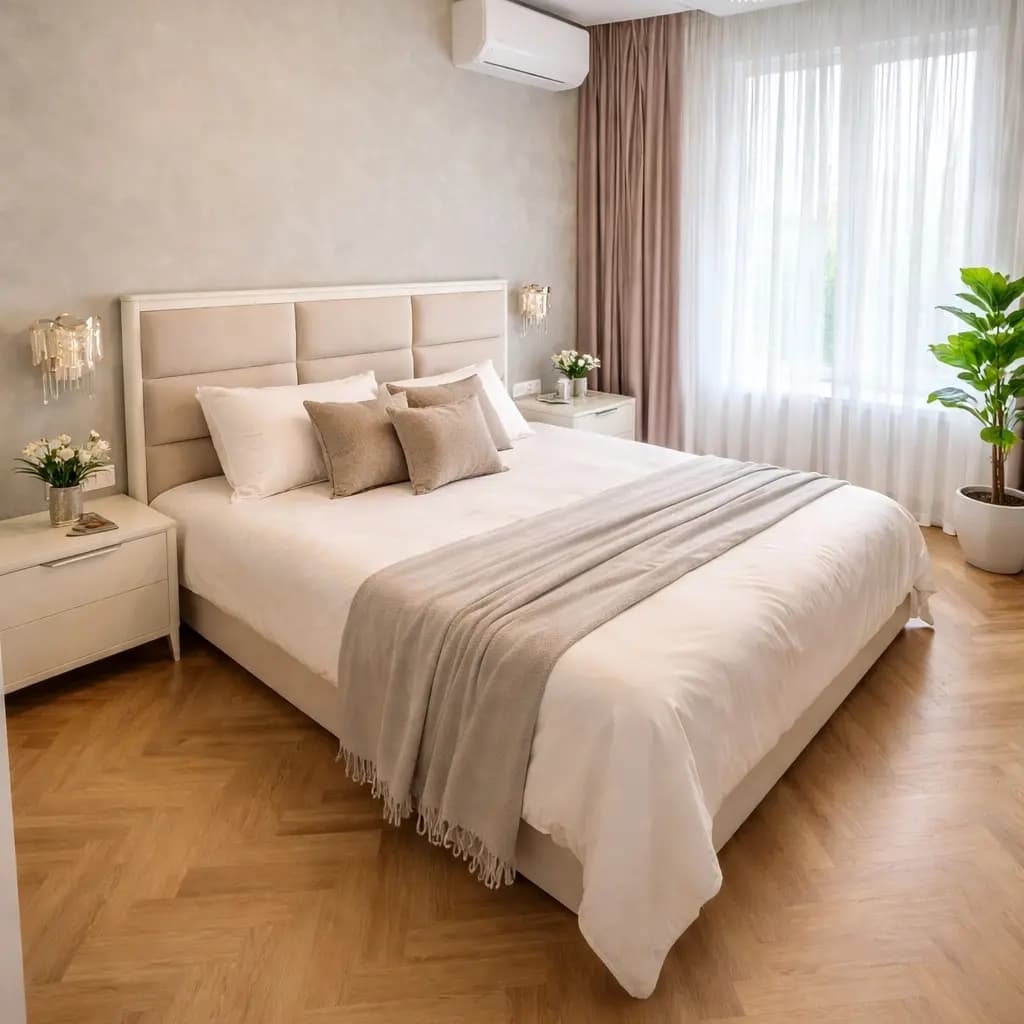
Deciding Between Los Angeles and San Francisco
Honor The Era In Each Metro
Stage Victorians and Edwardians in San Francisco with restrained period nods: a velvet wingback near a restored fireplace beats a Scandinavian sectional. In LA, a 1950s ranch in Mar Vista wants Mid-Century walnut and a low-slung sofa, not transitional furniture that fights the bones.
Light The Room For The Climate
San Francisco listings need warmer color temperatures and lamp-driven layered light because fog flattens midday photos. LA listings can lean cooler and brighter, especially Westside homes with deep overhangs and clerestory windows.
Show Outdoor Living In LA, Compactness In SF
An LA buyer in Sherman Oaks expects to see a staged outdoor dining setup or pool lounge. A San Francisco buyer in Noe Valley expects a tight, functional back garden with a stone path and built-in bench, not a sprawling patio.
Stage The Home Office Differently
In SF, a dedicated work-from-home corner can lift a two-bed listing materially. Use a slim oak desk and a single Eames-style chair. In LA, the home office often doubles as a guest room, so stage a daybed with a writing console rather than a fixed desk.
Match Color To Neighborhood Identity
Hancock Park and Pasadena reward warm whites, terra cotta, and saturated jewel tones. Pacific Heights and Cow Hollow respond to navy, ivory, and brushed brass. Avoid generic gray-and-white templates that erase neighborhood character.
Los Angeles vs San Francisco FAQ
Is Los Angeles or San Francisco more affordable for homebuyers?
Los Angeles is more affordable with a median home price of $975,000 compared to San Francisco's $1,350,000 — a difference of $375,000 (28%). However, affordability also depends on local incomes, property taxes, and cost of living. Both markets offer opportunities for buyers at different price points.
Which market is hotter, Los Angeles or San Francisco?
San Francisco is currently the faster-moving market with homes averaging 30 days on market, compared to 42 days in Los Angeles. A shorter time on market typically indicates stronger buyer demand and more competition. Agents in San Francisco need to list quickly — virtual staging helps get listings photo-ready in minutes, not weeks.
Should I stage my home when selling in Los Angeles or San Francisco?
Absolutely — staged homes sell faster and for more money in both markets. In Los Angeles (median $975,000), even a 1-2% price increase from staging can mean thousands more at closing. In San Francisco (median $1,350,000), the same applies. Virtual staging with Agent Lens costs just $0.10 per image, making it a no-brainer for agents in either market.
How does virtual staging help in competitive markets like Los Angeles and San Francisco?
Virtual staging transforms empty rooms into beautifully furnished spaces in under 60 seconds. In competitive markets, first impressions matter — 97% of buyers start their search online. Staged listing photos get more clicks, more showings, and higher offers. At $0.10 per image, virtual staging delivers professional results at a fraction of physical staging costs ($2,000-$5,000+).
Which metro typically sells faster, Los Angeles or San Francisco?
Days on market vary by submarket and price tier, but San Francisco condos in District 9 and Mission Bay historically turn faster than LA single-family on the Westside because the buyer pool is denser and the inventory is more standardized. Luxury tiers in both metros slow noticeably above the jumbo loan threshold, where staging quality and photography become decisive selling tools.
Does virtual staging work for both Victorians and Mid-Century homes?
Yes, when the furniture library matches the era. A Painted Lady in Alamo Square needs period-appropriate seating, restored fireplace styling, and bay-window vignettes. A Mar Vista ranch needs Mid-Century walnut, low-profile sectionals, and outdoor-indoor flow. Generic transitional furniture flattens both, so insist on era-matched virtual staging rather than templated solutions. Era authenticity becomes especially decisive for design-aware buyers in District 5 and on the Eastside, where the architecture itself is part of the value proposition.
How do school zones affect staging strategy in each metro?
LAUSD operates strict assignment boundaries, so staging a fourth bedroom or bonus room as a kid-focused space lifts family appeal in Sherman Oaks or Cheviot Hills. SFUSD uses a choice-based lottery, so agents lean less on a literal kid's room and more on flexible spaces that work for tech-family buyers, including playrooms that convert to home offices over time. Adjusting the staged room labels for each metro's school logic produces meaningfully better engagement on listing photos.
Should outdoor space be staged the same way in both metros?
No. LA outdoor spaces should read as a true second living room with dining, lounge, and shade structures, because year-round use is real. San Francisco outdoor spaces are smaller and weather-constrained, so stage them as garden moments with a bistro set, planted beds, and a path, not as full entertaining zones meant for daily summer use. Buyers in each metro recognize the difference instantly and discount over-staged exteriors that ignore local climate reality.
What architectural styles dominate listings in each city?
Los Angeles inventory is heavy on Spanish Colonial Revival, Mid-Century Modern, postwar ranch, and contemporary hillside rebuilds. San Francisco runs on Victorian, Edwardian, Marina-style stucco, and mid-rise concrete-glass condos in Mission Bay and Dogpatch. Match the staged furniture and palette to the era to keep the visual story coherent for prospective buyers. Era-honest staging consistently outperforms generic templates because buyers register architectural mismatch within the first few seconds of scrolling listing photos.