

Milwaukee vs Madison: Which city is better for real estate?
Pitching a client on Milwaukee versus Madison feels like comparing two cousins who grew up in the same house and turned out completely different. Milwaukee is an industrial port city of roughly 560,000 with a deep stock of pre-war Polish flats, Cream City brick duplexes, and Bay View bungalows that are still trading hands among first-time buyers. Madison, the state capital and home of UW, runs about 270,000 residents but punches well above its weight on price per square foot because the isthmus geography between Lake Mendota and Lake Monona physically caps new supply. After fifteen years writing offers in both markets, my rule of thumb is straightforward: Milwaukee rewards patience and renovation skill, Madison rewards speed and clean financing. Listings on Milwaukee's East Side or in Wauwatosa will sit a weekend longer and reward a buyer who can read a 1920s plaster wall. Listings in Madison's Marquette, Tenney-Lapham, or Westmorland neighborhoods routinely move in days, often with escalation clauses. For staging strategy, the visual gap is real. Milwaukee buyers respond to warm wood tones, leather, and Mid-Century pieces that nod to the city's manufacturing roots. Madison buyers, especially the academic and biotech crowd in Shorewood Hills, gravitate toward Scandinavian restraint, plant-forward rooms, and natural linen.
Milwaukee vs Madison
Real Estate Market Comparison
Thinking about buying or selling property? Compare the Milwaukee, WI and Madison, WI real estate markets side by side — from median prices and days on market to top neighborhoods and staging strategies.
Migration Insight
Milwaukee's housing inventory is dominated by Polish flats and duplexes built between 1900 and 1930, particularly in Riverwest, Bay View, and the South Side. These homes have narrow staircases, original oak trim, and small bedrooms averaging around 100 square feet. Staging tight rooms with oversized furniture is the single most common mistake I see on the MLS. Use a 54-inch full bed instead of a queen, a single nightstand, and a wall-mounted reading sconce to free the floor. Madison's stock skews newer in Far West neighborhoods like Hawks Landing and Junction Ridge, but the high-demand zones near the Capitol, Atwood Avenue, and Vilas Park are full of Craftsman bungalows and Prairie-influenced four-squares from the 1910s and 1920s. Buyers in those zones often work for Epic, the university, or state government, and they read a listing photo critically. A staged office nook with a leather chair, a brass task lamp, and a bookshelf reads as authentic. A generic gray sectional from a national catalog reads as flipped. Lake-effect light in Milwaukee runs cooler and bluer than Madison's; warm-toned bulbs at 2700K compensate in winter listings.
- Third Ward
- Bay View
- East Side
- Wauwatosa
- Shorewood
- Atwood
- Willy Street
- Shorewood Hills
- Maple Bluff
- Middleton
Milwaukee's affordable housing market offers value buyers great options. First-time buyers benefit most from seeing staged, move-in-ready homes. Virtual staging helps Milwaukee agents present homes professionally while keeping costs minimal in this value-focused market.
Madison's university community and government sector create a stable, educated buyer pool. Properties sell quickly in this competitive market, making same-day virtual staging invaluable. Clean, modern staging appeals to Madison's environmentally-conscious and design-aware buyers.
Market Dynamics: Milwaukee vs Madison
### Inventory Profile and Buyer Pool
Milwaukee's transaction volume sits roughly two and a half times Madison's in any given month, which sounds like a Milwaukee advantage until you look at days on market. Madison properties priced correctly, especially three-bedroom Capitol-area bungalows under 1,800 square feet, frequently go pending within a week of listing. Milwaukee gives agents more room to test pricing, hold a second open house, and refine the staging plan based on showing feedback. The buyer pool also splits along employer lines. Milwaukee draws from Northwestern Mutual, Aurora Health, Rockwell Automation, and a strong trades base, which means dual-income families looking at Wauwatosa, Shorewood, and Whitefish Bay want functional mudrooms, finished basements, and durable surfaces. Madison's buyer pool is heavily weighted toward Epic Systems employees in Verona, UW faculty, state employees, and a growing biotech contingent in University Research Park. They prioritize home offices, walk scores, and proximity to the bike network.
### Staging That Matches the City
In Milwaukee, I lean into the architectural inheritance. A Bay View bungalow staged with a Stickley-style settle, a wool rug in oxblood, and brass library lamps respects the bones of the house and photographs beautifully under overcast skies. South Side Polish flats benefit from staging only the upper unit if both are vacant, leaving the lower as a clear rental opportunity. For mid-century ranches in Greenfield or Greendale, walnut credenzas, ceramic table lamps, and abstract prints from local artists like Schomburg or Della Wells cue the right buyer. Madison demands a different palette. Near the lakes and in University Heights, I stage with travertine, white oak, and pieces that read European: a Thonet-style bentwood chair, a marble side table, an arc floor lamp. Far West new construction reads better with warmer tones to counteract the builder-grade gray that dominates 2018-2023 inventory. In both cities, virtual staging has become standard for vacant homes, but the angle matters more than the furniture; agents who shoot from corners at 24mm without correction lose buyers before the staging is even noticed.
Key Takeaways
Price difference: $140,000 (38%)
Milwaukee ($225,000) is $140,000 more affordable than Madison ($365,000).
Speed difference: 12 days
Homes in Madison sell in 30 days on average vs 42 days in Milwaukee.
More affordable: Milwaukee, WI
With a median price of $225,000, Milwaukee offers more entry-level options for first-time buyers and investors.
Faster market: Madison, WI
At 30 days on market, Madison moves faster. Sellers in this market benefit most from being listing-ready on day one — virtual staging delivers in under 60 seconds.
Stage Your Listing in Either Market
Transform empty rooms into stunning staged photos in 60 seconds. Starting at $0.10 per image.
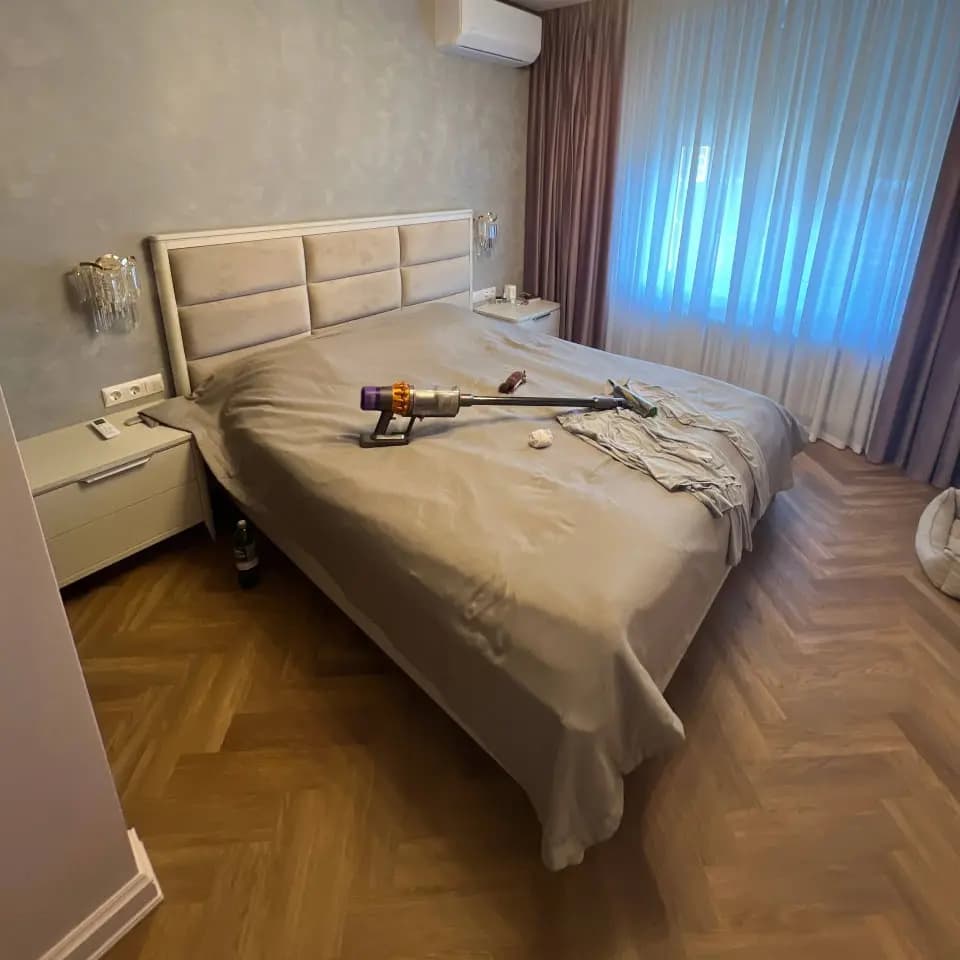
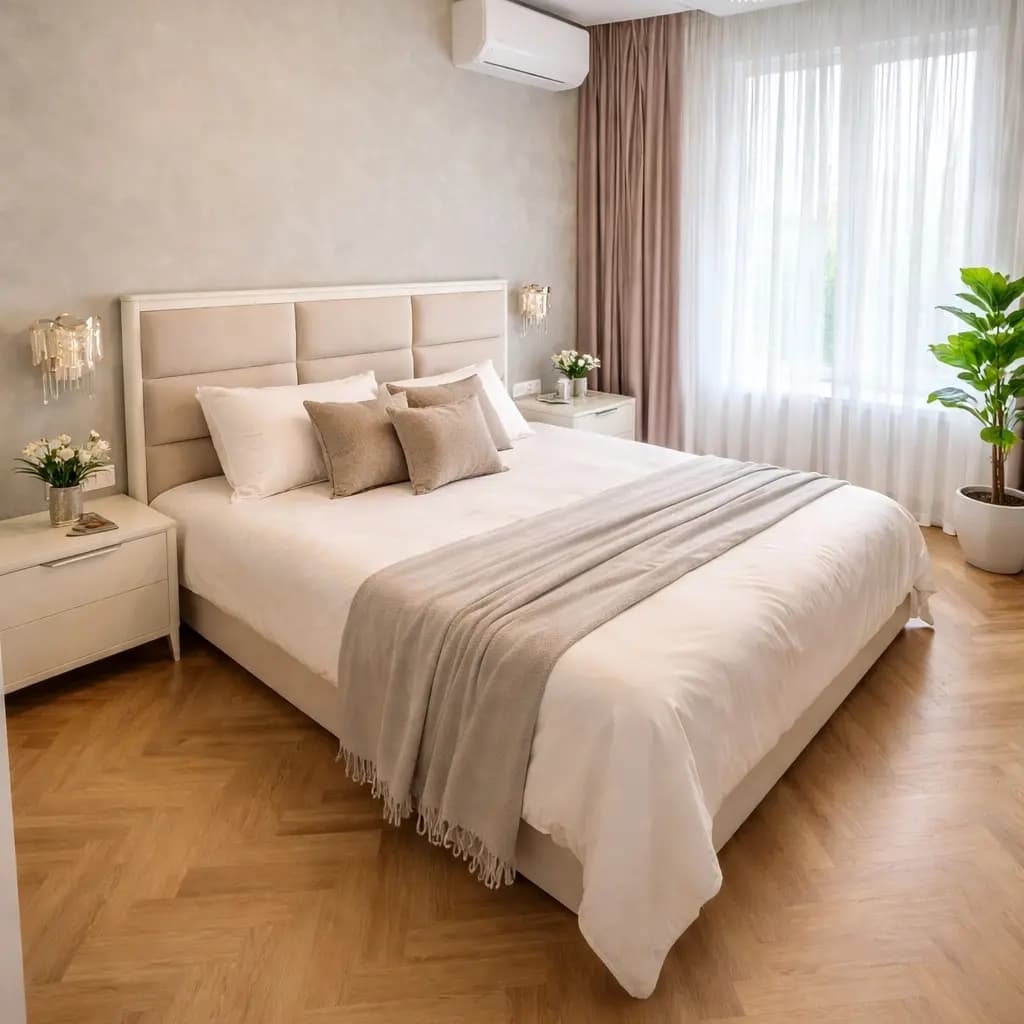
Deciding Between Milwaukee and Madison
Match wood tones to neighborhood era
Milwaukee pre-war stock pairs with quarter-sawn oak and walnut. Madison's Capitol-area Craftsmen want fumed oak or Douglas fir. Avoid orange-toned cherry and high-gloss maple in either city; both signal a flipper aesthetic that working buyers in these markets distrust on sight.
Stage the mudroom in Milwaukee
Lake-effect winters mean buyers look hard at entry storage. A bench, three labeled hooks, and a tray for boots in a back hall converts a forgotten corner into a selling point. In Tosa and Whitefish Bay families specifically ask about this during showings.
Show the home office in Madison
Epic, UW, and state remote workers want a dedicated workspace. Stage a small bedroom or sunroom with a real desk, a task chair, and a bookshelf rather than leaving it as a bonus room. This single move can shorten days on market noticeably in Westmorland and Schenk-Atwood.
Respect tight Milwaukee bedrooms
Pre-war bedrooms often measure 10x10 or smaller. Use a full bed, one nightstand, and a wall-mounted lamp. Photographs taken at chest height with a 35mm lens make these rooms read accurately rather than distorted, which builds trust before the showing.
Light Madison listings at 3000K
The reflective light off Mendota and Monona pulls cooler than most agents expect. Set staging bulbs at 3000K, slightly warmer than typical Milwaukee 2700K, to keep skin tones natural in agent video walkthroughs and to avoid the blue cast that ruins twilight exterior shots.
Milwaukee vs Madison FAQ
Is Milwaukee or Madison more affordable for homebuyers?
Milwaukee is more affordable with a median home price of $225,000 compared to Madison's $365,000 — a difference of $140,000 (38%). However, affordability also depends on local incomes, property taxes, and cost of living. Both markets offer opportunities for buyers at different price points.
Which market is hotter, Milwaukee or Madison?
Madison is currently the faster-moving market with homes averaging 30 days on market, compared to 42 days in Milwaukee. A shorter time on market typically indicates stronger buyer demand and more competition. Agents in Madison need to list quickly — virtual staging helps get listings photo-ready in minutes, not weeks.
Should I stage my home when selling in Milwaukee or Madison?
Absolutely — staged homes sell faster and for more money in both markets. In Milwaukee (median $225,000), even a 1-2% price increase from staging can mean thousands more at closing. In Madison (median $365,000), the same applies. Virtual staging with Agent Lens costs just $0.10 per image, making it a no-brainer for agents in either market.
How does virtual staging help in competitive markets like Milwaukee and Madison?
Virtual staging transforms empty rooms into beautifully furnished spaces in under 60 seconds. In competitive markets, first impressions matter — 97% of buyers start their search online. Staged listing photos get more clicks, more showings, and higher offers. At $0.10 per image, virtual staging delivers professional results at a fraction of physical staging costs ($2,000-$5,000+).
Which city sees faster sales for staged homes?
Madison consistently turns staged inventory faster, particularly in the Capitol-isthmus corridor where supply is geographically constrained. Milwaukee staged listings perform best in Wauwatosa, Whitefish Bay, and Shorewood, where buyer demand from the medical and corporate sectors is steady. In both cities, a professionally staged listing typically outperforms a vacant comparable by a meaningful margin in showings booked during the first weekend.
Should I stage a Milwaukee duplex differently than a single-family?
Yes. Stage the upper unit fully as owner-occupied with bedrooms, dining, and living, then stage the lower unit lightly as a rental opportunity with a bed, dresser, and small dining setup. This dual-purpose staging speaks to both owner-occupants and small investors, which is the realistic buyer pool for a Riverwest or Bay View duplex priced under typical Milwaukee thresholds.
Do Madison buyers care about basements?
Less than Milwaukee buyers do. The high water table in many isthmus and near-east neighborhoods means basements are often damp or unfinished by design. Stage the main floor and upstairs aggressively, and present the basement as clean storage rather than living space. In Far West new builds with proper egress, a finished lower level should be staged as a rec room or guest suite.
Which neighborhoods most reward virtual staging?
Vacant flips and estate sales in Milwaukee's Bay View, Riverwest, and Washington Heights respond strongly to virtual staging, since buyers struggle to visualize plaster-wall rooms with original trim. In Madison, virtual staging works well for Far West new construction where empty rooms feel cavernous. Always disclose virtual staging in the MLS remarks and use the same camera angle for before and after images.
How does the school district factor into staging choices?
In Wauwatosa, Whitefish Bay, Shorewood, and Madison's Maple Bluff and Shorewood Hills, families are the dominant buyer. Stage a clear bedroom for each child age range, leave a homework nook visible, and avoid staging an office in a fourth bedroom. Outside those districts, lean into adult-oriented staging with a guest room, office, or media space depending on the home's footprint.