

Denver vs Nashville: Which city is better for real estate?
Denver and Nashville share rapid growth and a creative-class buyer pool, but their architectural vocabularies and staging expectations diverge sharply. Denver's housing stock includes Denver Squares and Foursquares in Washington Park and Congress Park, brick bungalows in Berkeley and Sunnyside, mid-century ranches in Krisana Park, and contemporary new builds in RiNo and LoHi. Nashville's inventory features Tudor revivals in Belle Meade, brick ranches in Green Hills, Craftsman bungalows in East Nashville's Lockeland Springs, and contemporary tall-and-skinny duplexes in 12 South and the Nations. Buyers in Denver respond to staging that emphasizes mountain views, indoor-outdoor flow with large patios, and natural-material palettes — leather, wool, oak, soapstone. Nashville buyers expect Southern-influenced staging with wider porches, mudroom drop zones, and dining rooms sized for entertaining. Virtual staging from AIStage helps agents adapt furniture vocabulary to each market. A Denver Square needs Mission-style oak tables, Pendleton-pattern throws, and ceramic lamps with mica shades; a Nashville Tudor accepts antique-inspired rugs, brass library lights, and dining chairs upholstered in mohair or velvet. Agents who treat each city as a regional dialect rather than a universal template see stronger online engagement and faster listing turnover.
Denver vs Nashville
Real Estate Market Comparison
Thinking about buying or selling property? Compare the Denver, CO and Nashville, TN real estate markets side by side — from median prices and days on market to top neighborhoods and staging strategies.
Migration Insight
Denver neighborhoods divide into clear staging categories. Wash Park and Congress Park homes from 1900 to 1925 feature Denver Square footprints with central staircases, formal parlors, and dining rooms separated by pocket doors. Stage with Mission-style or Stickley-influenced furniture, wool rugs in muted reds and golds, and ceramic accent lamps. Berkeley and Sunnyside bungalows accept lighter Craftsman staging with painted casework. Krisana Park's Eichler-inspired ranches reward mid-century modern staging — walnut credenzas, ceramic table lamps with linen shades, abstract canvases in primary colors. RiNo and LoHi modern builds work best with industrial loft staging: black-frame coffee tables, leather sectionals, and oversized art. Nashville presents different rhythms. Belle Meade and Green Hills accept formal traditional staging with antique reproductions and oriental-style rugs. East Nashville's Lockeland Springs and Eastwood call for transitional Craftsman staging similar to Atlanta's intown bungalows. 12 South and the Nations contemporary builds reward modern farmhouse staging — black-framed windows, white walls, walnut tables, woven pendant lights. Suburban Brentwood and Franklin reward family-focused staging with mudrooms, playrooms, and outdoor kitchens. Agents matching staging vocabulary to neighborhood architecture consistently outperform those using one universal template.
- Cherry Creek
- LoHi
- Washington Park
- RiNo
- Highland
- East Nashville
- The Gulch
- Germantown
- 12 South
- Green Hills
Denver's outdoor-lifestyle market attracts young professionals and families from both coasts. Modern and contemporary styles dominate buyer preferences, and staged listings stand out in a competitive market that values clean, aspirational aesthetics.
Nashville's hot market draws relocating buyers who discover the city online first. Stunning listing photos are the first impression for out-of-state buyers, making staging essential. Virtual staging helps Nashville agents present properties at their best to this digital-first audience.
Market Dynamics: Denver vs Nashville
### Denver's altitude light and Nashville's filtered green light
Denver's high altitude produces sharp, intense daylight that exposes every staging flaw. Listings photographed at noon in Wash Park or LoHi often suffer from blown-out windows showing the Front Range without interior balance. Agents commonly schedule shoots for early morning or late afternoon, then use virtual staging that includes relighting to add warmth. Mountain views are a primary amenity; staging should never block windows or place tall furniture in front of them. Nashville's tree canopy in East Nashville, Belle Meade, and Hillwood produces filtered green light that photographs darker than expected. Virtual staging benefits from warm-toned lamps, lighter wall colors in staging overlays, and furniture in cream or oat rather than dark gray. Belle Meade Tudors with stained-glass windows and dark wood paneling especially benefit from virtual relighting that brightens the space without losing architectural character. Both cities reward staging that respects natural light conditions rather than forcing one universal palette.
### Furniture scale, outdoor staging, and entertaining priorities
Denver buyers prize outdoor space disproportionately. Front porches, back patios, and rooftop decks all carry significant marketing weight. Stage Denver Square front porches with two craftsman rocking chairs, a small side table, and a planter of high-altitude perennials like yarrow or salvia. RiNo rooftop decks demand modern teak loungers, fire-pit seating, and shade structures. Patios in Krisana Park ranches accept mid-century outdoor furniture — sling chairs, low-slung tables, and concrete planters. Nashville's outdoor staging tilts more toward Southern hospitality. Front porches in 12 South and East Nashville accept porch swings, pairs of rockers, and ceiling fans. Belle Meade backyards reward formal patio dining sets for six or eight, with pergolas and outdoor fireplaces. Inside, Nashville dining rooms commonly seat eight where Denver dining rooms more often seat six, reflecting differences in entertaining culture. Furniture scale also varies: Denver's narrower Square and Foursquare floor plans demand 78-inch sofas, while Nashville's wider ranches and new builds easily accept 96-inch sectionals. Agents working both markets maintain separate furniture libraries scaled to local conditions, with AIStage style presets configured for Mountain Modern, Mountain Craftsman, Nashville Modern Farmhouse, and Belle Meade Traditional as distinct categories.
Key Takeaways
Price difference: $130,000 (23%)
Nashville ($445,000) is $130,000 more affordable than Denver ($575,000).
Speed difference: 5 days
Homes in Denver sell in 34 days on average vs 39 days in Nashville.
More affordable: Nashville, TN
With a median price of $445,000, Nashville offers more entry-level options for first-time buyers and investors.
Faster market: Denver, CO
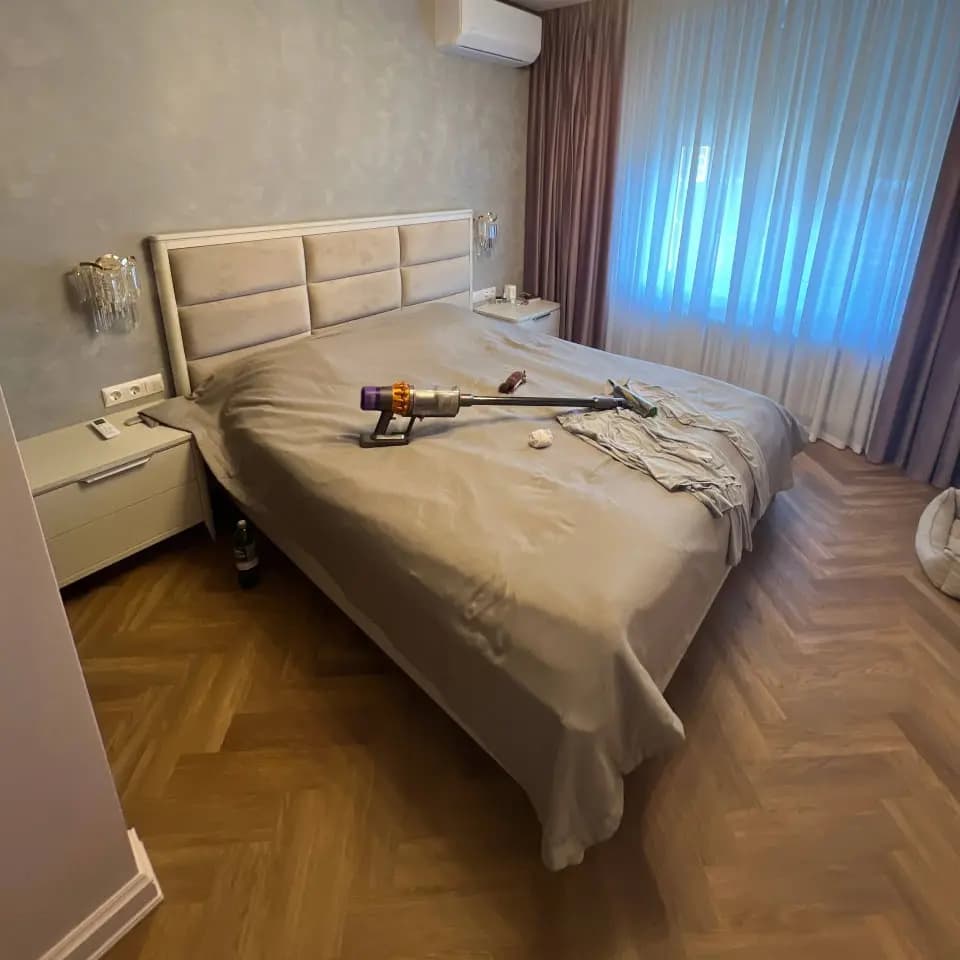
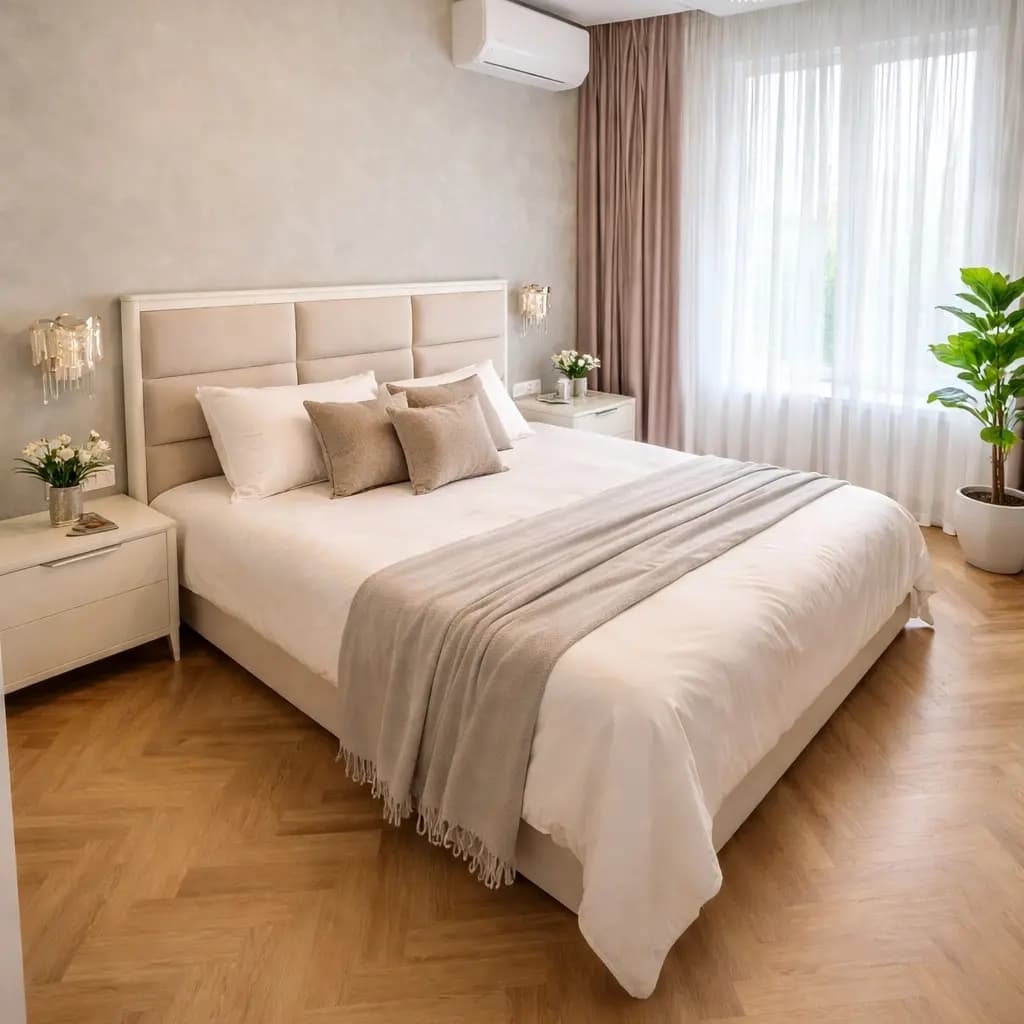
At 34 days on market, Denver moves faster. Sellers in this market benefit most from being listing-ready on day one — virtual staging delivers in under 60 seconds.
Stage Your Listing in Either Market
Transform empty rooms into stunning staged photos in 60 seconds. Starting at $0.10 per image.
Deciding Between Denver and Nashville
For Denver Squares, choose Mission-style or Stickley-inspired oak
For Denver Squares, choose Mission-style or Stickley-inspired oak furniture with through-tenons and wool upholstery to honor the architecture.
Nashville East Nashville bungalows work best with painted
Nashville East Nashville bungalows work best with painted brick fireplaces in Sherwin-Williams Iron Ore and walnut floating mantels.
Stage Krisana Park ranches with mid-century walnut credenzas,
Stage Krisana Park ranches with mid-century walnut credenzas, ceramic lamps with linen shades, and abstract art in primary colors against white walls.
Belle Meade Tudor dining rooms benefit from antique-inspired
Belle Meade Tudor dining rooms benefit from antique-inspired rugs in muted reds, brass library lights, and dining chairs in mohair or velvet.
Denver rooftop decks need shade structures in virtual
Denver rooftop decks need shade structures in virtual staging — pergolas, sail shades, or umbrellas — because the high-altitude sun makes uncovered staging look uncomfortable to buyers.
Denver vs Nashville FAQ
Is Denver or Nashville more affordable for homebuyers?
Nashville is more affordable with a median home price of $445,000 compared to Denver's $575,000 — a difference of $130,000 (23%). However, affordability also depends on local incomes, property taxes, and cost of living. Both markets offer opportunities for buyers at different price points.
Which market is hotter, Denver or Nashville?
Denver is currently the faster-moving market with homes averaging 34 days on market, compared to 39 days in Nashville. A shorter time on market typically indicates stronger buyer demand and more competition. Agents in Denver need to list quickly — virtual staging helps get listings photo-ready in minutes, not weeks.
Should I stage my home when selling in Denver or Nashville?
Absolutely — staged homes sell faster and for more money in both markets. In Denver (median $575,000), even a 1-2% price increase from staging can mean thousands more at closing. In Nashville (median $445,000), the same applies. Virtual staging with Agent Lens costs just $0.10 per image, making it a no-brainer for agents in either market.
How does virtual staging help in competitive markets like Denver and Nashville?
Virtual staging transforms empty rooms into beautifully furnished spaces in under 60 seconds. In competitive markets, first impressions matter — 97% of buyers start their search online. Staged listing photos get more clicks, more showings, and higher offers. At $0.10 per image, virtual staging delivers professional results at a fraction of physical staging costs ($2,000-$5,000+).
Why do Denver listings need relighting more than other markets?
High-altitude daylight is sharper and more contrasty than at lower elevations. Wash Park, LoHi, and Cherry Creek listings often photograph with blown-out windows showing the Front Range and underexposed interiors. Virtual staging tools that include relighting balance these conditions and let mountain views remain visible without losing interior detail. Agents who only use furniture insertion without lighting adjustment lose much of the value of the listing's primary amenity.
Should Nashville Tudor homes be staged formally or transitionally?
Belle Meade and Hillwood Tudors accept formal staging — antique-inspired rugs, brass library lights, mohair dining chairs, and traditional draperies. Smaller Tudor cottages in Sylvan Park and East Nashville work better with transitional staging that mixes traditional case goods with linen upholstery and lighter art. The key is honoring the architecture's stained-glass and dark-wood elements without overdoing chintz or heavy traditional fabrics that read dated to current buyers.
How important are front porches in Nashville staging?
Very important. 12 South, East Nashville, and Sylvan Park porches commonly span the full width of the home and serve as primary outdoor living space. Stage with porch swings, pairs of rockers, ceiling fans, and string lights. Empty porches signal underused space; staged porches signal Southern hospitality and entertainment readiness, both of which strongly resonate with current Nashville buyers regardless of price point.
What architectural styles dominate Denver new construction?
RiNo, LoHi, and Sloan's Lake new construction trends toward Mountain Modern — black-framed windows, mixed-material exteriors with stucco and corten steel, flat or low-slope roofs, and large glass walls. Stage these homes with industrial loft furniture, leather sectionals, walnut tables, and abstract or photographic art. Avoid traditional staging in modern Denver builds; the mismatch reduces buyer engagement significantly across all price segments.
Do Denver and Nashville share any staging strategies?
Both markets reward outdoor space staging, neutral wall colors, and warm wood tones in furniture. Both also benefit from staging that emphasizes entertaining — dining rooms set, kitchen islands styled with cookbooks and a single bowl of fruit, living rooms arranged for conversation. Where they differ is in architectural vocabulary, scale, and the specific furniture categories each market expects. Agents who recognize the shared and divergent elements stage both markets more efficiently.