

Charlotte vs Raleigh: Which city is better for real estate?
Agents who work both Charlotte and Raleigh learn quickly that North Carolina is not one market with two area codes. Charlotte runs on banking relocations, regional corporate moves, and a steady pull from the Northeast and Florida. Raleigh runs on tech, biotech, university hires, and a quieter but deeper migration from D.C. and Boston. The buyer brief reads differently before you even open the door. A Myers Park Charlotte buyer is choosing between a 1930s Tudor and a Foxcroft ranch with a renovation history. A North Hills or Five Points Raleigh buyer is choosing between a 1950s mid-century renovation and a custom infill. The staging vocabulary that wins inside the I-485 loop does not automatically win inside the I-440 beltline. Over the years I have watched Charlotte agents drop a generic transitional staging package on a Raleigh listing and lose the first weekend of showings because the styling read as imported rather than local. The reverse happens too: a Raleigh designer's clean, scholarly palette can feel underpowered against the polished Charlotte expectation. This comparison focuses on the practical staging and presentation differences, not the macro economics, because that is where listing agents have the most leverage week to week.
Charlotte vs Raleigh
Real Estate Market Comparison
Thinking about buying or selling property? Compare the Charlotte, NC and Raleigh, NC real estate markets side by side — from median prices and days on market to top neighborhoods and staging strategies.
Migration Insight
Charlotte's resale inventory leans on Myers Park Tudors and Georgians, Eastover and Foxcroft mid-century brick ranches, the SouthPark and Ballantyne build-outs from the 1990s and 2000s, and the recent NoDa and Plaza Midwood infill. Raleigh's stock is a different mosaic: Hayes Barton and Five Points 1920s revival homes, North Hills and Anderson Heights ranches, the ITB renovation set, and the heavy Cary, Apex, and Holly Springs production-builder belt to the southwest. Triangle buyers cross-shop Durham and Chapel Hill, which pulls staging taste toward warmer wood tones and a more academic, layered look. Charlotte buyers cross-shop Lake Norman and Waxhaw, which pulls taste toward polished transitional and outdoor-living forward staging. Both metros take heat and humidity seriously, so showing functional screened porches, ceiling fans on porches, and clean garage storage matters more than in cooler markets.
- Myers Park
- NoDa
- Dilworth
- South End
- Plaza Midwood
- Downtown
- North Hills
- Five Points
- Cameron Village
- Cary
Charlotte is one of the fastest-growing cities in the Southeast, attracting banking professionals and young families. Modern and transitional staging styles align with the city's blend of Southern tradition and corporate sophistication.
The Research Triangle's tech and academic community creates a sophisticated buyer pool. Raleigh's strong job growth attracts relocating buyers who discover homes online. Professional staging — especially virtual — helps properties make a strong digital first impression.
Market Dynamics: Charlotte vs Raleigh
### What Charlotte Buyers Actually Scroll For
Charlotte rewards a polished transitional aesthetic with strong outdoor-living storytelling. The first three frames almost always need the front elevation, a styled front porch, and either the kitchen or the screened porch. SouthPark and Ballantyne buyers expect to see a defined dining room, a kitchen island styled with restraint (one cutting board, one bowl of citrus, no clutter), and a primary suite that reads like a hotel rather than a bedroom. In Myers Park and Eastover, lean into architectural integrity: oil-rubbed bronze fixtures, a styled sitting room with a wing chair and a reading lamp, and an entry vignette with a runner and a console. Plaza Midwood and NoDa accept a more design-forward palette, but even there, buyers want warmth. Black-and-white minimalism falls flat. A walnut credenza, a terracotta planter, and a single piece of original art will outperform a curated gallery wall.
### What Raleigh Buyers Actually Scroll For
Raleigh buyers scroll like researchers. They look for the home office first, then the kitchen, then the outdoor space, then the primary. A Cary or North Raleigh production home benefits from staging that gives every flex room a clear job: office, nursery, peloton room, guest. Hayes Barton and Five Points buyers respond to a slightly more academic styling vocabulary: bookshelves with real books rather than stacked decor, a writing desk in the front room, layered wool and linen rather than performance velvet. ITB renovations photograph best with a warm white wall, white oak floors, and one bold but tasteful element per room: a navy island, a green-tile backsplash, an aged brass pendant. In Apex and Holly Springs, buyers relocating from out of state want to see the floorplan flow clearly. Stage every room. Empty bonus rooms above garages photograph as wasted space and create buyer hesitation.
Key Takeaways
Price difference: $30,000 (7%)
Charlotte ($385,000) is $30,000 more affordable than Raleigh ($415,000).
Speed difference: 3 days
Homes in Raleigh sell in 35 days on average vs 38 days in Charlotte.
More affordable: Charlotte, NC
With a median price of $385,000, Charlotte offers more entry-level options for first-time buyers and investors.
Faster market: Raleigh, NC
At 35 days on market, Raleigh moves faster. Sellers in this market benefit most from being listing-ready on day one — virtual staging delivers in under 60 seconds.
Stage Your Listing in Either Market
Transform empty rooms into stunning staged photos in 60 seconds. Starting at $0.10 per image.
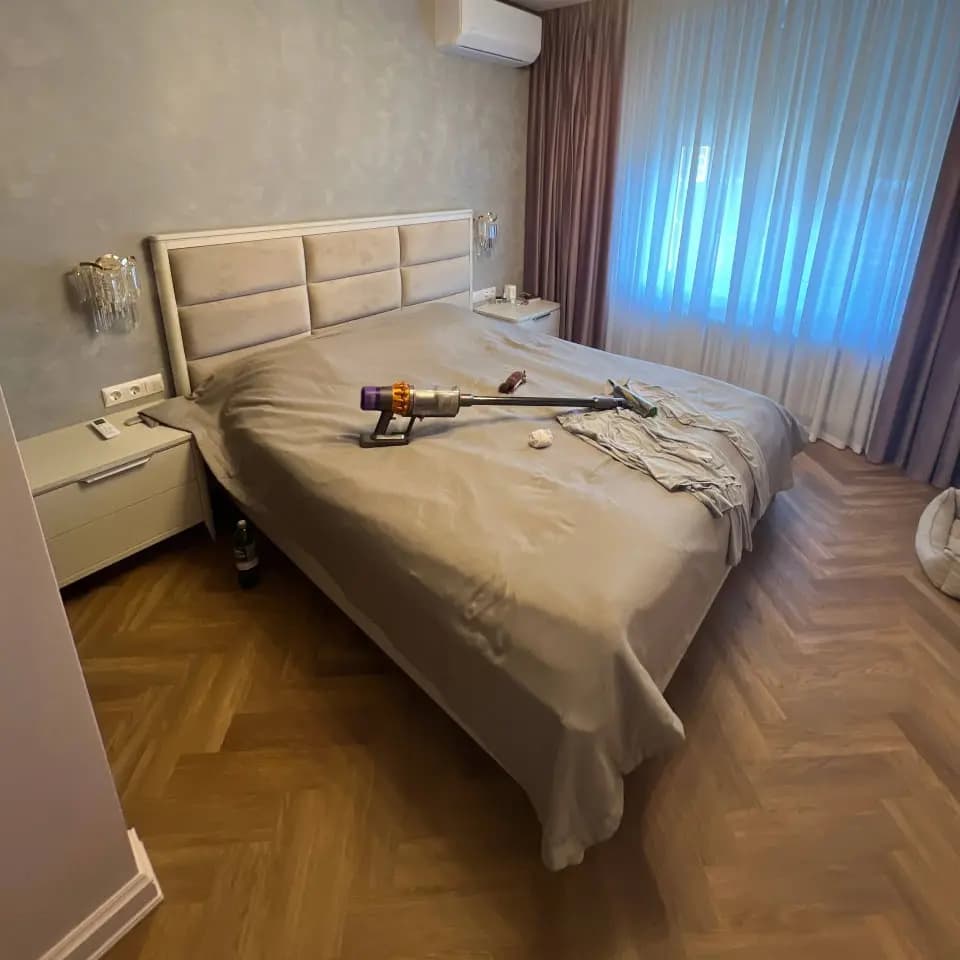
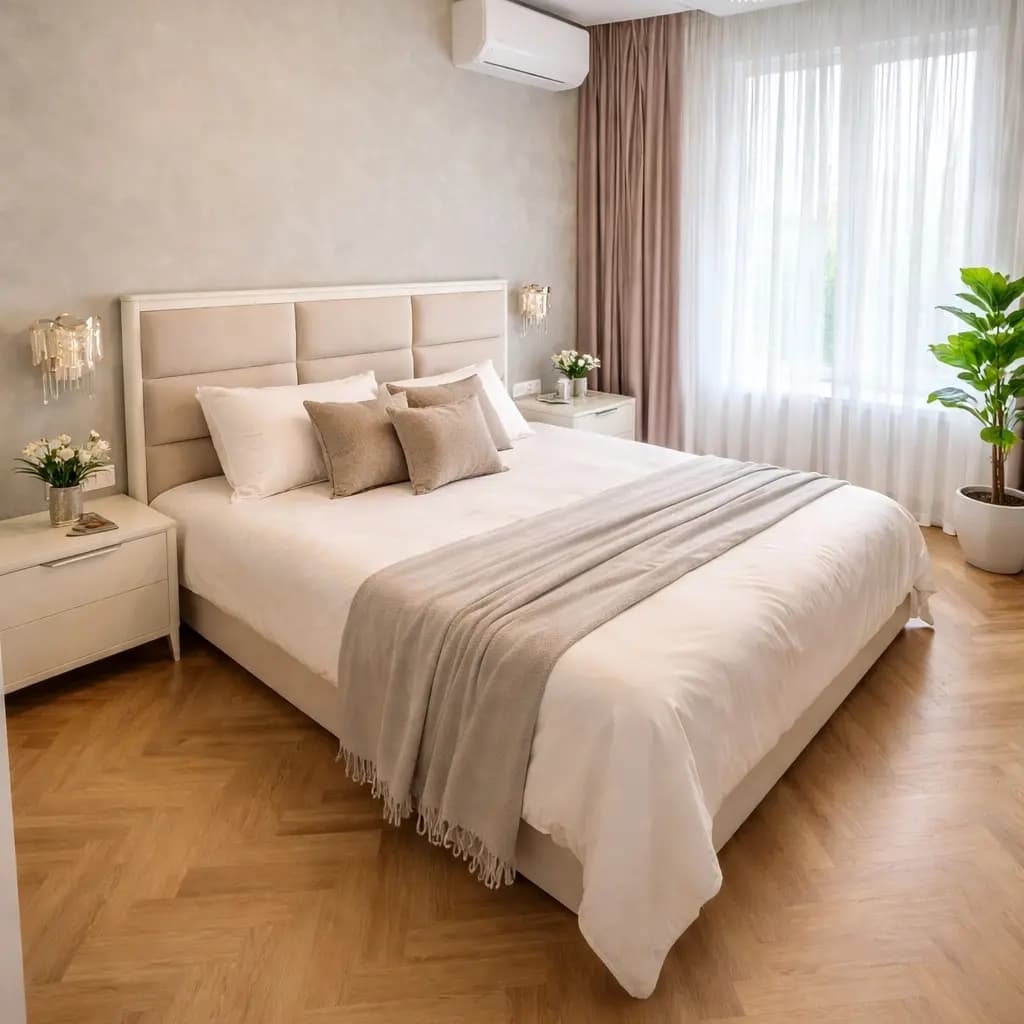
Deciding Between Charlotte and Raleigh
Stage the screened porch as a real room
In both metros, screened porches close deals from May through October. Add a small dining set or a pair of rocking chairs with a side table, an outdoor rug, and one ceiling fan visible in the photo. Empty screened porches photograph as a maintenance question.
Give the bonus room a job
Cary, Apex, Holly Springs, Ballantyne, and Waxhaw production homes almost all have a bonus room over the garage. Stage it as a media room, a home gym, or a second office. Buyers from out of state will not visualize the function on their own.
Respect the architectural era ITB and in Myers Park
A 1925 Hayes Barton revival or a 1930s Myers Park Tudor should be staged with furniture silhouettes from the period, not a modern transitional reset. The architectural integrity is the asset; lean into it with a wing chair, a Persian-style runner, and warm metal lighting.
Photograph the garage in production neighborhoods
Three-car garages in Wesley Chapel, Waxhaw, North Raleigh, and Apex matter to relocating buyers. A clean, organized garage with a styled workbench vignette signals a well-maintained home and ranks higher in scrolling sessions.
Stage the home office twice
In the Triangle especially, buyers want to see two work-from-home zones for dual-career households. If the floorplan supports it, stage one formal office and one secondary workspace in a flex room or large primary suite alcove.
Charlotte vs Raleigh FAQ
Is Charlotte or Raleigh more affordable for homebuyers?
Charlotte is more affordable with a median home price of $385,000 compared to Raleigh's $415,000 — a difference of $30,000 (7%). However, affordability also depends on local incomes, property taxes, and cost of living. Both markets offer opportunities for buyers at different price points.
Which market is hotter, Charlotte or Raleigh?
Raleigh is currently the faster-moving market with homes averaging 35 days on market, compared to 38 days in Charlotte. A shorter time on market typically indicates stronger buyer demand and more competition. Agents in Raleigh need to list quickly — virtual staging helps get listings photo-ready in minutes, not weeks.
Should I stage my home when selling in Charlotte or Raleigh?
Absolutely — staged homes sell faster and for more money in both markets. In Charlotte (median $385,000), even a 1-2% price increase from staging can mean thousands more at closing. In Raleigh (median $415,000), the same applies. Virtual staging with Agent Lens costs just $0.10 per image, making it a no-brainer for agents in either market.
How does virtual staging help in competitive markets like Charlotte and Raleigh?
Virtual staging transforms empty rooms into beautifully furnished spaces in under 60 seconds. In competitive markets, first impressions matter — 97% of buyers start their search online. Staged listing photos get more clicks, more showings, and higher offers. At $0.10 per image, virtual staging delivers professional results at a fraction of physical staging costs ($2,000-$5,000+).
Does Canopy MLS in Charlotte require disclosure of virtually staged photos?
Yes. Canopy MLS rules require that virtually staged or digitally altered photos be clearly labeled. The accepted practice is to add a watermark directly on the image reading Virtually Staged and to mention in agent remarks which photos have been altered. Keep at least one accurate, unaltered shot of each staged room in the listing to avoid buyer confusion at showing.
Is Triangle MLS handling virtual staging the same way?
Triangle MLS follows similar disclosure expectations. Label staged images on the image itself and reference the practice in agent remarks. Raleigh buyers in particular tend to ask the buyer's agent directly about which photos were altered, so transparency on the listing builds trust before the showing rather than creating friction at offer time.
Should I stage differently for relocation buyers from the Northeast?
Slightly. Northeast relocators often arrive expecting more square footage for the same budget and are more sensitive to how floorplans flow. Stage every functional room rather than leaving secondary bedrooms empty, and pay extra attention to the primary suite, the office, and outdoor living. Photo-first decisions are common because flying in for a second showing is harder.
Do Charlotte and Raleigh buyers respond differently to dark interior paint trends?
Charlotte buyers are more receptive to deep navy or moody green accents in dining rooms and powder baths, especially in Plaza Midwood and Dilworth. Raleigh buyers, particularly in ITB and North Hills, prefer warm whites and natural light. A moody dining room in a Cary production home tends to underperform compared to a brighter, more neutral treatment.
Is physical staging still worth the cost in either metro?
For homes priced in the upper tier in Myers Park, Eastover, Hayes Barton, and Five Points, physical staging still produces faster contracts because buyers expect a styled walkthrough. For mid-range and production-builder inventory in both metros, virtual staging is now the dominant choice because of speed, lower carrying cost, and the way buyers shop on phones before scheduling.