

Luxury Living Room
Virtual Staging
Transform your living room with luxury virtual staging. Professional AI-powered results in 60 seconds.
Quick Answer
Luxury living rooms separate listings that close quickly from those that stall through the spring. After fifteen years staging properties from Beverly Hills flats above Sunset to Park Avenue prewars and Buckhead estates, I have learned that affluent buyers do not respond to ornament alone. They read material truth: the depth of a wool pile, the weight of a brass pull, the way travertine catches afternoon light. Virtual staging for this tier must convey that tactile authority through pixels, which is why thoughtful furniture selection matters more than lavish accessorizing. The buyer who tours a Tribeca loft at the upper end of the market has likely visited four other properties that morning. Your photographs need to communicate restraint, lineage, and confident editing within seconds of opening the listing on a phone screen. I treat every staged living room as a quiet argument for the home itself, never a competition with it. The architecture leads, the furniture supports, and the styling whispers. Agents who try to load a luxury living room with attention-seeking pieces often diminish the very rooms they hope to celebrate. The most expensive-looking rooms I have ever produced were also the most edited, with negative space treated as a material in its own right and every visible object justified by craft, scale, or provenance.
Key Takeaways
- 1Luxury style features: High-end finishes, designer furniture, upscale
- 2Virtual staging costs just $0.10 per photo
- 3Results delivered in approximately 60 seconds
- 4Staged homes sell 30-50% faster (NAR)
Staging Insight
Regional taste shifts how a luxury living room should read. In coastal California, particularly Pacific Palisades and La Jolla, buyers favor lighter envelopes with bleached oak, plaster walls, and linen upholstery that feels right against ocean glare. The Upper East Side and Brookline still reward jewel-toned velvets, lacquered millwork, and serious case goods that nod to prewar architecture. Houston and Dallas estate buyers in River Oaks and Highland Park lean into warmer woods, custom cabinetry, and confident color in the family-adjacent living room, often with Hill Country influences creeping in. Aspen and Telluride buyers expect tactile layering, hand-loomed wool, leather that has been broken in, and stone hearths that anchor everything. Florida luxury, especially in Naples and Coral Gables, balances tropical light with European silhouettes. Pay attention to climate too: humid markets need upholstery and wood finishes that survive year-round air conditioning cycles, while dry mountain markets reward fibers that handle low humidity. Knowing which references the buyer expects, and editing accordingly during virtual staging, separates a listing that feels regionally fluent from one that looks like a generic catalog spread regardless of the architectural pedigree underneath.
Quick Answer
Luxury living room virtual staging uses AI to add high-end finishes, designer furniture, upscale to empty room photos. Costs as low as $0.10 per image vs $2,000-5,000 for physical staging. Results delivered in under 60 seconds.
Key Takeaways
- 1Luxury style features: High-end finishes, designer furniture, upscale
- 2Perfect for living room spaces that need professional appeal
- 3AI processing delivers results in under 60 seconds
- 420,000x more affordable than traditional physical staging
How much does luxury living room virtual staging cost?
Luxury living room virtual staging costs as low as $0.10 per image with Agent Lens. This is up to 20,000x cheaper than physical staging which costs $2,000-5,000 for an entire home. Our AI delivers professional high-end finishes, designer furniture, upscale staging in under 60 seconds.
About Luxury Style
Luxury staging positions properties at the highest tier of the market, featuring premium materials, designer furniture, and meticulous attention to detail. Marble surfaces, silk textiles, crystal lighting fixtures, and custom millwork create an atmosphere of opulent living. This style incorporates current luxury trends while maintaining timeless elegance. Essential for high-value listings where buyers expect aspirational presentation and white-glove service throughout their home-buying experience.. This style is perfect for living room spaces looking to attract buyers with a contemporary, refined aesthetic. Virtual staging allows you to showcase this design without the cost or logistics of physical furniture.
Luxury Design for Your Living Room
### Furniture Strategy and Material Hierarchy
The luxury living room rests on a small number of confident decisions. Begin with the seating arrangement, because nothing else can compensate for a poorly proportioned sofa pairing. I favor a single substantial sofa, often in a hand-tailored slipcover or performance mohair, paired with two distinct lounge chairs rather than a matched set. Asymmetry signals collected taste; matched pairs signal showroom shortcuts. Coffee tables should read as objects of weight, whether a single slab of marble, a sculpted bronze form, or a vintage parchment piece. Avoid glass tops, which photograph thinly and read as builder-grade in print and on phone screens. Anchor the conversation area with a wool or silk-blend rug whose pile depth flatters the room rather than competing with it. Materially, layer warm metals against cool stone, rough plaster against polished walnut, and a single statement textile against quieter neighbors. Drapery deserves real budget: floor-puddled linen or silk in a tone close to the wall, never contrasting, lifts every other choice in the room. Lighting fixtures must be sculptural at the high end, ideally one ceiling moment and one floor-level glow, and never the standard recessed-only ceiling that betrays a developer-level finish.
### Color, Light, and the Buyer's Eye
Color at this tier moves in narrow ranges, but those ranges are emotionally exact. I work in a palette of three values per room, usually a wall envelope tuned to the home's natural light, a midtone for upholstery, and a deeper grounding tone for case goods. Painted millwork in a warm off-white reads richer than stark white, particularly in north-facing rooms or shaded urban exposures. For bright western or southern light, you can afford a touch more pigment in the walls without the room feeling heavy. Lighting should be staged as if the photograph were taken at the golden hour, with table lamps lit in addition to natural daylight, which produces the layered glow that mid-tier listings rarely capture. The buyer persona at this price point notices light temperature; warm bulbs in cool-light rooms signal correct human care. Accessories should be few, but each should have a story: a bronze object with patina, a folded throw in cashmere or alpaca, a single book stack rather than the publishing-warehouse pile common in lower-tier staging. Restraint is the actual luxury, and your virtual staging should perform exactly that restraint.
Luxury Living Room Staging Benefits
Why Virtual Staging Works for Living Rooms
Luxury Living Room Staging Tips
Edit Before You Add
Walk the room photograph and remove three items before adding anything. Luxury reads through negative space and unblocked sightlines. Most amateur staging crowds the coffee table and side surfaces, which collapses the perceived ceiling height and signals lower price tier to a trained buyer's eye.
Choose One Hero Material
Decide whether the room celebrates stone, wood, or textile, then let the other materials retreat. A travertine fireplace surround needs quieter upholstery; a hand-knotted Tibetan rug needs simpler casegoods. Competing heroes flatten the hierarchy and the room photographs as visually noisy rather than carefully composed.
Treat Drapery as Architecture
Floor-length, ceiling-mounted drapery in a tone that matches the wall envelope makes ceilings appear taller and the room more deliberate. Skip patterned panels in luxury staging. The point is to extend the architecture, not to introduce another visual element competing for the buyer's attention in the listing photograph.
Light Lamps in the Render
Always specify table and floor lamps in the on state during virtual staging. Layered low-level light produces the cinematic warmth that buyers associate with custom homes. A purely daylit render reads as a builder-grade showroom, while a softly lit one reads as lived-in by someone with taste.
Anchor with One Sculptural Object
Every luxury living room needs a single object that earns the camera's attention, whether a vintage ceramic vessel, a small bronze, or a framed work of art on a tilted easel. This focal point gives the photograph its narrative center and prevents the room from reading as a furniture catalog page.
Stage Your Living Room in Luxury Style Today
Get professional luxury virtual staging in 60 seconds
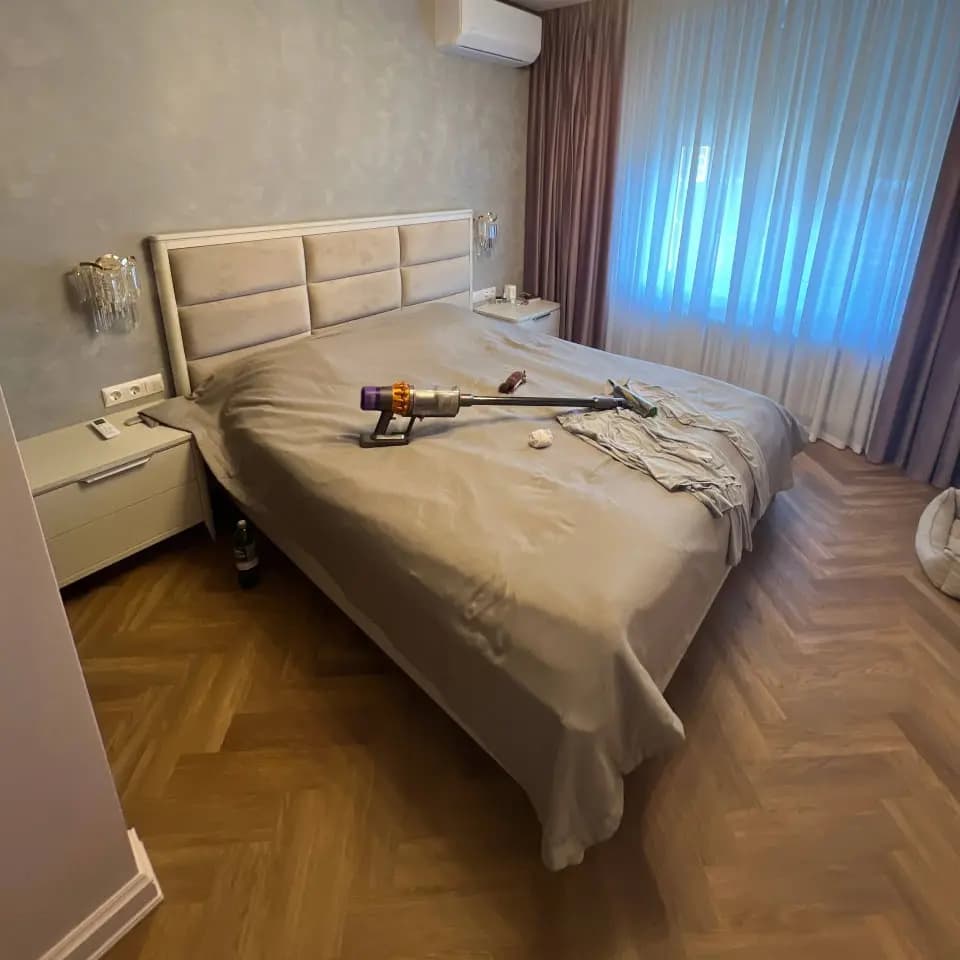
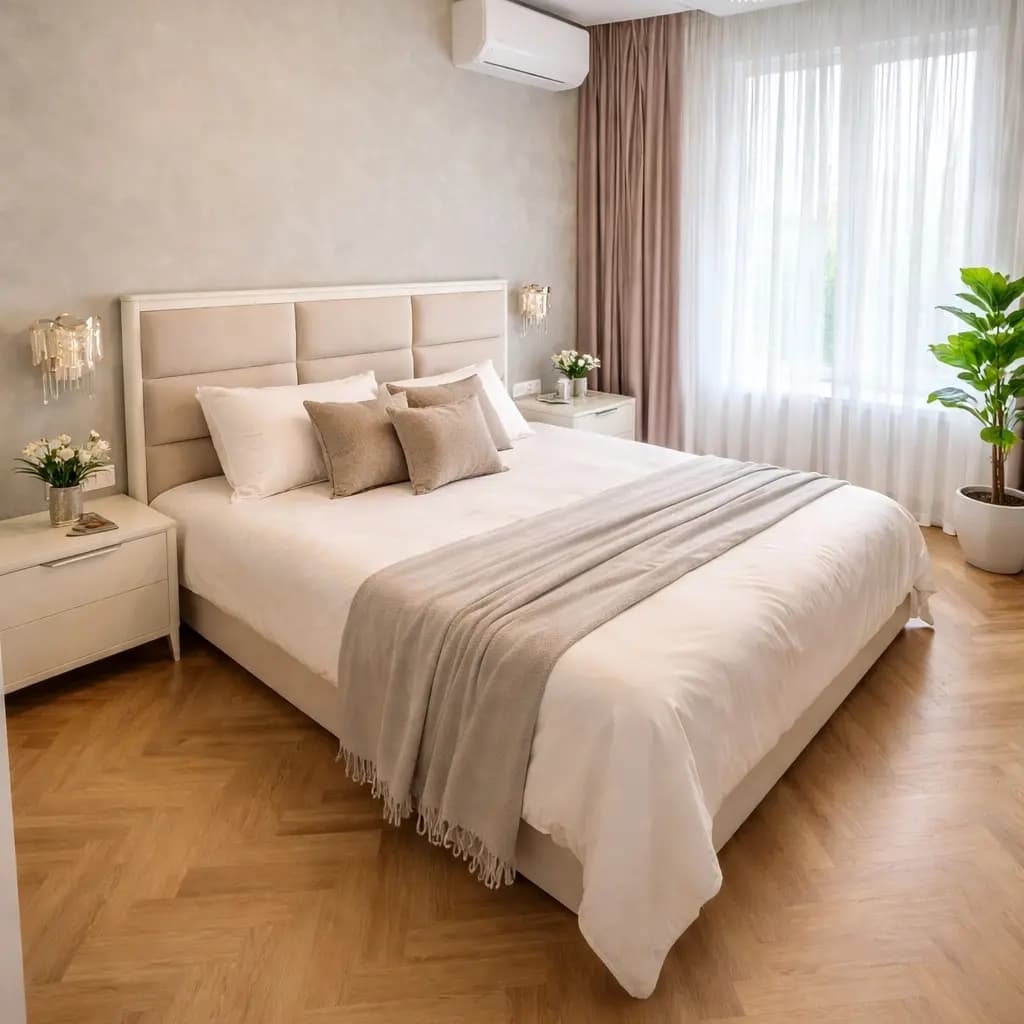
Luxury Living Room Virtual Staging FAQ
Should I include art in luxury living room virtual staging?
Yes, but choose carefully. One substantial piece anchored above the sofa or fireplace works better than gallery walls, which can look busy on a phone screen. Avoid recognizable mass-market prints. Abstract canvases, large-scale photography, or single framed works in muted tones photograph well at this tier. The art should feel collected rather than coordinated, and its scale must match the wall. Undersized art is the most common error I see in upper-bracket virtual staging and instantly betrays the price ceiling of the staging budget.
How do I avoid making a luxury room look cold?
Cold rooms result from too much hard surface and not enough textile layering. Warm a room by adding a wool throw on the sofa arm, a deep-pile rug under the seating group, and floor-puddled drapery. Wood tones in side tables and a vintage leather chair add organic warmth that stone and metal cannot provide alone. Light temperature matters too. Specify warm lamp glow in the render. Cold lighting paired with cool finishes is the combination that creates the sterile look most luxury buyers actively reject.
Is matched furniture acceptable in luxury staging?
Generally no. A pair of matching armchairs flanking a fireplace can work as a deliberate symmetrical gesture in formal architecture, but matching sofa-and-loveseat sets read as suburban builder-grade regardless of the materials. Affluent buyers expect rooms that look collected over time, with mixed periods, varying leg profiles, and intentional asymmetry. When you need two of something, vary the upholstery or finish slightly to suggest the pieces were chosen separately rather than ordered as a coordinated package.
Which architectural styles benefit most from luxury living room staging?
Prewar apartments, mid-century estate homes, traditional Georgians, and contemporary architect-built houses all reward this approach. The staging should reference the home's period and region without replicating it slavishly. A Tudor revival in Greenwich tolerates more layered formality, while a Joseph Eichler in the Bay Area asks for restrained mid-century pieces with quiet luxury detailing. The goal is always to make the home read as authentically inhabited by a thoughtful collector rather than dressed for a single open house weekend.
Do luxury buyers actually look at virtual staging or do they hire designers?
Both, but the listing photograph is the gate. A poorly staged luxury room loses serious buyers before they ever schedule a showing, because they screen heavily on aesthetic compatibility. The virtual staging does not need to dictate their actual furniture choices. It needs to help them visualize the home as worthy of their lifestyle. Once they tour the property, professional designers usually take over, but the listing image is what earned them through the door in the first place.
Learn More
Helpful guides related to Luxury living room virtual staging.