

Mid-Century Modern Home Office
Virtual Staging
Transform your home office with mid-century modern virtual staging. Professional AI-powered results in 60 seconds.
Quick Answer
Mid-century modern remains the most-requested home-office style I see across listing prep conversations, and for good reason. The vocabulary travels well across regions, decades, and price points, which makes it a safe but high-performing choice for virtual staging when the listing photo will live on Zillow, Redfin, and Instagram for weeks. Walnut, brass, soft wool, and clean horizontal lines photograph cleanly under almost any light, and buyers from their late twenties through their early sixties recognize the references without needing them explained. I started using mid-century treatments heavily after watching open houses in Palm Springs, where genuine 1958 desks sit alongside reproductions and nobody minds the mix. The key for staging a home office in this style is balancing warmth and discipline. Too much warmth and the room reads as a furniture catalog; too much discipline and it reads as a museum. The best mid-century home offices look like they belong to someone who reads architecture monographs but also takes Zoom calls. That is the buyer mid-century reaches: a remote professional who wants a room that performs without shouting. When the staging respects that, listing photos pull steady saves and the showing calendar fills.
Key Takeaways
- 1Mid-Century Modern style features: 1950s-60s style, iconic furniture, retro
- 2Virtual staging costs just $0.10 per photo
- 3Results delivered in approximately 60 seconds
- 4Staged homes sell 30-50% faster (NAR)
Staging Insight
Mid-century modern home-office staging performs strongest in markets with mid-century housing stock or a documented design-tourism culture. Palm Springs neighborhoods like Vista Las Palmas and Twin Palms, the Eichler tracts in San Mateo and Sunnyvale, and pockets of Denver's Krisana Park or Arapahoe Acres are obvious anchors, but I also see strong response in Sarasota's Lido Shores, Houston's Glenbrook Valley, and Columbus's Beechwold. In those neighborhoods buyers expect period-correct cabinetry and walnut tones, and a mid-century home-office stage feels like continuity. In markets dominated by Tudor revival or Craftsman housing, like much of Cleveland Heights or Portland's Laurelhurst, I soften the references: I keep the walnut desk and the wool chair but skip the starburst clock and the abstract atomic art, because those references read as costume rather than continuation. Climate also shapes the palette. Sun-drenched markets handle saturated mustard, olive, and burnt orange beautifully because the light bleaches them gently. Cooler, gray-skied markets like Seattle's Mount Baker or Portland's Eastmoreland do better with muted teal, dusty rose, and warmer walnut to fight the flatness of overcast listing-day light.
Quick Answer
Mid-Century Modern home office virtual staging uses AI to add 1950s-60s style, iconic furniture, retro to empty room photos. Costs as low as $0.10 per image vs $2,000-5,000 for physical staging. Results delivered in under 60 seconds.
Key Takeaways
- 1Mid-Century Modern style features: 1950s-60s style, iconic furniture, retro
- 2Perfect for home office spaces that need professional appeal
- 3AI processing delivers results in under 60 seconds
- 420,000x more affordable than traditional physical staging
How much does mid-century modern home office virtual staging cost?
Mid-Century Modern home office virtual staging costs as low as $0.10 per image with Agent Lens. This is up to 20,000x cheaper than physical staging which costs $2,000-5,000 for an entire home. Our AI delivers professional 1950s-60s style, iconic furniture, retro staging in under 60 seconds.
About Mid-Century Modern Style
Mid-Century Modern staging honors the revolutionary design movement of the 1950s and 60s. Characterized by organic curves, hairpin legs, and bold color blocking, this style features iconic furniture pieces from designers like Eames and Saarinen. The aesthetic balances form and function, with clean lines and innovative materials like molded plywood and fiberglass. Appeals strongly to design enthusiasts and collectors who appreciate architectural significance and retro sophistication.. This style is perfect for home office spaces looking to attract buyers with a contemporary, refined aesthetic. Virtual staging allows you to showcase this design without the cost or logistics of physical furniture.
Mid-Century Modern Design for Your Home Office
### Furniture and Material Choices
The heart of a mid-century home office is a writing desk in walnut or teak with tapered legs, ideally with two slim drawers and a clean front. I avoid executive desks because they read 1980s rather than 1960s, and I avoid bright-finish reproductions because they photograph plasticky. The chair carries equal weight: a low-back wool task chair in olive, mustard, or charcoal, or a leather Eames-style executive lounge if the room can absorb the volume. Walls work best in soft warm whites such as Benjamin Moore White Dove or in a muted earth tone like Farrow and Ball Light Blue or Sherwin-Williams Ranch House. A single wall in a deeper color, say a dusty sage or a warm clay, can frame the desk beautifully if the room has good natural light. Floors should show: a low-pile flatweave or a vintage Berber rug under the chair area, never a thick shag, which fights the clean lines. Window treatments should be linen panels in oatmeal or natural, hung high and wide, never heavy drapery.
### Accessories and Composition
Mid-century styling lives in the small choices. I dress the desk with a brass-and-walnut desk lamp, a ceramic pencil cup in muted ochre or matte black, a small leather catchall, and one hardcover book left face-up. A rotary-style desk clock in brass adds period reference without crossing into kitsch. Above the desk I hang one strong piece of art: a framed Saul Bass print, a black-and-white Slim Aarons photograph, or a graphic mid-century travel poster sized large enough to anchor the wall. A second statement comes from a low credenza or a slim two-drawer file cabinet in walnut along an adjacent wall, topped with a ceramic vessel, a stack of art books, and a small fiddle-leaf or rubber plant. I avoid the temptation to load every surface with starburst clocks and atomic-era tchotchkes; one or two period references read as confident, while six or seven read as theme-park. The eye should land on the desk, take in the chair, and discover the credenza last. That hierarchy is what makes the photo work.
Mid-Century Modern Home Office Staging Benefits
Why Virtual Staging Works for Home Offices
Mid-Century Modern Home Office Staging Tips
Choose walnut over teak for staging photos
Walnut photographs with more depth and warmth than teak under typical residential lighting. Teak can swing toward orange in afternoon listing photography, while walnut holds its character. Reserve teak for in-person reveals where the buyer can see the actual grain.
Pair tapered legs with a flatweave rug
Mid-century furniture is defined by visible legs, so the rug must let them breathe. A low-pile flatweave or vintage Persian in muted tones lets the silhouette of the desk and chair register clearly. Thick shag rugs swallow the legs and erase the style.
Hang art high and oversized
One large graphic print above the desk works better than three small ones. Mid-century interiors favored single statement pieces, and listing photography rewards bold focal points. Frame in walnut or matte black with a generous mat for a finished, intentional look.
Limit pattern to one surface
If the rug has pattern, the chair should be solid. If the chair has a textured wool, the rug should be plain. Mixing pattern on the floor and the seating creates noise that fights the clean lines mid-century depends on. One pattern per visual zone.
Use brass sparingly and consistently
Brass on the lamp, the desk clock, and one drawer pull is plenty. Mixing brass with chrome or polished nickel in the same frame makes the room read as confused. Stick to a single warm metal and let it appear in two or three thoughtful spots rather than five competing ones.
Stage Your Home Office in Mid-Century Modern Style Today
Get professional mid-century modern virtual staging in 60 seconds
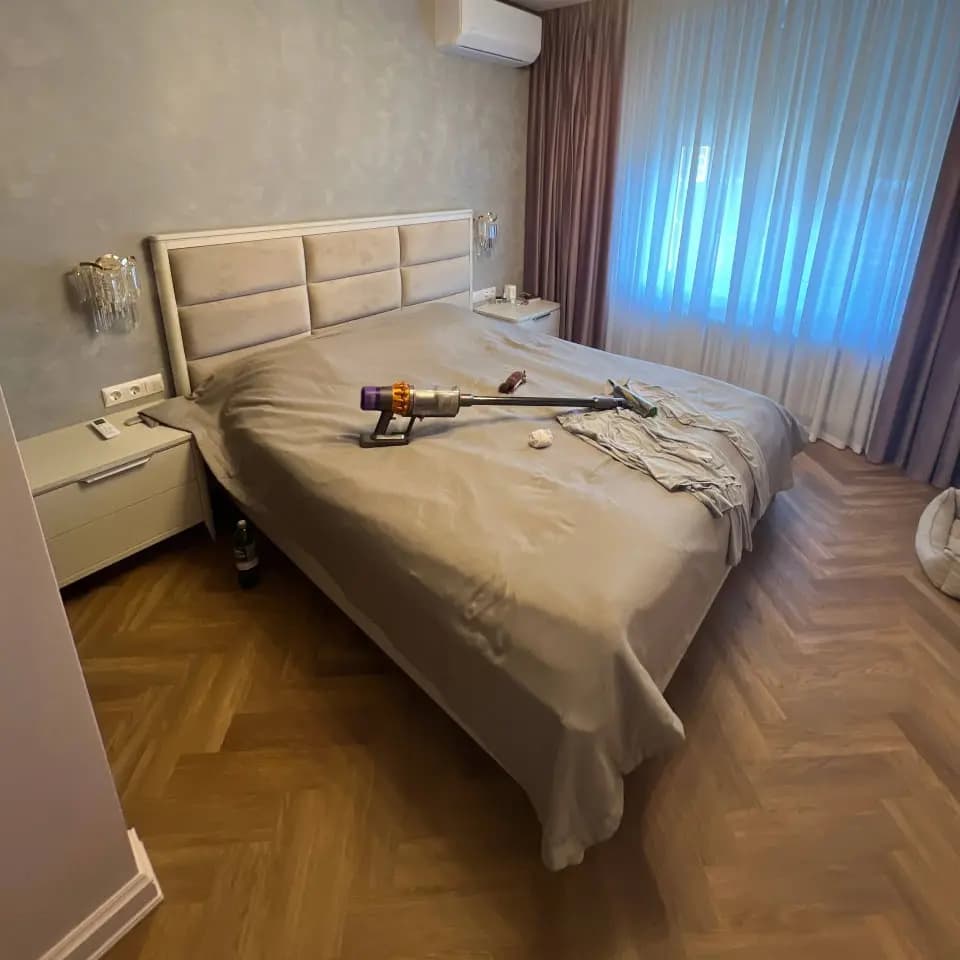
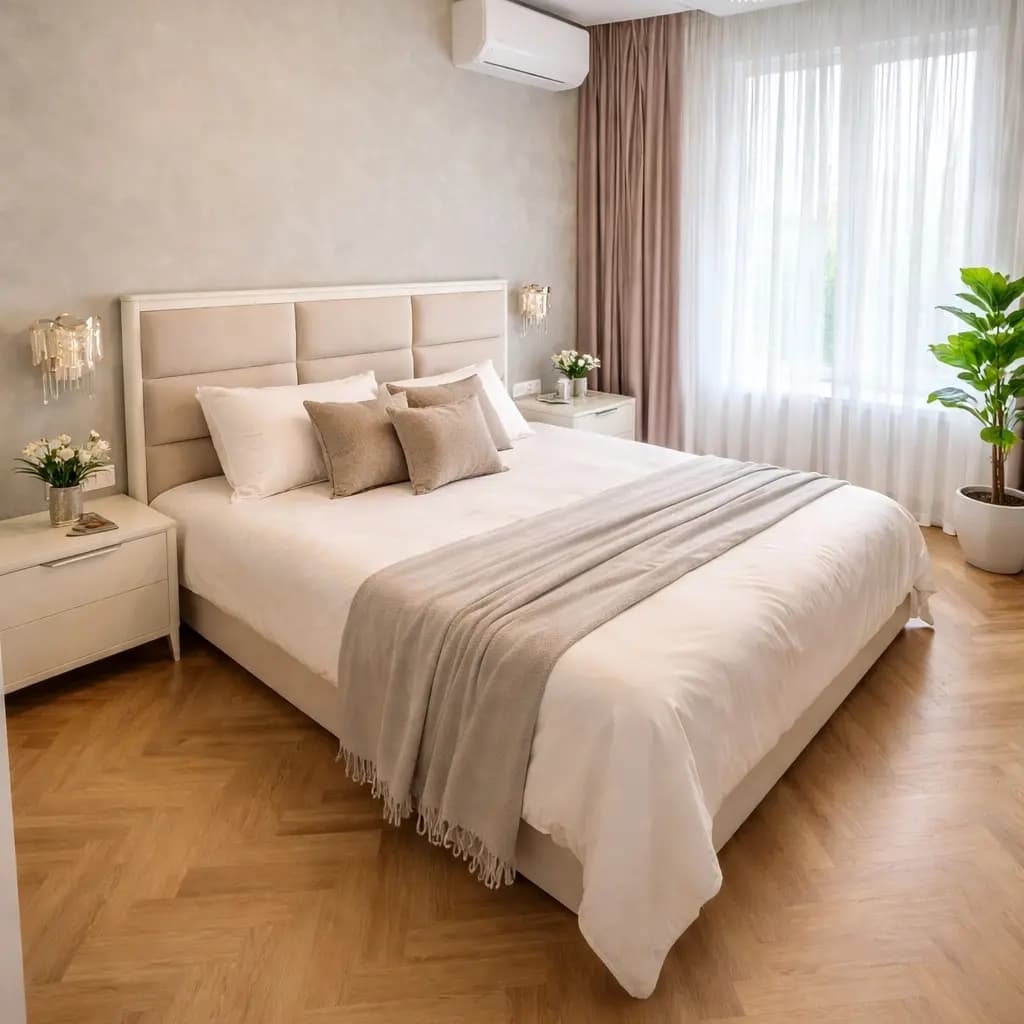
Mid-Century Modern Home Office Virtual Staging FAQ
Is mid-century modern still a strong choice in 2026?
It remains the most universally appealing home-office style I stage. The reason is durability: the vocabulary has been familiar to American buyers for sixty years and survived multiple design cycles. While bolder styles trend in and out, walnut and wool consistently photograph well and read as tasteful across age groups. For a home office that needs to appeal to the broadest possible buyer pool, mid-century is the safest premium choice.
How do I keep mid-century from feeling dated?
Edit hard and lean contemporary in lighting and accessories. Use a modern brass-and-walnut desk lamp rather than a literal 1962 reproduction, choose abstract art rather than atomic-era starbursts, and skip the tulip swivel chair if the room is small. Pair the walnut desk with a wool task chair in a current shade like sage or rust rather than the predictable mustard. The result reads as collected and updated rather than themed.
Can mid-century work in a small home office?
Yes, and it often works better in small rooms than maximalist styles do. The visible legs and clean silhouettes make a 90-square-foot office feel larger than the same room stuffed with traditional furniture. Choose a slim writing desk no deeper than 24 inches, a low-back chair, and one floating walnut shelf instead of a full credenza. The discipline of the style matches the discipline a small room demands.
What art works best above a mid-century desk?
Three categories perform reliably: graphic typography or movie posters from the late 1950s through the 1970s, abstract geometric prints in two or three colors, and black-and-white architectural or travel photography. Avoid floral still lifes, family photos, and motivational quotes. Frame in walnut, white oak, or matte black, and choose a single piece sized to roughly two-thirds the width of the desk below it.
Should the office match the rest of the home?
It should harmonize, not match exactly. If the living room is mid-century, the office can lean further into the style with a stronger desk and a statement chair. If the rest of the home is transitional or traditional, the office can still use a walnut desk and a wool chair while skipping the more iconic silhouettes. Buyers want to see the home reading as one curated decision, not five different magazine spreads stitched together.
Learn More
Helpful guides related to Mid-Century Modern home office virtual staging.