

Farmhouse Great Room
Virtual Staging
Transform your great room with farmhouse virtual staging. Professional AI-powered results in 60 seconds.
Quick Answer
Farmhouse great rooms have shifted considerably in the last three years. The shiplap-and-mason-jar version that dominated Pinterest boards has given way to a more grounded interpretation, sometimes called modern farmhouse or transitional farmhouse, which prioritizes architectural honesty over country motifs. I have staged farmhouse great rooms in Franklin, Tennessee, in Sonoma County, in Bucks County outside Philadelphia, and in Hudson Valley new construction, and the through line is craftsmanship: visible beams, plank floors, board-and-batten walls, and furniture that looks built rather than ordered. The current farmhouse buyer wants the warmth of country tradition without the kitsch. That means dropping the chicken wire, the burlap runners, and the chalkboard signs, and bringing in substantial slipcovered upholstery, hand-finished oak case goods, and textile choices in flax, oat, putty, and softened black. The rug carries the warmth, usually a hand-loomed jute with a cotton border or a vintage Turkish flatweave in muted earth tones. The fireplace, often a stone or whitewashed brick stack, becomes the gathering point. Built-in bookshelves on either side, when present, get styled with restraint: one in three slots empty, books arranged horizontally and vertically in roughly equal measure, and a single sculptural object per shelf. Buyers should feel a sense of unhurried craft.
Key Takeaways
- 1Farmhouse style features: Rustic charm, shiplap, barn doors, cozy feel
- 2Virtual staging costs just $0.10 per photo
- 3Results delivered in approximately 60 seconds
- 4Staged homes sell 30-50% faster (NAR)
Staging Insight
Farmhouse means different things by region, and listing photos punish stagers who miss the local read. Tennessee farmhouse, which dominates Franklin, Leiper's Fork, and parts of east Nashville, leans rustic with reclaimed barnwood beams, copper accents, and warm rust tones. California farmhouse, popular in Healdsburg, Sebastopol, and Ojai, reads lighter and more modern with white-oak floors, weathered plaster, and pale linen upholstery. Northeastern farmhouse, common in Hudson Valley and Bucks County, balances English country with American shaker: substantial trestle tables, windsor chairs, and rich heritage colors like deep claret and forest green in textiles. Texas farmhouse, especially in Fredericksburg and Dripping Springs, blends cowboy with refinement: leather chairs, longhorn-adjacent art handled tastefully, and warm tobacco tones in the upholstery. The mistake I see most often is overcorrecting toward modern farmhouse on a property that has clear regional character. A Hudson Valley stone-and-timber great room needs heritage paisley pillows and an oushak rug, not a white slipcovered sofa with a black-framed sign. Read the architecture, then stage to match.
Quick Answer
Farmhouse great room virtual staging uses AI to add rustic charm, shiplap, barn doors, cozy feel to empty room photos. Costs as low as $0.10 per image vs $2,000-5,000 for physical staging. Results delivered in under 60 seconds.
Key Takeaways
- 1Farmhouse style features: Rustic charm, shiplap, barn doors, cozy feel
- 2Perfect for great room spaces that need professional appeal
- 3AI processing delivers results in under 60 seconds
- 420,000x more affordable than traditional physical staging
How much does farmhouse great room virtual staging cost?
Farmhouse great room virtual staging costs as low as $0.10 per image with Agent Lens. This is up to 20,000x cheaper than physical staging which costs $2,000-5,000 for an entire home. Our AI delivers professional rustic charm, shiplap, barn doors, cozy feel staging in under 60 seconds.
About Farmhouse Style
Farmhouse virtual staging brings the warmth of rural American living into any property. Characterized by reclaimed wood elements, shiplap accent walls, and vintage-inspired accessories, this style creates an inviting atmosphere that feels both nostalgic and fresh. Key pieces include farmhouse sinks, sliding barn doors, distressed wooden furniture, and natural textiles like linen and cotton. This incredibly popular style resonates with families seeking spaces that feel warm, welcoming, and unpretentious.. This style is perfect for great room spaces looking to attract buyers with a contemporary, refined aesthetic. Virtual staging allows you to showcase this design without the cost or logistics of physical furniture.
Farmhouse Design for Your Great Room
### Anchoring the room with substance
A farmhouse great room asks for furniture that feels built. I start with a slipcovered sofa, ninety-six inches if the space allows, in a pre-washed flax or oat linen with loose cushions. The slipcover signals approachability and is one of the few traditional farmhouse markers I keep front and center. Across from it, a leather chesterfield or a pair of windsor chairs with a worn finish add masculine counterweight. The coffee table is almost always a salvaged wood piece: a low trestle, a square farmhouse cocktail with breadboard ends, or a vintage suitcase trunk for narrower rooms. I avoid glass tops in this style. They fight the wood vocabulary. A jute or vintage Turkish rug in muted earth tones grounds the seating zone, sized so all front legs sit on it. Behind one sofa, a long pine console with chunky legs holds two pottery lamps and a wooden bowl filled with eucalyptus stems.
### Texture, color, and the believable finishing layer
Farmhouse fails when it tries too hard. The accessories layer is where most stagers overshoot. I keep it disciplined: a stack of two linen-bound books, a stoneware vase with branches, a hand-thrown bowl, and one piece of wall art that reads as a found object rather than a printed sign. The art might be a vintage botanical, a black-and-white landscape photograph, or a salvaged window frame mirror. Pillows mix three fabrics: a mudcloth or block-print accent, a striped flax in oat and black, and a solid heavyweight linen. Throw a wool plaid blanket across one arm. Lighting comes from a black metal cage chandelier or a whitewashed wood beam fixture, paired with iron sconces or barn pendant table lamps. Color stays grounded in flax, oat, putty, softened black, and one warm accent like aged terracotta or eucalyptus green. The room should feel like the family has lived there for two harvest seasons.
Farmhouse Great Room Staging Benefits
Why Virtual Staging Works for Great Rooms
Farmhouse Great Room Staging Tips
Choose a slipcovered sofa over a tight upholstered piece
A loose slipcover in flax or oat linen, with rumpled cushions and a slightly relaxed skirt, signals approachable farmhouse instantly. Tight tailored upholstery reads more transitional. The slipcover is one of the few country markers that has aged well and still tests strongly with current buyers.
Use a vintage Turkish or jute rug, not a printed pattern
Hand-loomed jute with a cotton border or a faded vintage Turkish flatweave in muted reds, ochres, and putty grounds the room with authentic texture. Avoid machine-printed farmhouse rugs with bold patterns. They photograph cheap and date the listing within a year.
Style built-ins with restraint and negative space
Leave one shelf in three completely empty. Mix horizontal book stacks with vertical groupings, and add only one sculptural object per shelf. Overstyled built-ins are the most common farmhouse mistake and read as visual clutter on wide-angle camera angles.
Replace signage with vintage botanicals or photographs
Drop the wood signs with cursive sayings. Hang a vintage botanical print, a black-and-white landscape photograph, or a salvaged window frame mirror instead. Found-object art reads authentic and ages well, while signage looks dated within a season.
Layer three textile weights
Combine pre-washed linen on the sofa, a chunky knit throw, and a wool plaid blanket. Add pillows in mudcloth, striped flax, and solid heavyweight linen. Three textile weights give the room a believable lived-in quality without crossing into rustic costume.
Stage Your Great Room in Farmhouse Style Today
Get professional farmhouse virtual staging in 60 seconds
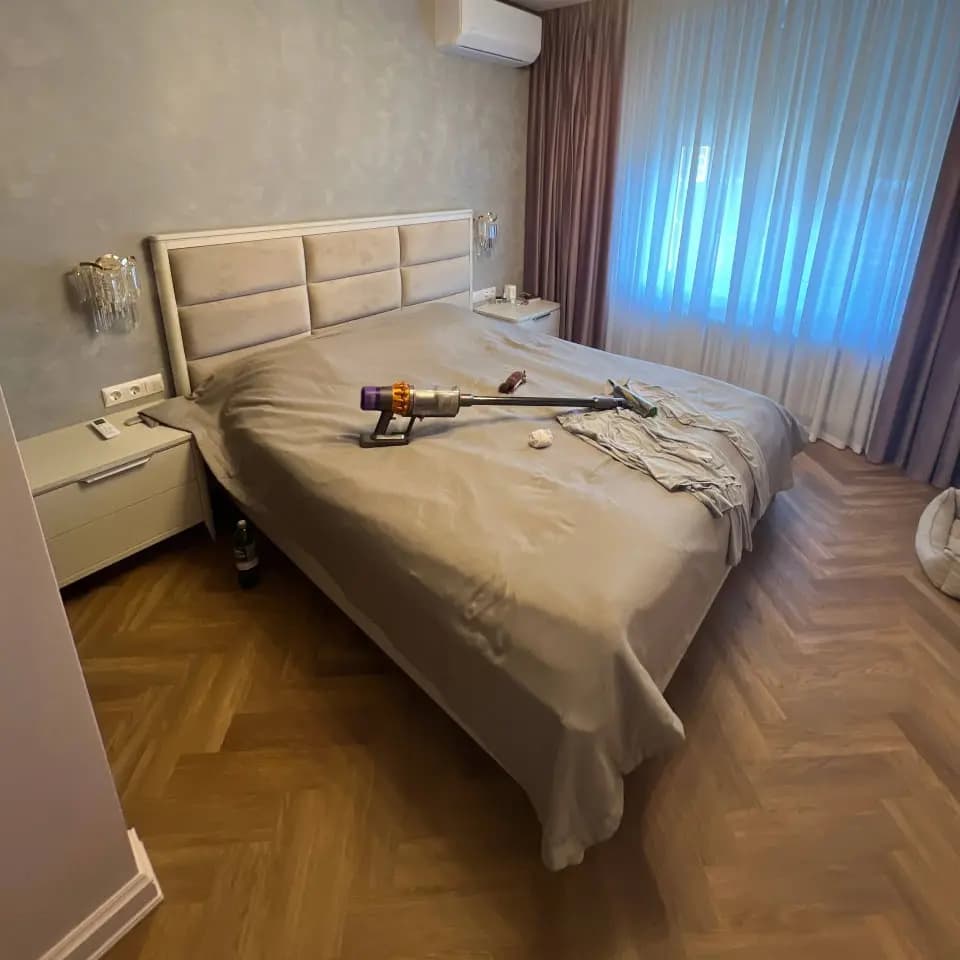
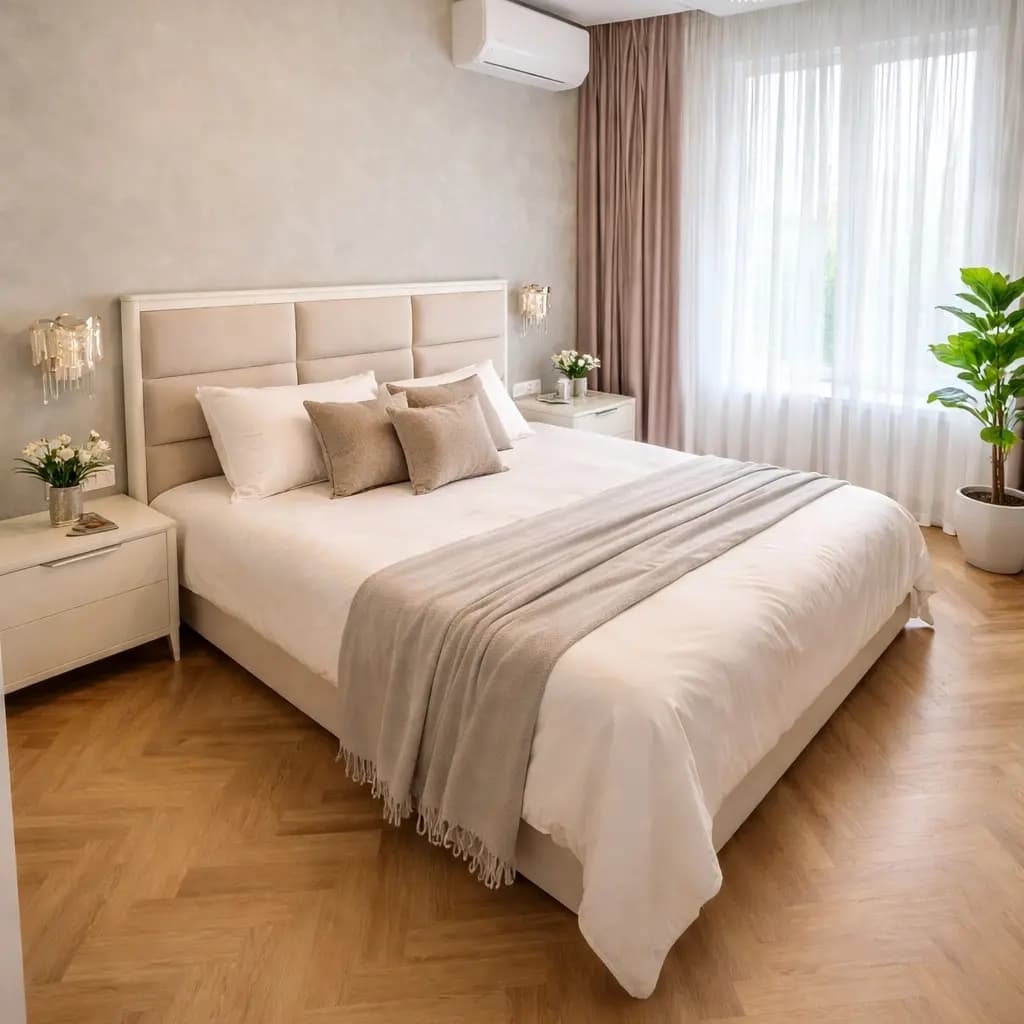
Farmhouse Great Room Virtual Staging FAQ
Is modern farmhouse still selling, or has the trend faded?
The shiplap-and-signage version has cooled significantly with buyers, but well-executed modern farmhouse with architectural honesty is selling steadily in markets where the regional character supports it. Tennessee, Hudson Valley, Sonoma, and parts of Texas still respond strongly. The shift is toward what stagers now call grounded farmhouse: real materials, restrained accessories, and furniture that looks crafted rather than mass-produced. Skip the trend signifiers and lean into substance.
Can I do farmhouse without a fireplace?
Yes, but you need an alternative anchor. A long pine console under a substantial mirror, a wall of built-in bookshelves, or a pair of large vintage botanical prints flanking a window can all hold the focal weight. The risk is a room that feels untethered. If the architecture has no built-in anchor, I bring in a tall pine cabinet or hutch on the primary wall to give the camera something to resolve on.
What colors should I avoid in farmhouse staging?
Cold gray, primary blue, and bright white-on-white are the three palettes that fight the style. Cold gray reads industrial. Primary blue reads coastal or nautical. Bright white-on-white photographs sterile and signals new build rather than handcrafted. Stay in the warm neutrals: flax, oat, putty, softened black, and aged terracotta or eucalyptus green as the single accent. Buyers respond to warmth in this category more than any other style.
How do I balance farmhouse with a contemporary kitchen?
Many recent builds pair white shaker kitchens with farmhouse-leaning great rooms. Bridge the two with materials that read in both languages: white oak floors, brushed brass hardware, and matte black accents. The great room can lean slightly more rustic with reclaimed wood and vintage textiles, while the kitchen-adjacent zone uses cleaner-lined casegoods. The two rooms should share a palette so the transition reads intentional on listing photos rather than as two different styles.
What is the single biggest farmhouse mistake on listing photos?
Overaccessorizing the coffee table and mantel. Stagers feel pressure to add country charm and end up with seven items where two would do. A wooden bowl, a stack of books, and one branch in a stoneware vase is a complete coffee table. A mantel with a single vintage mirror, a pair of brass candlesticks, and one piece of greenery photographs better than any cluster of seasonal accents. Restraint is what separates current farmhouse from dated farmhouse.
Learn More
Helpful guides related to Farmhouse great room virtual staging.